

What is an Automatic Powder Feeding and Mixing System? What are its Design Principles?
An automatic powder feeding and mixing system is a sophisticated industrial solution designed to handle the precise and efficient handling of bulk powders in various manufacturing processes. These systems are integral to industries such as pharmaceuticals, food processing, chemicals, and materials science, where the accurate proportioning and blending of powders are critical for product quality and consistency. The system typically integrates multiple components, including hoppers, feeders, conveyors, and mixing units, all controlled by advanced automation technology to ensure seamless operation. Developed by companies like Shandong HeadPowder Engineering Co., Ltd. (headpowder), these systems are engineered to meet the specific needs of modern manufacturing.
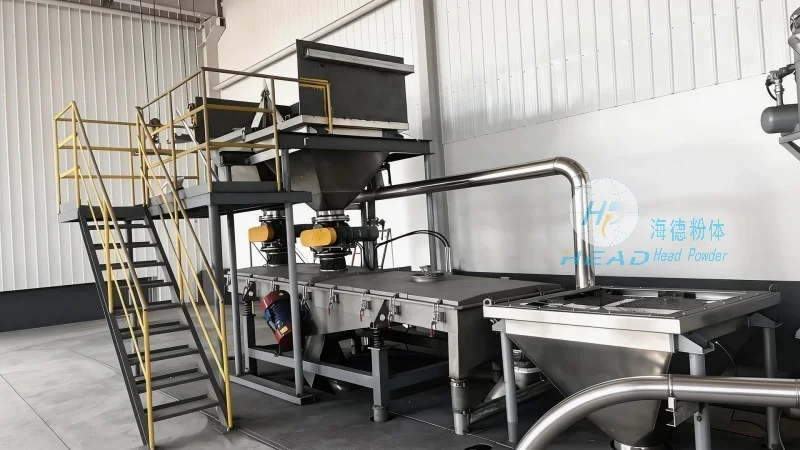
Key Components of an Automatic Powder Feeding System
The core components of an automatic powder feeding system include several essential elements that work in tandem to achieve the desired results. The first component is the hopper, which serves as the storage container for the bulk powder. Hoppers are designed with specific geometries and materials to prevent material bridging, caking, or segregation, ensuring a smooth flow of the powder. Next, the feeder is a critical component responsible for controlling the flow rate of the powder from the hopper to the next stage of the process. Common types of feeders include volumetric feeders (e.g., rotary, vibratory) and gravimetric feeders, which provide more precise weight-based control. The conveyor system then transports the powder from the feeder to the mixing unit or processing equipment. This may involve pneumatic conveying lines or mechanical conveyors, depending on the system design and the properties of the powder being handled.
Design Principles for Efficient Powder Handling
The design principles of an automatic powder feeding and mixing system are centered on achieving high accuracy, reliability, and efficiency. One of the primary design principles is the minimization of material loss and contamination. This is achieved through the use of sealed systems, proper material handling techniques, and regular maintenance to prevent dust accumulation and cross-contamination. Another key principle is the optimization of flow characteristics. Engineers design the system to account for the powder's bulk density, flowability, and particle size distribution to ensure consistent and predictable flow rates. This involves selecting appropriate hopper angles, feeder types, and conveyor speeds to match the specific properties of the powder being handled.
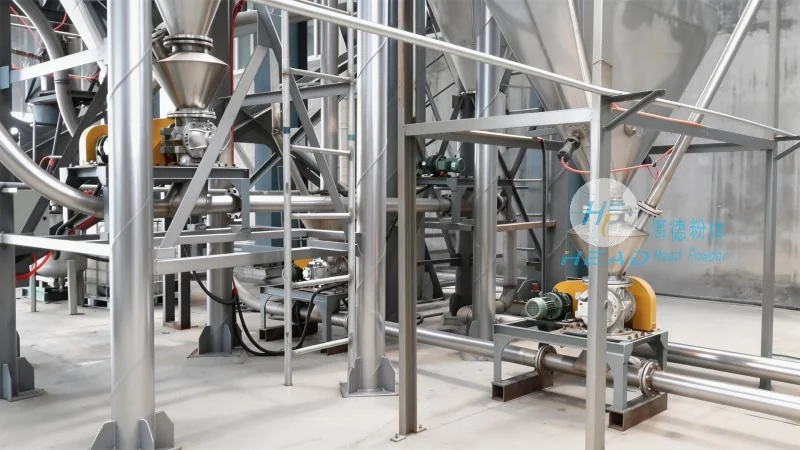
Automation and Control Systems
Automation is a fundamental aspect of modern powder feeding systems, enabling real-time monitoring and control of the entire process. The system is typically equipped with sensors, such as level sensors, pressure sensors, and flow meters, to provide feedback on the status of the hopper, feeder, and conveyor. This data is processed by a programmable logic controller (PLC) or a more advanced industrial computer system, which adjusts the operation of the feeders and conveyors to maintain the desired flow rate and mixing ratio. The control system may also include features like batch control, where the system can be programmed to feed specific quantities of each powder in a sequence, ensuring precise proportioning for complex formulations. Additionally, the system may incorporate safety features, such as emergency stop buttons and interlocks, to protect operators and prevent accidents during operation.
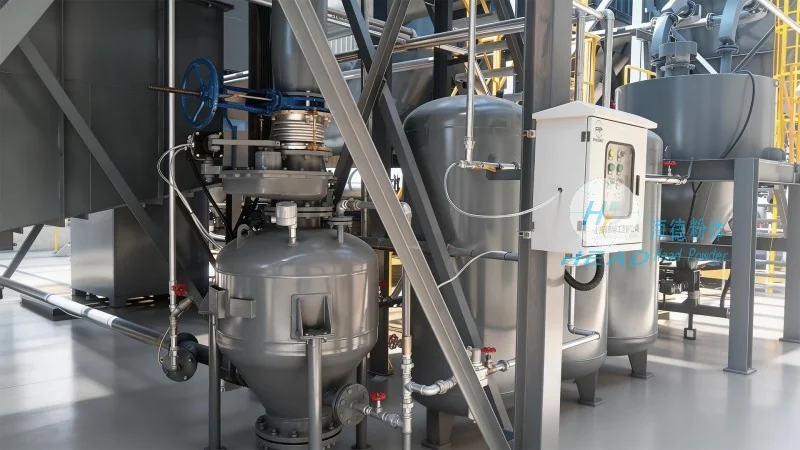
Applications and Benefits
Automatic powder feeding and mixing systems are widely used in various applications across different industries. In the pharmaceutical industry, these systems are essential for the accurate formulation of active pharmaceutical ingredients (APIs) and excipients, ensuring that each batch meets strict regulatory standards for potency and purity. In the food industry, they are used for the precise mixing of ingredients in products like beverages, snacks, and baked goods, maintaining consistent flavor and texture. The chemical industry relies on these systems for the blending of raw materials in the production of coatings, pigments, and other chemical products. The primary benefits of using an automatic powder feeding system include improved product quality through consistent mixing ratios, increased production efficiency due to reduced downtime and labor requirements, and enhanced safety by minimizing human exposure to powders and dust. Furthermore, these systems can be integrated with other manufacturing processes, such as packaging and quality control, to create a fully automated production line.
Conclusion
In conclusion, an automatic powder feeding and mixing system is a vital piece of equipment for industries that require precise and efficient handling of bulk powders. The design principles, which focus on accuracy, reliability, and automation, ensure that these systems can meet the demanding requirements of modern manufacturing. By integrating advanced components and control technologies, these systems provide significant benefits in terms of product quality, operational efficiency, and safety. As technology continues to advance, the capabilities of automatic powder feeding systems are expected to improve further, enabling even more complex and precise powder handling applications.