

Operation Process and Working Principle of Monosodium Glutamate Pneumatic Conveying System
Monosodium glutamate (MSG), a widely used flavor enhancer in the food industry, requires efficient and reliable transportation methods to ensure quality and safety. The pneumatic conveying system for MSG, developed by Shandong HeadPowder Engineering Co., Ltd., is a sophisticated solution that addresses these needs. This article explores the operation process and working principle of this system, highlighting its key components, operational steps, and the technical advantages it offers.
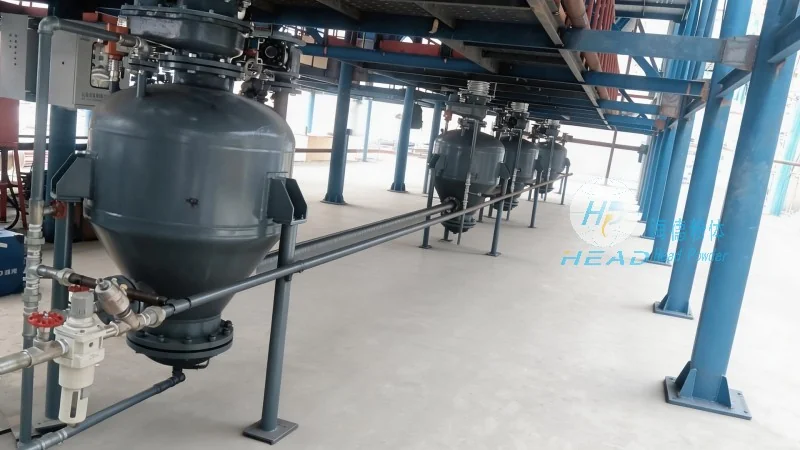
Introduction to the Pneumatic Conveying System for Monosodium Glutamate
Shandong HeadPowder Engineering Co., Ltd., a leading manufacturer based in China, specializes in engineering solutions for the chemical and food processing industries. The company’s pneumatic conveying system for monosodium glutamate is designed to handle the unique challenges associated with transporting this sensitive material. The system is built with high-quality materials and advanced technology to ensure minimal product degradation, consistent flow rates, and optimal energy efficiency. By integrating state-of-the-art components, the system meets the stringent requirements of modern food processing facilities, providing a reliable and cost-effective solution for MSG transportation.
Key Components of the Monosodium Glutamate Pneumatic Conveying System
The pneumatic conveying system for monosodium glutamate consists of several critical components that work in harmony to achieve efficient material transport. These components include the hopper for material storage, a rotary valve for controlled discharge, a pneumatic conveyor line with appropriate air velocity, a filter system to capture fine particles, and a dust collection unit. Each component is carefully selected and integrated to ensure seamless operation and minimal maintenance. The hopper is designed to hold a sufficient quantity of MSG, preventing material buildup and ensuring a steady supply to the system. The rotary valve regulates the flow of MSG from the hopper to the conveyor line, maintaining consistent material feed rates. The pneumatic conveyor line uses compressed air to move the MSG particles through the system, with the air velocity carefully controlled to prevent particle degradation or blockages. The filter system and dust collection unit ensure that any fine particles are captured and removed, maintaining air quality and preventing contamination.
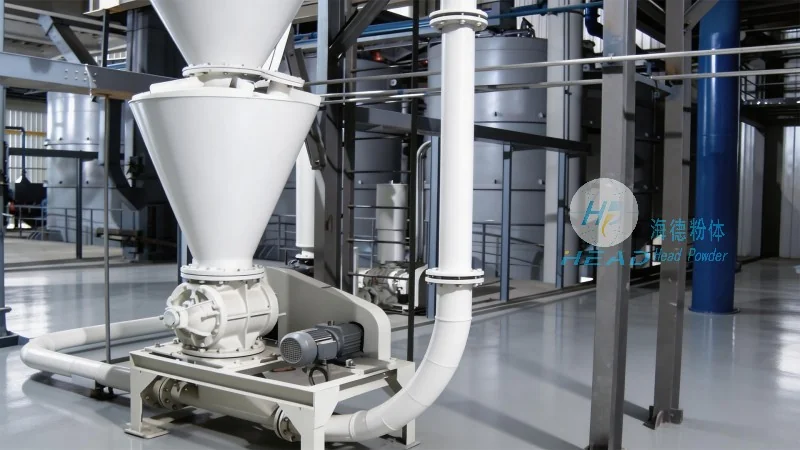
Operation Process of the Monosodium Glutamate Pneumatic Conveying System
The operation process of the monosodium glutamate pneumatic conveying system involves several sequential steps that ensure smooth and efficient material transport. The process begins with the loading of MSG into the hopper. The rotary valve then opens to allow a controlled amount of MSG to enter the pneumatic conveyor line. Compressed air is introduced into the line, creating a flow that propels the MSG particles forward. The system is designed to maintain a consistent air velocity, which is crucial for preventing particle agglomeration and ensuring uniform transport. As the MSG travels through the conveyor line, it passes through the filter system, where any fine particles are captured and removed. The clean air, along with the transported MSG, exits the system through the discharge point, where the material is collected in the receiving container. The entire process is automated, with sensors and control systems monitoring key parameters such as air pressure, flow rate, and material level. This automation ensures that the system operates within optimal parameters, minimizing downtime and maximizing efficiency.
Working Principle of the Monosodium Glutamate Pneumatic Conveying System
The working principle of the monosodium glutamate pneumatic conveying system is based on the principles of fluid dynamics and particle transport. The system utilizes compressed air to create a flow that moves the MSG particles through the conveyor line. The air velocity is carefully controlled to ensure that the particles are carried without causing degradation or damage. The system operates under positive pressure, where the air pressure is higher than the ambient pressure, which helps to prevent dust emissions and maintain a clean environment. The rotary valve plays a critical role in controlling the material feed rate, ensuring that the air velocity remains sufficient to transport the MSG without causing blockages. The filter system and dust collection unit work together to capture any fine particles that may be generated during the transport process, preventing them from entering the environment and ensuring compliance with environmental regulations. The entire system is designed to be energy-efficient, with the air compressor and control systems optimized to minimize energy consumption while maintaining high performance.
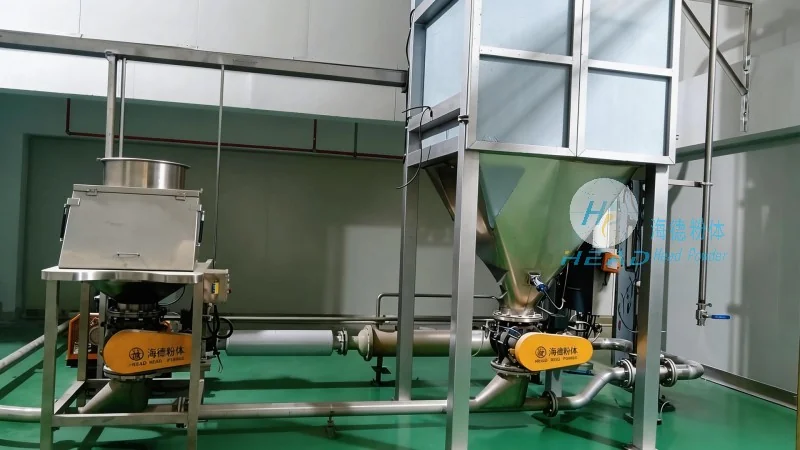
Advantages and Applications of the Monosodium Glutamate Pneumatic Conveying System
The pneumatic conveying system for monosodium glutamate offers several advantages over traditional transportation methods, such as belt conveyors or bucket elevators. One of the key advantages is the ability to transport the material in a closed system, which prevents contamination from external sources and minimizes dust emissions. This is particularly important for MSG, as it is a sensitive material that can be easily affected by moisture and contaminants. The system also provides a high degree of flexibility, allowing for easy integration into existing processing lines and the ability to transport the material over long distances without the need for multiple transfer points. The automated operation of the system reduces labor costs and minimizes the risk of human error, ensuring consistent and reliable transport. The system is widely used in the food processing industry, particularly in the production of monosodium glutamate, where it is essential to maintain product quality and safety. It is also suitable for other applications where fine powders need to be transported efficiently and safely.
Conclusion and Company Information
Shandong HeadPowder Engineering Co., Ltd. has developed a highly efficient and reliable pneumatic conveying system for monosodium glutamate, which addresses the unique challenges associated with transporting this sensitive material. The system’s operation process and working principle are based on advanced engineering principles and state-of-the-art technology, ensuring minimal product degradation, consistent flow rates, and optimal energy efficiency. The system is designed to meet the stringent requirements of modern food processing facilities, providing a cost-effective and sustainable solution for MSG transportation. With its headquarters in China, Shandong HeadPowder Engineering Co., Ltd. continues to innovate and provide high-quality engineering solutions for the chemical and food processing industries, contributing to the advancement of industrial processes and the improvement of product quality.