

AlN Pneumatic Conveying Introduction: Principles of Pneumatic Conveying Systems
Shandong HeadPowder Engineering Co., Ltd., commonly known as headpowder, is a professional enterprise dedicated to the research, development, and application of advanced powder handling technologies. With a focus on providing efficient and reliable solutions for industrial powder transport, the company has established itself as a key player in the field of pneumatic conveying systems. HeadPowder's operational base is located in Shandong, China, where the company leverages local resources and expertise to deliver high-quality products and services tailored to diverse industrial needs.
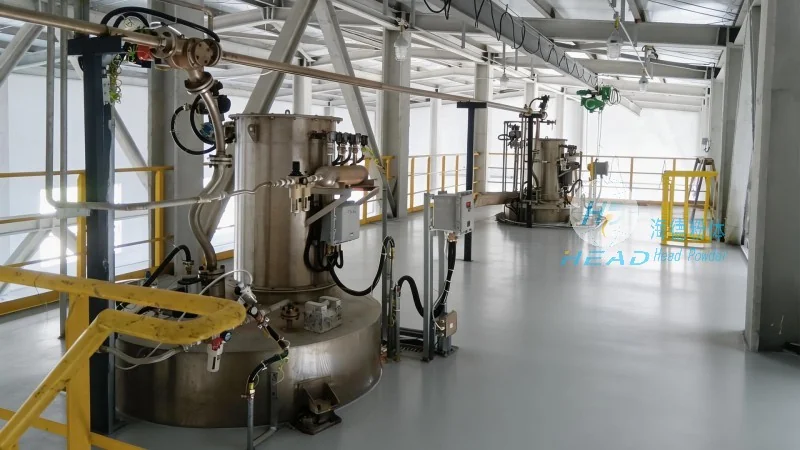
Overview of AlN Pneumatic Conveying
Aluminum nitride (AlN) is a widely used ceramic material with excellent thermal conductivity, electrical insulation properties, and chemical stability. In industrial applications, the efficient and safe transport of AlN powder is crucial for maintaining product quality and operational efficiency. Pneumatic conveying systems offer a versatile and effective method for handling AlN powder, particularly in processes that require minimal contamination and precise control over particle flow. This section provides an introduction to the principles and applications of AlN pneumatic conveying, highlighting the importance of specialized equipment and system design for optimal performance.
Principles of Pneumatic Conveying Systems
Pneumatic conveying systems operate by using compressed air or other gases to transport bulk materials, such as powders, through a pipeline network. The fundamental principle involves creating a pressure differential that propels the material from the source to the destination. There are two primary types of pneumatic conveying systems: dilute-phase and dense-phase. Dilute-phase systems use low air velocities to move particles in a suspended state, suitable for long-distance transport and low to moderate material loads. Dense-phase systems, on the other hand, employ higher air velocities and lower air-to-material ratios to achieve higher material concentrations, ideal for short-distance transport and handling of abrasive or sensitive materials. For AlN powder, the choice between these systems depends on factors such as particle size, flow rate requirements, and the need to minimize particle degradation or agglomeration.
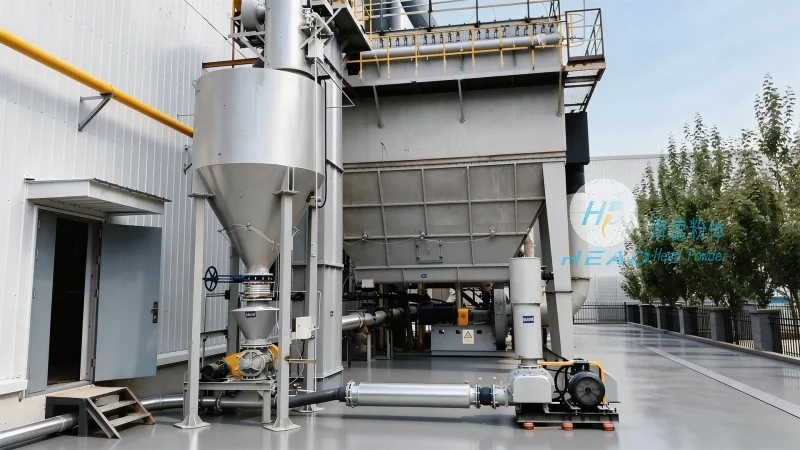
System Components and Design Considerations
The effectiveness of a pneumatic conveying system for AlN powder is heavily influenced by its component design and integration. Key components include the material feed hopper, which ensures a consistent and controlled feed of AlN powder into the system; the air supply unit, responsible for generating the necessary pressure and flow rates; the conveying pipeline, which must be constructed from materials resistant to chemical and thermal degradation, such as stainless steel or specialized alloys; and the control system, which monitors and adjusts parameters like air pressure, flow rate, and material level to maintain optimal operation. Design considerations also extend to factors like particle size distribution, moisture content, and the presence of contaminants, as these can impact system performance and longevity. HeadPowder emphasizes the importance of customizing system designs to match specific operational conditions, ensuring that the conveying process is both efficient and cost-effective.
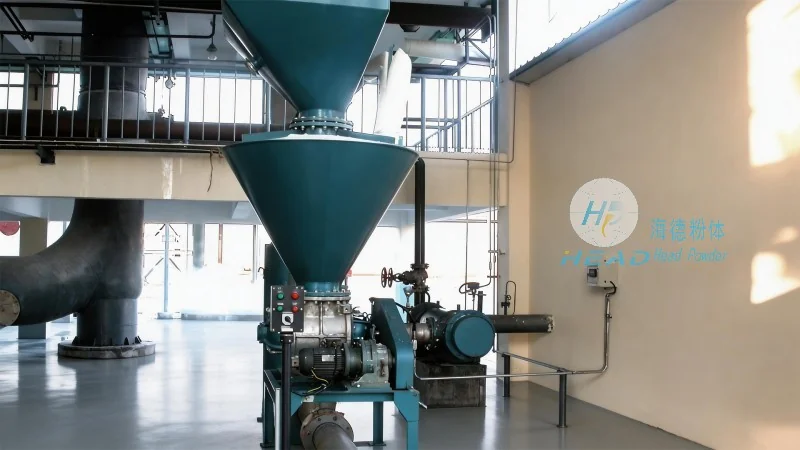
Applications and Advantages of AlN Pneumatic Conveying
AlN pneumatic conveying systems find applications in various industries, including electronics, aerospace, and ceramics manufacturing. In the electronics sector, AlN is used as a substrate material for high-power devices, and efficient transport is essential for maintaining the purity and integrity of the powder during production. The aerospace industry utilizes AlN for thermal management components, where precise control over powder flow is critical to ensure the quality of final products. Other applications include the production of AlN-based ceramics, where the system's ability to handle fine powders without degradation is vital. The advantages of pneumatic conveying for AlN include reduced material handling costs, minimized contamination risk, and improved process control compared to traditional methods like manual handling or mechanical conveying. Additionally, pneumatic systems can be integrated with other processing equipment, such as mixing and drying units, to create a seamless production line, enhancing overall operational efficiency.
Conclusion and Commitment from HeadPowder
As a leading provider of pneumatic conveying solutions, Shandong HeadPowder Engineering Co., Ltd. continues to innovate and refine its technologies to meet the evolving needs of industries handling AlN powder. By combining advanced engineering expertise with a customer-centric approach, HeadPowder ensures that its systems deliver reliable, efficient, and sustainable performance. The company's commitment to quality, safety, and customer satisfaction is reflected in its comprehensive service offerings, including system design, installation, and maintenance. With a strong presence in Shandong, China, HeadPowder remains dedicated to advancing the field of powder handling and supporting industrial growth through reliable AlN pneumatic conveying solutions.