

[Lithium Cobalt Oxide Technical Parameters and Conveying System Process]
For industries involved in lithium battery production, understanding the technical parameters of lithium cobalt oxide (LiCoO₂) and the efficiency of its conveying system is crucial. This document provides a comprehensive overview of the key technical specifications and the advanced conveying system processes used in the production of LiCoO₂, highlighting the expertise of Shandong HeadPowder Engineering Co., Ltd. (headpowder), a leading manufacturer based in Shandong, China.
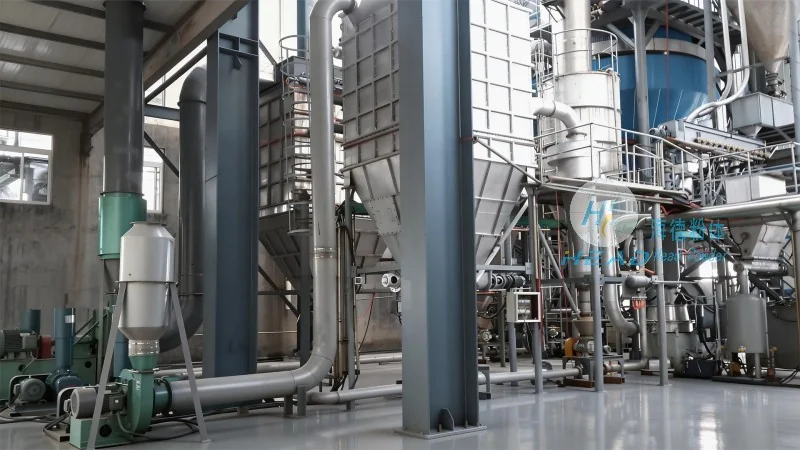
Key Technical Parameters of Lithium Cobalt Oxide
Lithium cobalt oxide is a critical cathode material in lithium-ion batteries, known for its high energy density and thermal stability. The technical parameters of LiCoO₂ directly impact the performance and safety of the final battery products. At headpowder, we adhere to stringent standards to ensure the quality of our LiCoO₂ products. The primary technical parameters include:
- Particle Size Distribution: Typically ranging from 1 to 10 micrometers, with a D50 (median particle size) optimized for battery performance. Our production processes ensure a narrow particle size distribution, which is vital for uniform battery electrode coating.
- Surface Area: Measured by BET method, the specific surface area of LiCoO₂ is usually between 8 and 15 m²/g. This parameter affects the electrochemical reaction kinetics and the rate capability of the battery.
- Moisture Content: Maintained below 0.1% to prevent degradation and ensure consistent performance. Proper drying and packaging processes are implemented to keep moisture levels within this range.
- Impurity Levels: Strict control of impurities such as iron, nickel, and carbonates. Impurities can negatively affect battery cycle life and safety. Our quality control measures include advanced analytical techniques to monitor and reduce impurity content.
Advanced Conveying System Process for LiCoO₂
The conveying system is a critical component in the production line of LiCoO₂, ensuring the material is transported efficiently and safely from one processing stage to another. headpowder employs a state-of-the-art conveying system that integrates multiple technologies to enhance productivity and product quality.
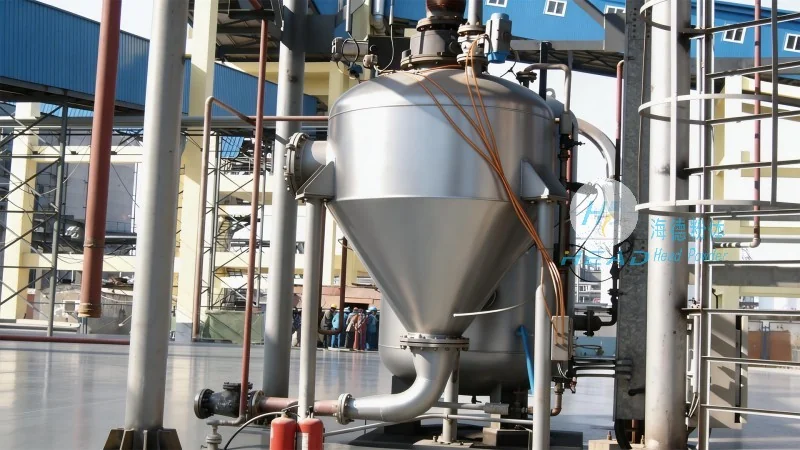
Our conveying system includes:
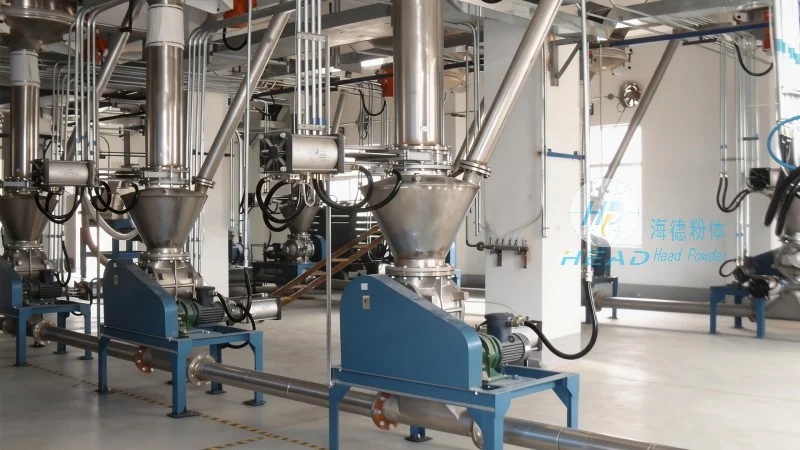
- Positive Pressure Air Conveying: This method uses compressed air to transport fine powders like LiCoO₂. It is suitable for long-distance and high-volume material transport, minimizing dust generation and ensuring a clean environment.
- Rotary Valve and Air Lock: These components are used to control the flow of material, preventing backflow and ensuring precise dosing. The rotary valve's design ensures minimal material residue, which is essential for maintaining product purity.
- Filtering and Dust Collection: Integrated dust collection systems are employed to capture any airborne particles, ensuring compliance with environmental regulations and maintaining a safe working environment.
- Temperature and Humidity Control: The conveying system is equipped with temperature and humidity sensors to monitor and adjust conditions, preventing moisture absorption and maintaining the stability of the LiCoO₂ powder.
Quality Assurance and Production Capabilities at headpowder
As a manufacturer based in Shandong, China, headpowder is committed to delivering high-quality LiCoO₂ products. Our production facilities are equipped with advanced equipment and adhered to international quality standards. The combination of precise technical parameters and an efficient conveying system ensures that our LiCoO₂ meets the demanding requirements of battery manufacturers worldwide.
Our team of experienced engineers and technicians continuously optimizes the production process to enhance product performance and reduce costs. We conduct regular quality inspections at various stages of production, from raw material processing to final product packaging, to ensure consistency and reliability.