

What is a Ternary Cathode Material Powder Conveyor? And What Are Its Design Principles?
Ternary cathode materials are a critical component in modern lithium-ion batteries, playing a vital role in enhancing battery performance, energy density, and overall efficiency. These materials typically consist of a combination of nickel, cobalt, and manganese (or other elements), offering superior electrochemical properties compared to traditional binary cathode materials. The production and handling of these fine powders require specialized equipment to ensure consistent quality, safety, and efficiency. This article explores the concept of a ternary cathode material powder conveyor and delves into its fundamental design principles, highlighting how such systems are engineered to meet the demanding requirements of the battery manufacturing industry.
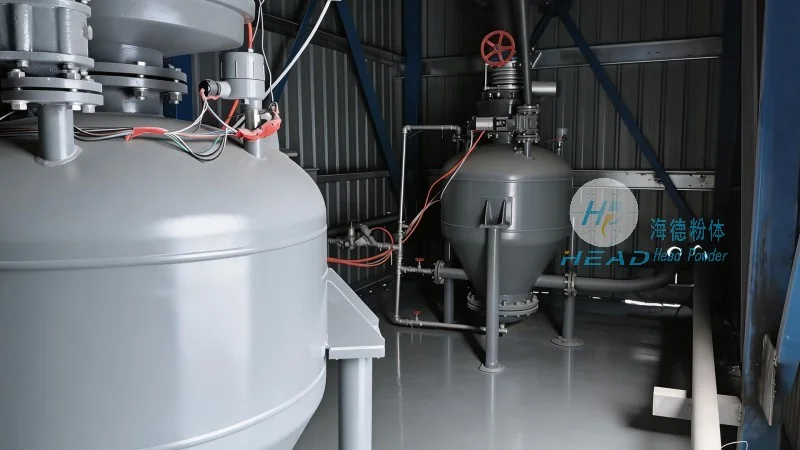
HeadPowder, a leading manufacturer based in Shandong, China, specializes in the design and production of advanced powder handling solutions tailored for high-value materials like ternary cathode powders. The company's expertise lies in creating systems that ensure minimal particle loss, prevent contamination, and maintain the integrity of sensitive powders throughout the conveying process. By integrating cutting-edge technology and robust engineering, HeadPowder's powder conveyors are engineered to deliver reliable performance in demanding industrial environments.
A ternary cathode material powder conveyor is a specialized piece of equipment designed to transport fine powders, such as those used in lithium-ion battery production, from one location to another. Unlike traditional bulk material handling systems, these conveyors are optimized for the unique characteristics of cathode powders, which are often fine, hygroscopic, and sensitive to moisture and air exposure. The primary goal of such a system is to move powders efficiently while preserving their quality and preventing agglomeration or degradation. This is achieved through a combination of precise engineering, advanced materials, and controlled operational parameters.
The design principles of a ternary cathode material powder conveyor revolve around several key factors, including material handling efficiency, product integrity, and operational safety. One of the most critical aspects is the choice of conveying mechanism. Common methods include pneumatic conveying (using air pressure to move powders), mechanical conveying (using screws, belts, or other mechanical components), and vacuum conveying. Each method has its advantages and limitations, and the selection depends on the specific properties of the powder and the application requirements.
Pneumatic conveying systems, for example, are often preferred for their ability to handle fine powders with high moisture content or those that are prone to caking. These systems use compressed air to create a flow of powder particles, transporting them through a network of pipes. The design of the air ducts, including the angle of inclination and the size of the pipes, is carefully optimized to minimize pressure drop and ensure consistent flow rates. Additionally, the use of pulse-jet or rotary airlock valves helps to control the flow of powder and prevent blockages.
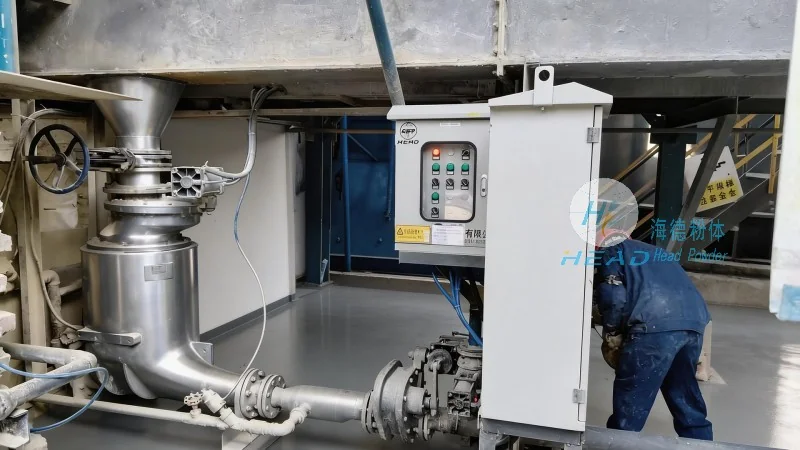
Mechanical conveying systems, such as screw conveyors or belt conveyors, are another option for handling ternary cathode powders. Screw conveyors use a rotating screw to move powders along a trough, while belt conveyors rely on a moving belt to transport materials. These systems are generally more suitable for bulkier or less sensitive powders, but with proper design, they can also be adapted for fine cathode powders. The key is to use smooth, non-stick surfaces and appropriate screw or belt speeds to prevent particle degradation and ensure smooth operation.
Vacuum conveying systems are also used in some applications, particularly when the powder needs to be transported over long distances or when the process requires a closed system to prevent contamination. These systems use a vacuum to draw powders into a collection container, which is then moved to the next stage of the production process. The design of the vacuum pump and the tubing network is critical to maintaining a consistent vacuum level and preventing air leaks that could compromise the quality of the powder.
Another crucial design consideration is the material of construction. Since ternary cathode powders are often sensitive to moisture and can react with certain metals, the conveyor components must be made from materials that are inert and resistant to corrosion. Common materials include stainless steel (specifically 316L or 304L), PTFE-coated components, or specialized polymers. These materials not only protect the powder from contamination but also ensure the longevity and reliability of the conveyor system.
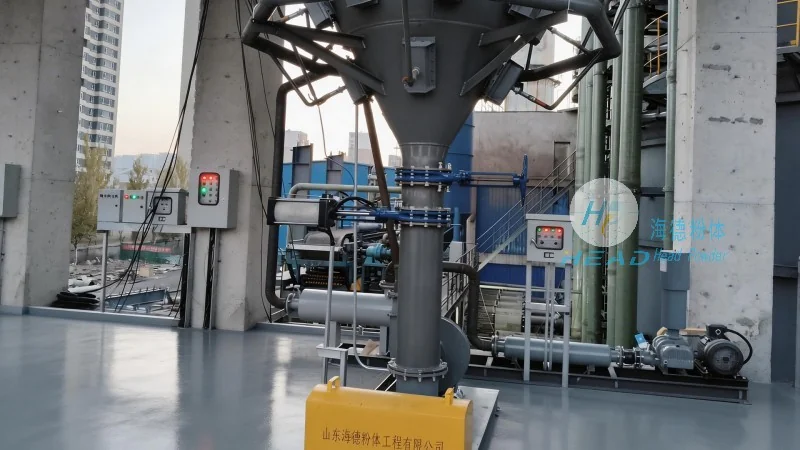
The control system of a ternary cathode material powder conveyor is also a critical design element. Modern systems often incorporate advanced sensors and automation to monitor key parameters such as flow rate, pressure, and temperature. These sensors provide real-time data that allows operators to adjust the system parameters as needed, ensuring optimal performance and preventing issues such as overloading or underflow. The control system may also include safety features, such as emergency stop buttons and interlocks, to protect both the equipment and the personnel operating it.
In addition to the conveying mechanism and material selection, the overall system design must consider the layout and integration with other production equipment. A well-designed powder conveyor should be seamlessly integrated with upstream and downstream processes, such as mixing, drying, or packaging, to form a cohesive production line. This integration helps to minimize material handling time, reduce the risk of contamination, and improve overall operational efficiency. The design process typically involves detailed process flow analysis, material property testing, and simulation to ensure that the final system meets all the required specifications.
HeadPowder's approach to designing ternary cathode material powder conveyors is centered on understanding the unique challenges of handling these high-value materials. By leveraging their expertise in powder technology and industrial engineering, the company develops customized solutions that address the specific needs of each client. Whether it's a small-scale laboratory setup or a large-scale industrial production line, HeadPowder's conveyors are engineered to deliver consistent performance and reliability. The company's commitment to quality and innovation has made them a trusted partner in the battery manufacturing industry, providing solutions that help clients improve their product quality and operational efficiency.
As the demand for high-performance lithium-ion batteries continues to grow, the importance of reliable powder handling systems like the ternary cathode material powder conveyor cannot be overstated. These systems are not just tools for moving materials; they are integral to the entire battery production process, ensuring that the final product meets the highest standards of quality and performance. By understanding the design principles behind such equipment and the expertise of manufacturers like HeadPowder, battery manufacturers can optimize their production processes and stay competitive in a rapidly evolving market.