

Operation Process and Working Principle of Titanium Ore Powder Pneumatic Conveying System
HeadPowder, a leading engineering firm based in Shandong, China, specializes in the design, manufacturing, and implementation of advanced pneumatic conveying systems tailored for the handling of titanium ore powder. This article delves into the operational process and underlying principles of such systems, providing a comprehensive overview for industry professionals and potential clients.
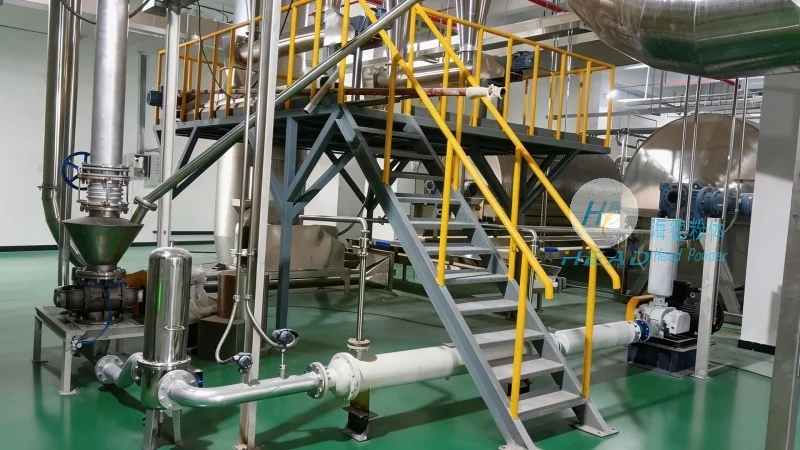
Key Components of a Pneumatic Conveying System
The pneumatic conveying system for titanium ore powder typically consists of several critical components that work in concert to ensure efficient material transport. These include the material feed hopper, which stores and regulates the flow of titanium ore powder; the air compressor or blower, which generates the necessary air pressure to move the powder; the conveying line, which can be either a rigid pipe or a flexible hose; and the receiving hopper or silo, where the material is deposited. Additionally, control valves, pressure sensors, and dust collection systems are integral to the system's functionality, ensuring safety, efficiency, and compliance with industrial standards.
Operation Process of the System
The operation of a titanium ore powder pneumatic conveying system begins with the loading of the material into the feed hopper. The hopper is equipped with a feeder, such as a rotary valve or a screw conveyor, which controls the rate at which the powder is released into the conveying line. Simultaneously, the air compressor starts, generating a flow of air that travels through the conveying line. As the air passes through the hopper and feeder, it entrains the titanium ore powder, forming a slurry of powder and air. This mixture is then propelled through the pipeline to the receiving hopper. The receiving hopper is designed to settle the powder and separate it from the air, which is then filtered and recycled back into the system to maintain energy efficiency. The entire process is monitored by a control system that adjusts air pressure, flow rates, and other parameters to optimize performance and prevent blockages or other operational issues.
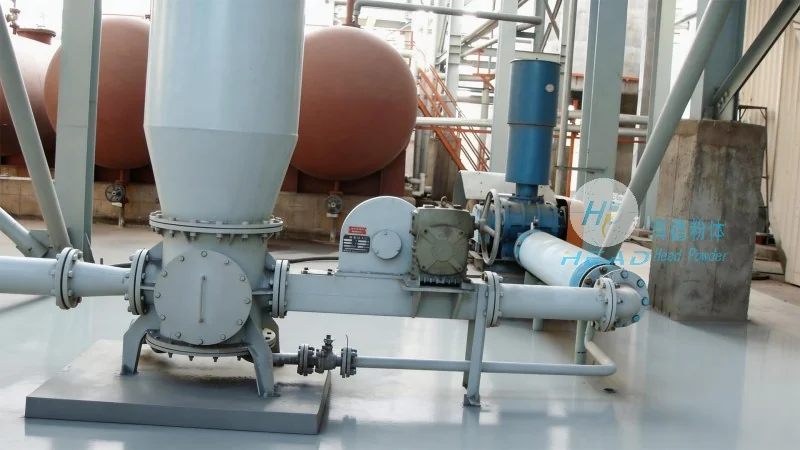
Working Principle: The Role of Air and Particle Dynamics
The core principle of pneumatic conveying is the use of air as a medium to transport solid particles. In the case of titanium ore powder, the system relies on the creation of a high-velocity air stream that captures and transports the fine particles. The efficiency of this process depends on several factors, including the particle size, density, and moisture content of the titanium ore powder, as well as the air velocity and pressure within the system. The system operates under either positive pressure (where air is forced into the conveying line) or negative pressure (where air is drawn out of the system), with positive pressure being more common for long-distance or high-capacity applications. The air flow must be sufficient to overcome the gravitational and frictional forces acting on the particles, ensuring that they remain suspended and move smoothly through the pipeline. Advanced systems may incorporate features such as pulse-jet technology or cyclone separators to enhance particle separation and prevent clogging, further improving the system's reliability and performance.
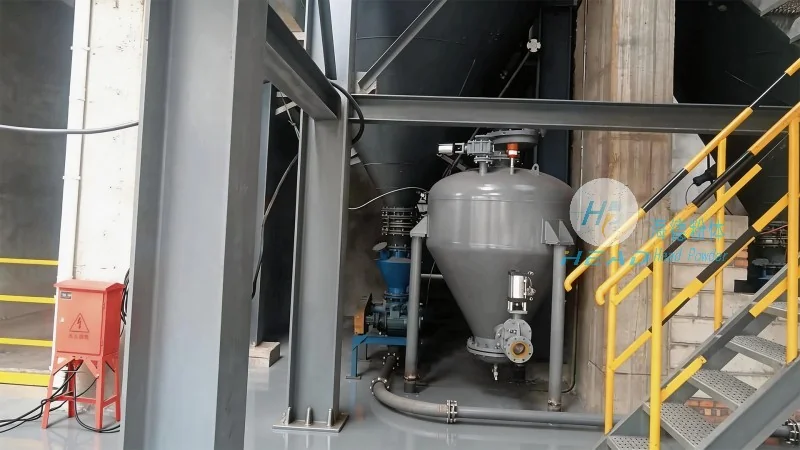
Dense-Phase vs. Dilute-Phase Conveying
For titanium ore powder, the choice between dense-phase and dilute-phase conveying is a critical decision based on operational requirements. Dense-phase conveying involves transporting the powder in a more concentrated form with lower air velocities, which reduces particle degradation and clogging risks. This mode is ideal for sensitive materials or long-distance transport. Dilute-phase conveying, conversely, uses higher air velocities and a more dispersed powder-air mixture, offering higher energy efficiency for shorter distances or less sensitive materials. The system's design must account for these dynamics to ensure optimal performance and material integrity.
About HeadPowder Engineering
HeadPowder Engineering, based in Shandong, China, is a reputable company specializing in the engineering and supply of pneumatic conveying systems for various industrial applications, including the titanium ore processing sector. With years of experience in the field, the company has developed a deep understanding of the unique challenges associated with handling fine powders like titanium ore, and has tailored its systems to meet the specific needs of clients. The company's commitment to quality, efficiency, and safety is reflected in its design and manufacturing processes, ensuring that its pneumatic conveying systems are reliable, durable, and compliant with international standards. By leveraging advanced technology and a customer-centric approach, HeadPowder Engineering provides tailored solutions that enhance operational efficiency and reduce costs for its clients in the titanium ore industry.