

Operation Process and Working Principle of Calcined Ash Pneumatic Conveying System
Shandong HeadPowder Engineering Co., Ltd., a professional manufacturer in the field of powder handling and conveying equipment, specializes in providing efficient solutions for calcined ash transportation. The calcined ash pneumatic conveying system is a key component in industrial processes that require the safe and reliable transfer of calcined ash from one location to another. This system is designed to handle the unique characteristics of calcined ash, such as its density, particle size, and potential moisture content, ensuring optimal performance and minimal operational issues.
Key Components and Their Functions
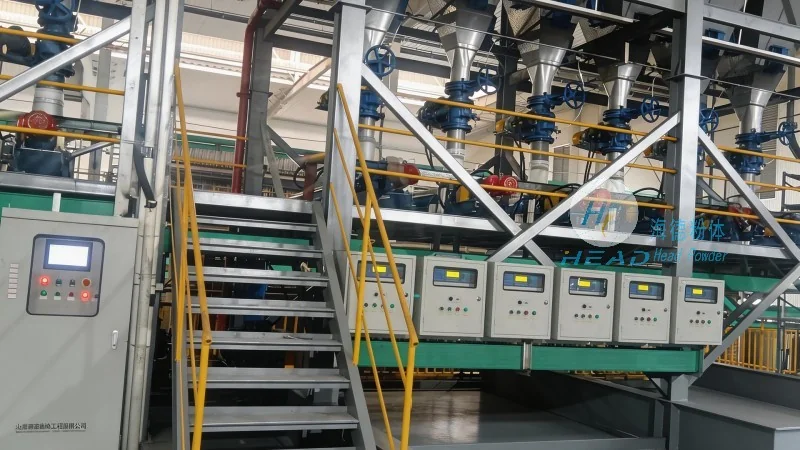
The calcined ash pneumatic conveying system typically consists of several critical components that work in tandem to achieve effective material transport. The main components include the material feeder, which is responsible for feeding the calcined ash into the system at a controlled rate. The feeder may be a rotary valve or a screw feeder, depending on the specific requirements of the application. Next, the conveying pipeline is where the material is transported under pressure or suction. The pipeline is usually made of high-quality steel or plastic, with appropriate fittings and elbows to ensure smooth flow. A critical component is the air compressor or vacuum pump, which provides the necessary air pressure or suction to move the material through the pipeline. The system may also include a separation and cleaning unit, such as a cyclone separator or a bag filter, to remove any dust or debris from the air before it is discharged.
Operation Process of the System
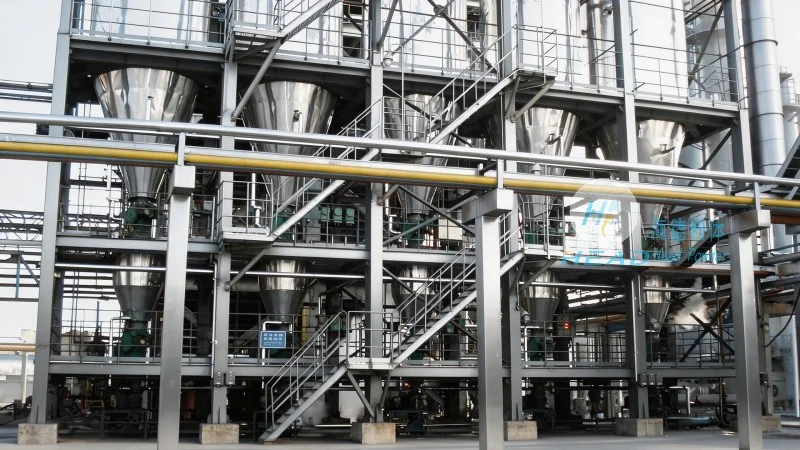
The operation of the calcined ash pneumatic conveying system follows a systematic process that ensures consistent and efficient material transfer. The process begins with the feeding of calcined ash into the material feeder. The feeder then delivers the material to the conveying pipeline at a controlled rate, preventing overloading and ensuring a steady flow. Simultaneously, the air compressor or vacuum pump generates the required air pressure or suction, which propels the calcined ash particles through the pipeline. As the material travels through the pipeline, it is carried by the air stream, which helps to maintain the particle suspension and prevent blockages. The conveying system is designed to handle different distances and heights, with the ability to adjust the air pressure or suction to match the specific requirements of the application. Upon reaching the destination, the calcined ash is discharged into a storage bin or processing unit. The system may also include a control panel that allows operators to monitor and adjust the parameters, such as the feeding rate and air pressure, to optimize performance.
Working Principle of the Pneumatic Conveying System
The working principle of the calcined ash pneumatic conveying system is based on the fundamental concept of transporting solid particles using a gas stream. There are two main types of pneumatic conveying systems: positive pressure and negative pressure. In a positive pressure system, the air compressor supplies compressed air to the conveying pipeline, creating a pressure higher than the ambient air pressure. This pressure pushes the calcined ash particles through the pipeline. In a negative pressure system, a vacuum pump creates a low-pressure environment in the pipeline, which draws the material from the source and transports it to the destination. The choice between positive and negative pressure depends on factors such as the distance to be covered, the material characteristics, and the environmental considerations. The system operates by creating a flow of air that suspends the calcined ash particles, allowing them to be carried along the pipeline. The air velocity must be sufficient to keep the particles in suspension and prevent them from settling or clogging the pipeline. The separation unit at the end of the system removes any remaining particles from the air stream, ensuring that the air is clean before it is discharged. This process is crucial for maintaining the efficiency of the system and preventing damage to downstream equipment.
Advantages and Applications
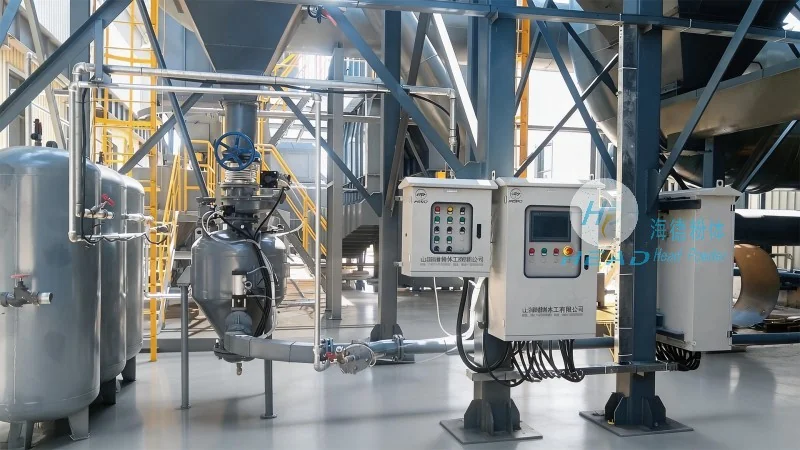
The calcined ash pneumatic conveying system offers several advantages over traditional methods of material transport, such as belt conveyors or bucket elevators. One of the primary advantages is the ability to transport calcined ash in a closed system, which helps to prevent dust emissions and maintain a clean working environment. This is particularly important in industrial settings where dust control is a regulatory requirement. Another advantage is the flexibility of the system, which can be easily adjusted to handle different material volumes and distances. The system is also relatively compact and can be installed in confined spaces, making it suitable for various industrial applications. The calcined ash pneumatic conveying system is widely used in industries such as power generation, cement production, and chemical processing, where calcined ash is a byproduct that needs to be transported to storage or processing facilities. The system is also suitable for transporting other fine powders, such as fly ash or silica, making it a versatile solution for powder handling applications.