

Operation Process and Working Principle of Air-Driven Light Aggregate Material Handling
Light aggregate materials, including expanded clay, vermiculite, and other lightweight construction aggregates, play a vital role in modern construction and industrial processes. These materials are characterized by their low density and high porosity, making them ideal for applications such as lightweight concrete, insulation, and soil amendment. However, the efficient handling and transportation of these materials present unique challenges due to their light weight and tendency to settle or clog traditional mechanical systems. Air-driven (pneumatic) conveying systems have emerged as a preferred solution, offering a flexible and reliable method to transport light aggregates over short to medium distances. The technology leverages compressed air or vacuum to move material particles through pipelines, providing advantages like dust containment, reduced maintenance, and the ability to handle a wide range of particle sizes and shapes. For industries relying on consistent material flow, air-driven conveying systems are essential for maintaining production efficiency and product quality.
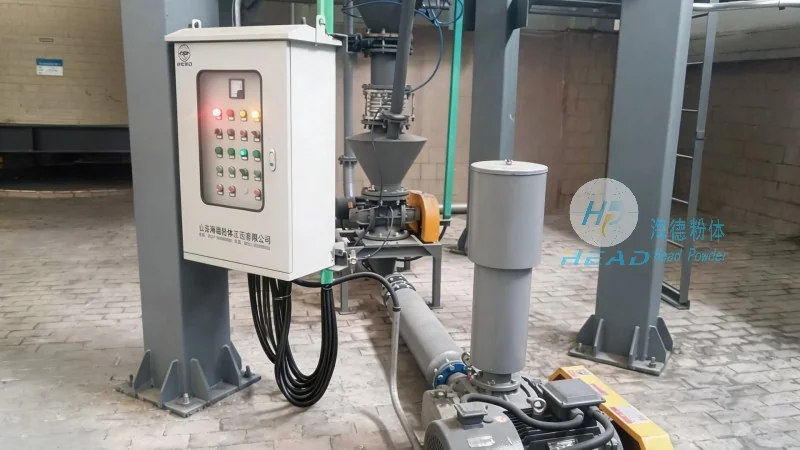
Working Principle of Air-Driven Material Conveying
The fundamental working principle of an air-driven material conveying system revolves around the transfer of material particles using compressed air or a vacuum. The system typically comprises several key components: a hopper for material storage, a feeder to control the flow rate, a conveying line (pipeline) to transport the material, and a receiver to collect the material at the destination. The process begins with the material being fed from the hopper into the conveying line via the feeder. The feeder ensures a consistent material level and flow rate, preventing overloading or underloading of the system. Compressed air is then introduced into the conveying line, creating a pressure differential that propels the material particles forward. In a positive pressure system, air is blown into the pipeline, pushing the material through. In a negative pressure (vacuum) system, air is drawn out of the pipeline, pulling the material along. The air and material mixture travels through the pipeline, with the air providing the necessary force to overcome friction and gravity. At the receiving end, the material is separated from the air using a cyclone separator or a filter. The material is collected in the receiver, while the air is discharged, completing the cycle. The choice between positive and negative pressure systems depends on factors such as material characteristics, distance, and environmental considerations.
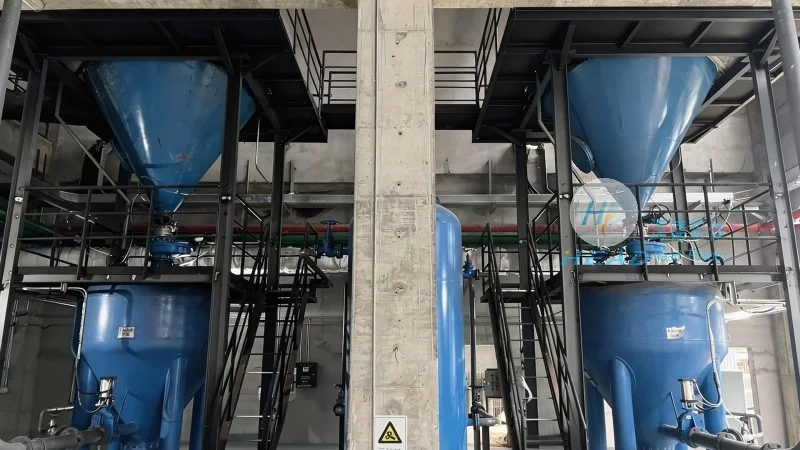
Operation Process of Air-Driven Light Aggregate Conveying
The operation process of an air-driven light aggregate conveying system involves a series of coordinated steps to ensure continuous and efficient material transport. The process starts with system preparation, which includes checking the hopper level, verifying the feeder settings, and activating the compressed air supply. Once the system is primed, the feeder begins to regulate the material flow, and the air pressure maintains the conveying velocity. The material travels through the pipeline, with sensors monitoring flow rates, pressure, and temperature to detect any anomalies. At the destination, the material is discharged into the receiver, and the air is filtered and released. The system operates continuously as long as material is available in the hopper, with the flow rate adjusted based on production demands. Regular maintenance is critical to sustaining system performance. This includes cleaning the cyclone separator to prevent clogging, checking the air filter for blockages, and inspecting the feeder mechanism for wear. By adhering to a maintenance schedule, operators can minimize downtime and ensure the system runs at optimal efficiency. The operation process is designed to be straightforward yet robust, allowing for quick start-up and easy troubleshooting when issues arise.
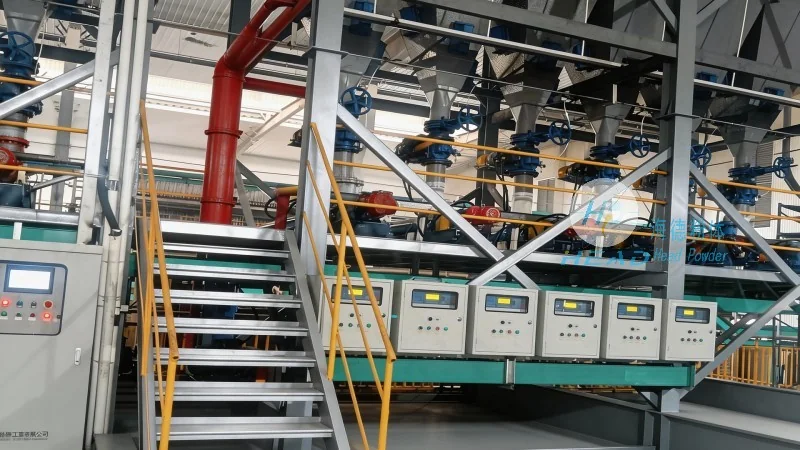
About Shandong HeadPowder Engineering Co., Ltd.
Shandong HeadPowder Engineering Co., Ltd., commonly referred to as headpowder, is a leading provider of advanced material handling solutions, specializing in air-driven conveying systems for light aggregate applications. HeadPowder combines decades of engineering expertise with innovative technology to deliver customized systems that meet the unique requirements of clients in the construction, industrial, and agricultural sectors. The company’s core focus is on optimizing material flow, reducing product degradation, and enhancing overall operational efficiency. HeadPowder’s team of experienced engineers designs and manufactures systems tailored to specific material characteristics, such as particle size, density, and moisture content. The company’s facilities, located in Shandong, China, leverage local resources and industry knowledge to deliver high-quality products and services. HeadPowder offers comprehensive support, including system installation, commissioning, and ongoing maintenance, ensuring clients achieve their production goals while maintaining cost-effective and sustainable operations. By prioritizing client needs and technological advancement, headpowder continues to be a trusted partner in the material handling industry.