

Automatic Blending and Metering Pneumatic Conveying: Introduction to Structure and Principle
HeadPowder, formally known as Shandong HeadPowder Engineering Co., Ltd., is a professional manufacturer based in Shandong, China. The company specializes in the research, development, and production of advanced pneumatic conveying systems, particularly those designed for automatic blending and metering applications. With a strong focus on precision and efficiency, HeadPowder's solutions are tailored to meet the demands of various industries, including food, pharmaceuticals, chemicals, and more. The core technology behind these systems is the integration of precise metering mechanisms with reliable pneumatic conveying, ensuring accurate material handling and consistent product quality.
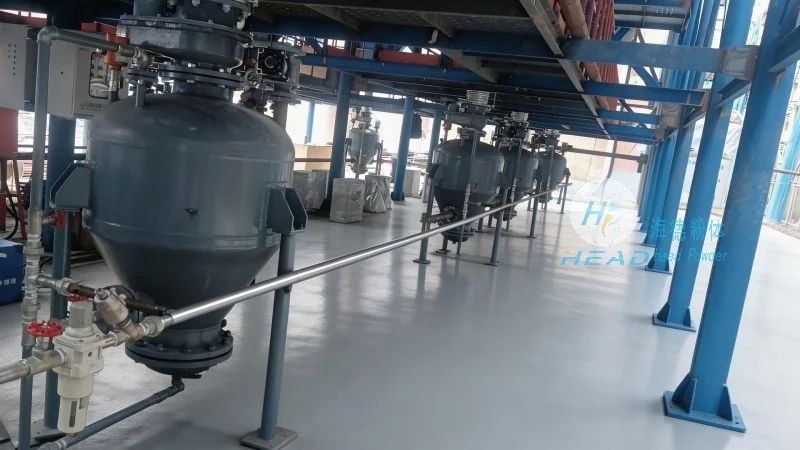
Understanding Pneumatic Conveying Systems
Pneumatic conveying systems utilize air or other gases to transport bulk materials from one location to another. In the context of automatic blending and metering, these systems are engineered to handle a wide range of materials, from fine powders to granules, with minimal product degradation. The system typically consists of several key components that work in tandem to achieve optimal performance. These components include a material feeder, a metering device, a conveying line, a gas source, and a control unit. Each component plays a critical role in the overall operation, contributing to the system's efficiency and accuracy.
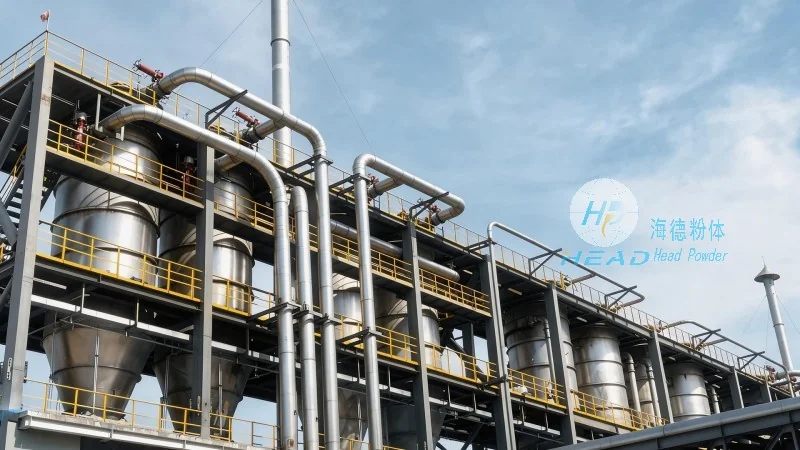
Structural Components and Their Functions
The structural design of an automatic blending and metering pneumatic conveying system is carefully engineered to ensure durability and reliability. The material feeder is responsible for delivering the bulk material to the system at a controlled rate. This component may include a hopper or a rotary valve, depending on the material's characteristics and the required flow rate. The metering device, often a rotary valve or a gravimetric feeder, ensures that the material is measured with high precision, typically to within ±0.5% of the target weight. This accuracy is crucial for maintaining consistent product composition in blending applications. The conveying line, usually made of stainless steel or other corrosion-resistant materials, transports the material and air mixture through the system. The gas source, such as a blower or a compressor, provides the necessary pressure and airflow to move the material. Finally, the control unit monitors and adjusts the system parameters in real-time, ensuring that the blending and metering processes run smoothly and efficiently.
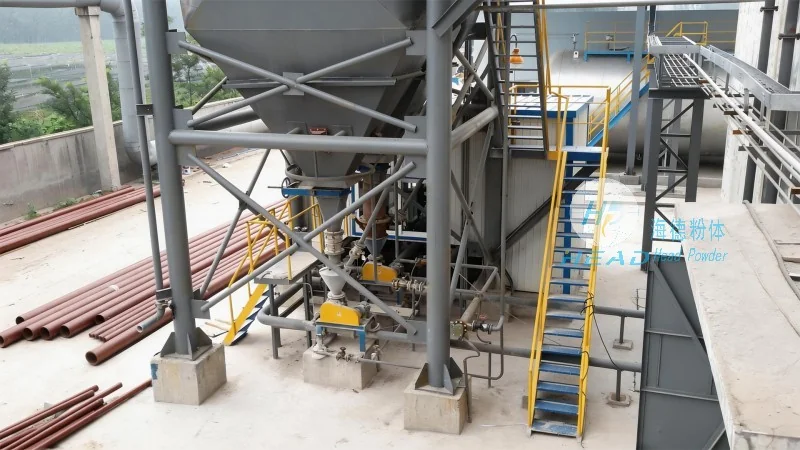
Principle of Operation
The operation of an automatic blending and metering pneumatic conveying system follows a systematic process. First, the bulk material is fed into the system from a storage hopper. The material feeder then regulates the flow rate, which is controlled by the metering device. The metering device measures the material volume or weight and sends a signal to the control unit. The control unit adjusts the gas flow rate to maintain the desired conveying velocity. As the material is conveyed through the pipeline, it mixes with the air, forming a suspension that is transported to the destination point. At the end of the line, the material is separated from the air, typically through a cyclone or a filter, and collected in a receiving container. The entire process is automated, with the control unit continuously monitoring and adjusting parameters to ensure consistent performance. This automation reduces human error, increases production efficiency, and enhances product quality.
Advantages of Automatic Blending and Metering Pneumatic Conveying
Implementing an automatic blending and metering pneumatic conveying system offers several significant advantages for industrial applications. Firstly, it provides high accuracy in material measurement, which is essential for maintaining consistent product composition in blending processes. This precision helps in meeting strict quality standards and regulatory requirements. Secondly, the system enhances operational efficiency by automating the material handling process, reducing labor costs and increasing throughput. Thirdly, the use of pneumatic conveying minimizes product contamination and degradation, as the material is transported in a closed system, away from external factors. Additionally, the system is flexible and can be easily scaled to accommodate varying production volumes. The modular design allows for easy integration with existing production lines, making it a cost-effective solution for modern manufacturing environments.
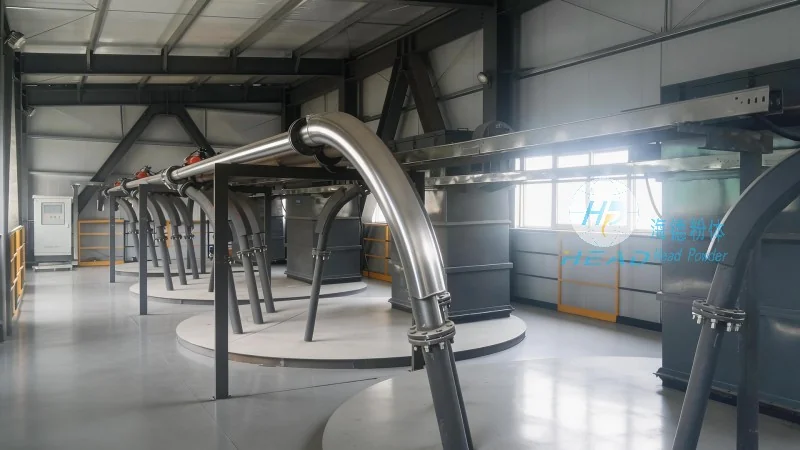
Applications and Industry Impact
Automatic blending and metering pneumatic conveying systems are widely used across various industries due to their versatility and efficiency. In the food industry, these systems are employed to blend ingredients for beverages, snacks, and other food products, ensuring uniform flavor and texture. In the pharmaceutical industry, they are used to handle active pharmaceutical ingredients (APIs) and excipients with high precision, maintaining compliance with GMP (Good Manufacturing Practice) standards. In the chemical industry, they facilitate the blending of raw materials for manufacturing processes, improving product consistency and reducing waste. The ability to handle a wide range of materials and the high level of automation make these systems indispensable in modern industrial settings. By streamlining material handling and blending processes, these systems contribute to improved productivity, reduced costs, and enhanced product quality.