

Introduction to BaCO3 Pneumatic Conveying: Structure and Working Principle
For industrial applications involving the transport of barium carbonate (BaCO3), pneumatic conveying systems offer an efficient and reliable method. This article provides an overview of the pneumatic conveying process for BaCO3, detailing its structural components and the underlying principles that enable effective material handling. The discussion will focus on the technical aspects of the system, including how it operates and the key elements that contribute to its functionality.
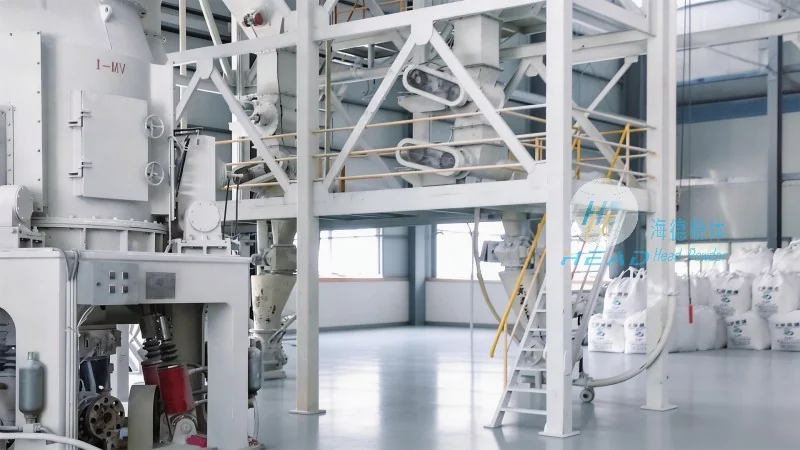
Key Components of a BaCO3 Pneumatic Conveying System
A typical BaCO3 pneumatic conveying system comprises several critical components designed to handle the material from source to destination. The primary elements include the material feeding unit, the conveying pipeline, the air supply system, and the separation and discharge equipment. Each component plays a vital role in ensuring the smooth and efficient transport of BaCO3 particles.
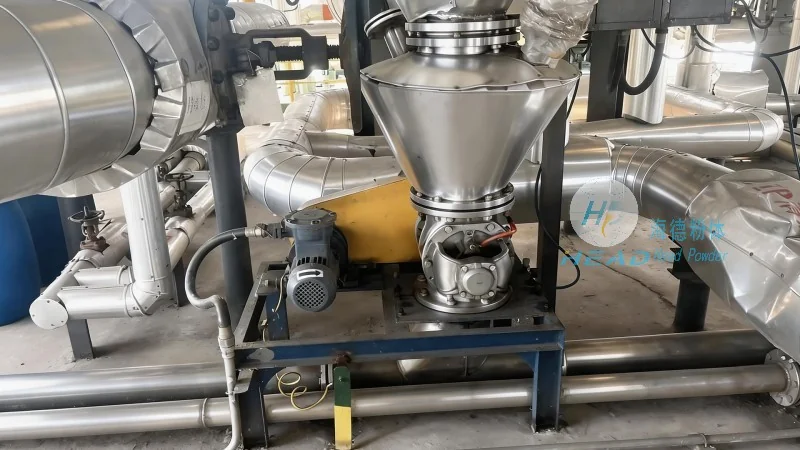
The material feeding unit is responsible for introducing BaCO3 into the system. This may involve a hopper or a feeder that controls the flow rate of the material, preventing blockages and ensuring a consistent feed. For BaCO3, which can vary in particle size and density, a properly designed feeder is essential to maintain stable operation. The feeding mechanism may include a rotary valve or a screw feeder, depending on the system requirements and the characteristics of the material.
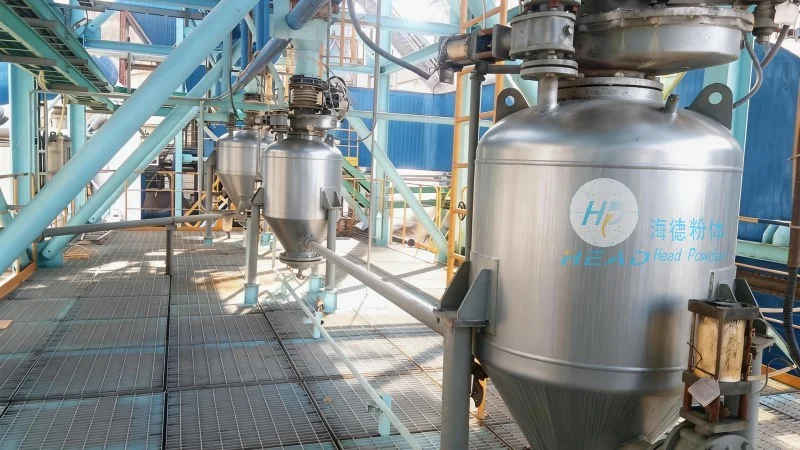
The conveying pipeline is the core of the system, responsible for transporting the BaCO3 particles along with the air. The pipeline is typically made of materials such as stainless steel or plastic, chosen for their resistance to corrosion and wear, which are important considerations when handling chemical powders like BaCO3. The design of the pipeline, including the diameter and length, affects the system's performance, as it influences the pressure drop and the velocity of the material-air mixture.
The air supply system provides the necessary airflow to move the BaCO3 particles through the pipeline. This can be achieved through either positive pressure (pressurized) or negative pressure (suction) systems. Positive pressure systems use a blower or compressor to force air through the pipeline, while negative pressure systems use a vacuum pump to create a suction effect. The choice between these systems depends on factors such as the distance to be covered, the material's properties, and the overall system layout. For BaCO3, which is often transported over moderate distances, both positive and negative pressure systems can be effective, but the selection is typically based on cost, energy efficiency, and operational considerations.
The separation and discharge equipment is crucial for recovering the BaCO3 from the air stream and delivering it to the final destination. This component may include a cyclone separator, a bag filter, or a combination of both. The cyclone separator uses centrifugal force to separate the particles from the air, while the bag filter captures fine particles that may escape the cyclone. The design of the separation system must account for the particle size distribution of BaCO3, as larger particles are more easily separated, while fine particles may require additional filtration steps. The discharge mechanism, such as a rotary valve or a gate valve, controls the release of the material from the system, ensuring that it is delivered to the target container without spillage or contamination.
Working Principle of BaCO3 Pneumatic Conveying
The fundamental principle behind pneumatic conveying is the use of air to suspend and transport solid particles. In the case of BaCO3, the material is introduced into the conveying pipeline along with a stream of air. The air velocity is maintained at a level sufficient to keep the BaCO3 particles in suspension, preventing them from settling or clogging the pipeline. The velocity of the air stream is typically higher than the terminal velocity of the BaCO3 particles, which is the speed at which the particles would fall due to gravity if not supported by the air flow.
When the BaCO3 particles are suspended in the air stream, they are carried along the pipeline to the destination. The air stream may be directed through a series of bends or changes in direction, but the design of the pipeline must ensure that the velocity remains high enough to maintain suspension. The pressure drop along the pipeline is a key factor in the system's performance, as it determines the energy required to maintain the airflow and transport the material. The pressure drop is influenced by the length of the pipeline, the diameter of the pipe, the material's properties (such as particle size and density), and the air velocity.