

Introduction to Rare Earth Pneumatic Conveying Systems: Structure and Working Principles
HeadPowder, a leading engineering company based in Shandong, China, specializes in the design, manufacturing, and implementation of advanced pneumatic conveying systems tailored for the handling of rare earth materials. This article provides a comprehensive overview of the rare earth pneumatic conveying system, detailing its structural components and operational principles to help industry professionals understand its functionality and benefits.
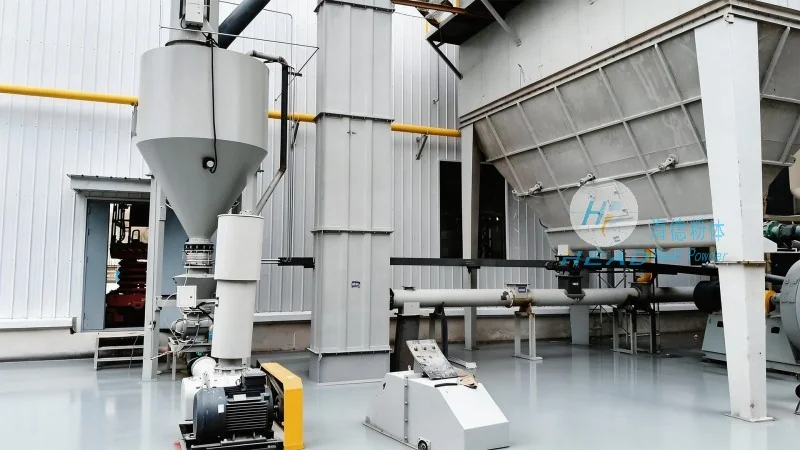
At the core of any pneumatic conveying system is the ability to transport bulk materials like rare earth powders or granules through a pipeline using compressed air or other gas streams. The system's design is critical to ensure efficient, reliable, and cost-effective material transfer, especially for materials that are sensitive to moisture, contamination, or degradation during handling.
Key components of a typical rare earth pneumatic conveying system include the material feed hopper, which stores and meters the rare earth material; the air compressor or blower, which generates the necessary airflow; the conveying line, which transports the material; and the receiving hopper or discharge equipment. Each component plays a vital role in the system's overall performance and efficiency.
The material feed hopper is designed to handle the specific characteristics of rare earth materials, such as their density, flowability, and potential for dust generation. It often includes features like a level sensor and a discharge valve to control the flow rate and prevent overfilling. The hopper may also be equipped with a pre-filter or a dust collection system to minimize airborne particles and ensure a clean handling environment.
The air compressor or blower is the power source of the system, providing the pressure and airflow required to move the material through the pipeline. For rare earth materials, which may be abrasive or have specific particle size distributions, the choice of compressor type (e.g., rotary lobe, centrifugal, or positive displacement) is crucial. Proper selection ensures that the system operates efficiently without causing excessive wear or energy consumption.
The conveying line, typically made of stainless steel or other corrosion-resistant materials, is designed to withstand the chemical and physical properties of rare earth materials. The pipeline may include bends, elbows, or expansion joints to accommodate changes in direction or elevation, while maintaining minimal pressure drop and material loss. The line is also equipped with pressure sensors and flow meters to monitor system performance and detect any blockages or leaks.
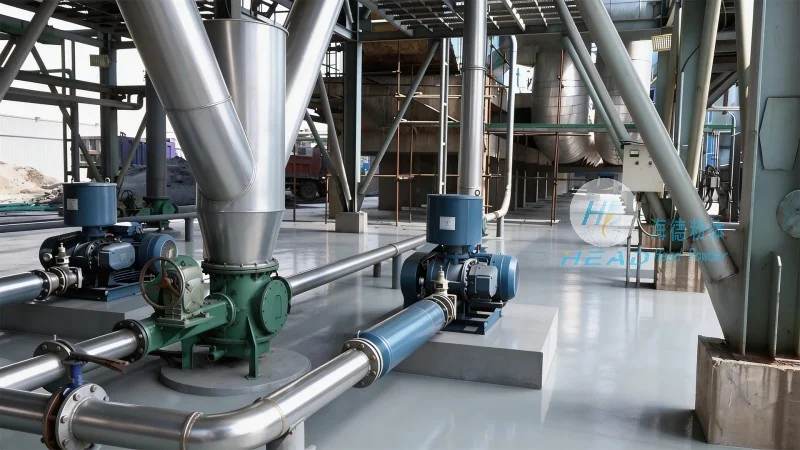
The receiving hopper or discharge equipment is responsible for collecting the material at the end of the conveying line. It may include a discharge valve, a level indicator, or a dust collection system to ensure safe and efficient material unloading. For rare earth materials, which are often used in high-purity applications, the receiving hopper is typically designed to minimize contamination and maintain the material's quality.
In addition to the main components, a rare earth pneumatic conveying system may include auxiliary equipment such as a filter system, a vacuum pump, or a material dryer. These components help to maintain the purity of the material, control dust emissions, and ensure the system operates within safe and regulatory parameters.
The working principle of a pneumatic conveying system involves the creation of a gas-solid mixture within the pipeline. The compressed air or gas is introduced into the material feed hopper, where it mixes with the rare earth material, forming a slurry or suspension. This mixture is then propelled through the conveying line by the pressure differential created by the compressor. The material is carried along the pipeline by the gas stream, with the velocity and pressure of the gas determining the system's capacity and efficiency.
There are two primary types of pneumatic conveying systems used for rare earth materials: pressure and vacuum systems. Pressure systems use compressed air to push the material through the pipeline, while vacuum systems use a vacuum pump to pull the material from the feed hopper. The choice between these systems depends on factors such as the distance to be conveyed, the material's properties, and the desired system efficiency.
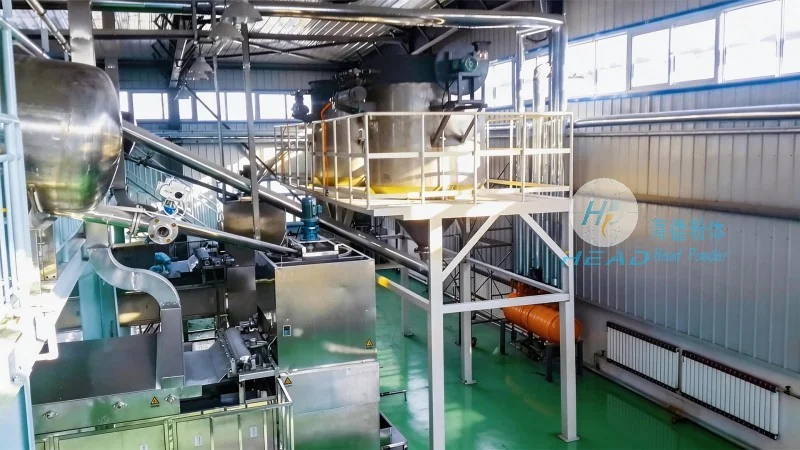
Pressure systems are generally more suitable for short to medium distances and high material flow rates. They are characterized by higher pressure differentials and can handle abrasive or high-density materials more effectively. Vacuum systems, on the other hand, are ideal for longer distances or when the material needs to be transported from a lower elevation to a higher one. They are often used in applications where the material is sensitive to pressure or where the system needs to operate in a closed loop.
When designing a rare earth pneumatic conveying system, several factors must be considered to ensure optimal performance. These include the material's particle size distribution, density, and flowability; the required conveying distance and elevation change; the desired material flow rate and system capacity; and the environmental and safety requirements. HeadPowder engineers use advanced computational fluid dynamics (CFD) and material handling expertise to design systems that meet these specific requirements and deliver reliable, efficient operation.
HeadPowder's expertise in rare earth pneumatic conveying systems extends beyond system design to include installation, commissioning, and maintenance services. The company's team of experienced engineers and technicians ensures that each system is installed correctly and operates as intended, minimizing downtime and maximizing productivity. With a focus on quality and customer satisfaction, HeadPowder has become a trusted partner for businesses in the rare earth industry, providing reliable solutions for material handling challenges.
As the demand for rare earth materials continues to grow in various industries, including electronics, renewable energy, and automotive, the importance of efficient and reliable material handling systems cannot be overstated. HeadPowder's rare earth pneumatic conveying systems offer a cost-effective and environmentally friendly solution for transporting these critical materials, ensuring that they are handled with the precision and care required for high-purity applications.
By understanding the structure and working principles of a rare earth pneumatic conveying system, industry professionals can make informed decisions about the most suitable equipment for their specific needs. Whether for short-distance transport or long-distance conveying, HeadPowder's systems are designed to deliver the performance and reliability required to meet the demands of today's rare earth processing facilities.