

Pneumatic Conveying of Positive and Negative Electrode Materials: Exploring Design Principles
For manufacturers and engineers in the battery industry, the efficient handling of positive and negative electrode materials is a critical aspect of production. Pneumatic conveying systems have emerged as a key technology for transporting these materials with precision and reliability. This article, brought to you by Shandong HeadPowder Engineering Co., Ltd. (commonly known as headpowder), delves into the concept of pneumatic conveying for positive and negative electrode materials and outlines the fundamental design principles that underpin such systems.
Understanding Pneumatic Conveying of Electrode Materials
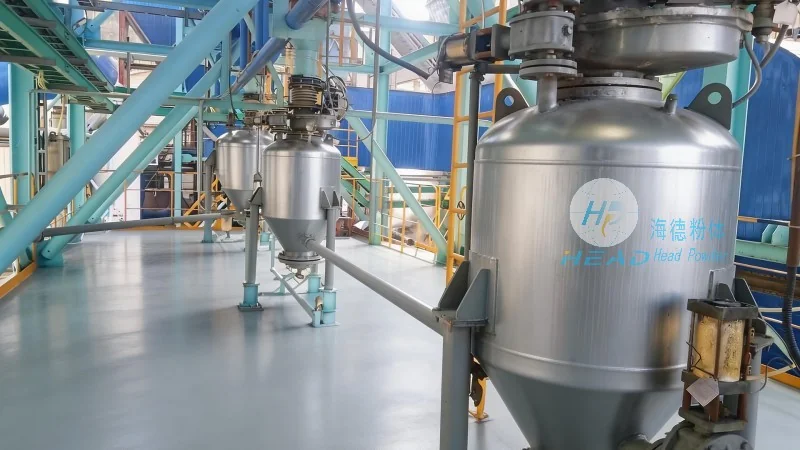
Pneumatic conveying involves the use of air or other gases to transport bulk materials through a pipeline system. In the context of battery manufacturing, this technology is employed to move powders of positive and negative electrode active materials from storage silos or processing units to the mixing and coating stages. The process relies on the creation of a pressure differential or the use of vacuum to move the material through the conveying line, ensuring minimal product degradation and consistent flow rates.
Key Components of a Pneumatic Conveying System
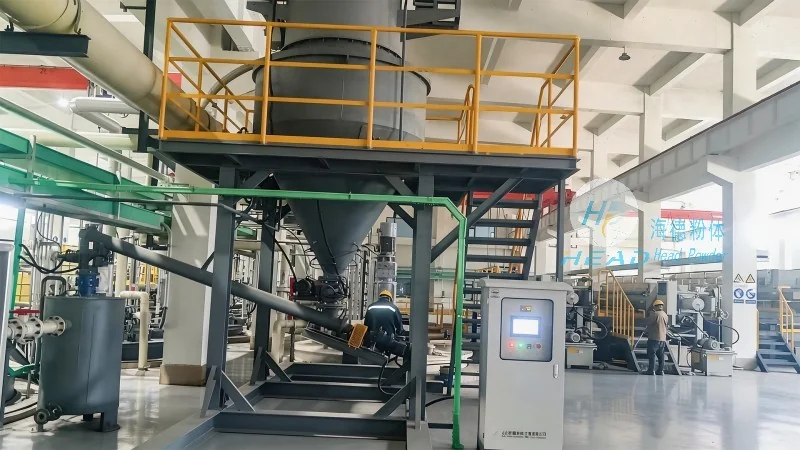
At the core of any pneumatic conveying system are several essential components that work in tandem to achieve efficient material transport. These include the material feed hopper, which holds the electrode powder and regulates its flow into the system; the air compressor or vacuum pump, which provides the necessary pressure or suction to move the material; the conveying line, typically made of stainless steel or other corrosion-resistant materials to prevent contamination; and the control valves and sensors that monitor and adjust the system's performance in real-time.
Design Principles for Optimal Performance
The design of a pneumatic conveying system for electrode materials must consider several factors to ensure maximum efficiency, reliability, and safety. One of the primary design principles is the selection of the appropriate conveying method—either pressure or vacuum—based on the material characteristics, such as particle size, density, and moisture content. Pressure systems are often used for short-distance conveying, while vacuum systems are suitable for longer distances or when the material needs to be transported from multiple sources.
Another critical design principle is the sizing of the conveying line and the air velocity. The line diameter and air velocity must be optimized to prevent material settling or blockages, which can lead to system inefficiencies or equipment damage. Engineers typically use empirical formulas and material testing to determine the optimal line size and air velocity for a given application.
Material Handling Considerations
Electrode materials, particularly those used in lithium-ion batteries, are often sensitive to moisture and contamination. Therefore, the design of the pneumatic conveying system must incorporate features to maintain material integrity. This includes the use of sealed hoppers and conveying lines to prevent exposure to air, as well as the incorporation of filters and drying systems to remove moisture and particulate matter from the air stream.
System Integration and Scalability
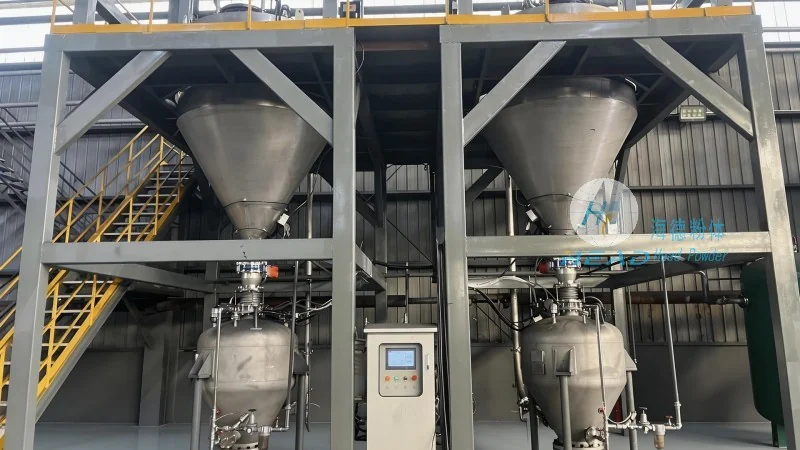
Pneumatic conveying systems are often integrated into larger battery production lines, requiring seamless coordination with other equipment such as mixers, coating machines, and quality control units. The design must consider the overall production flow and the ability to scale the system as production volumes increase. This involves designing modular components that can be easily expanded or reconfigured to accommodate changes in production needs.
Conclusion
Pneumatic conveying of positive and negative electrode materials is a sophisticated technology that plays a vital role in modern battery manufacturing. By adhering to the design principles outlined above, manufacturers can ensure the efficient, safe, and reliable transport of these critical materials. As the battery industry continues to grow, the importance of well-designed pneumatic conveying systems will only increase, making them an essential component of high-performance battery production.