

Principle and Working Scene Characteristics of Urea Powder Pneumatic Conveying Systems
Urea, a vital nitrogen fertilizer, plays a crucial role in modern agriculture and industrial chemical processes. The efficient and reliable transportation of urea powder is essential for optimizing production workflows, maintaining product integrity, and ensuring operational safety. This article delves into the fundamental principles of urea powder pneumatic conveying systems and examines their distinct working scene characteristics, providing insights into how these technologies enhance material handling in various industrial settings.
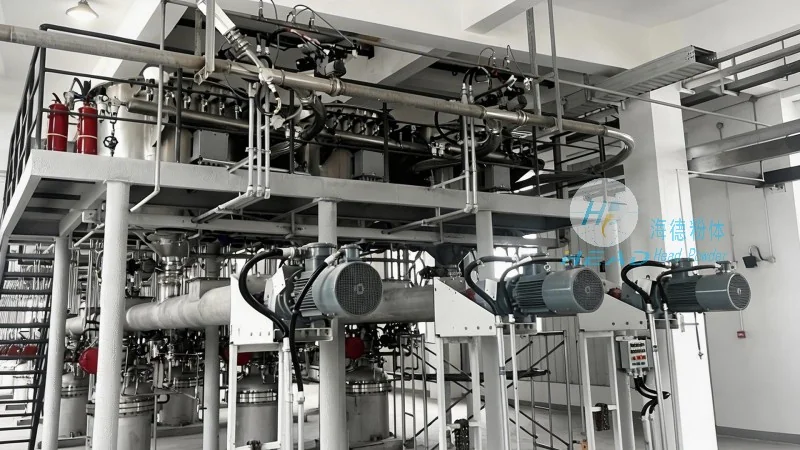
Introduction to Urea Powder Pneumatic Conveying Systems
Urea powder pneumatic conveying systems represent advanced industrial solutions designed to transport fine urea particles from storage silos or production units to processing, packaging, or distribution areas. Unlike traditional mechanical conveyors, these systems utilize compressed air or gas streams to move the powder through pipelines, eliminating the need for moving parts and reducing maintenance requirements. The technology is particularly well-suited for handling dusty, fine materials like urea, which can be challenging to transport using conventional methods due to issues such as caking, agglomeration, or dust dispersion.
HeadPowder: A Specialized Manufacturer of Pneumatic Conveying Solutions
Shandong HeadPowder Engineering Co., Ltd., commonly referred to as HeadPowder, is a professional enterprise dedicated to the design, development, and installation of pneumatic conveying systems. With a strong emphasis on innovation and customer-centric approaches, HeadPowder has established itself as a trusted provider in the fertilizer and chemical industries. The company's expertise lies in tailoring systems to meet specific operational demands, ensuring optimal performance, energy efficiency, and durability for diverse applications.
The Core Principle of Pneumatic Conveying for Urea Powder
The fundamental principle of urea powder pneumatic conveying systems is the use of air or gas to create a flow that suspends and transports the powder particles. There are two primary categories of pneumatic conveying: dilute-phase and dense-phase. Dilute-phase systems operate at higher air velocities, allowing the powder to be suspended in the air stream and conveyed through pipelines. Dense-phase systems, conversely, employ lower air velocities and higher pressure to push the powder in a plug-like flow, which minimizes particle degradation and enhances system efficiency.
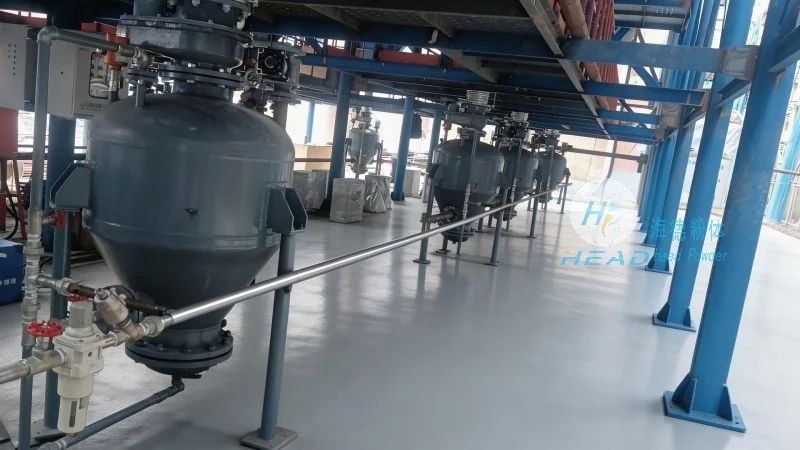
For urea powder applications, the choice between dilute-phase and dense-phase systems depends on factors such as the required transport distance, material characteristics, and system capacity. Dilute-phase systems are typically preferred for short to medium distances due to their lower energy consumption and simpler design. Dense-phase systems are more suitable for longer distances or when handling sensitive materials that require gentle transport to prevent agglomeration or damage during transit.
Working Scene Characteristics of Urea Powder Pneumatic Conveying Systems
The working scene characteristics of urea powder pneumatic conveying systems are defined by their adaptability to various industrial environments and operational requirements. These systems are commonly utilized in fertilizer manufacturing plants, where they facilitate the movement of urea from storage to granulation or packaging units. The systems are engineered to handle large volumes of urea powder efficiently, with minimal downtime and maintenance needs, thereby improving overall production throughput.
In agricultural contexts, urea is often transported from bulk storage facilities to farms or distribution centers. Pneumatic conveying systems enable the safe and hygienic transfer of the material, ensuring that the product remains free from contamination and maintains its quality throughout the process. The systems are also employed in industrial applications, such as in the production of urea-based chemicals, where precise control over the powder flow is critical for maintaining product consistency and quality.
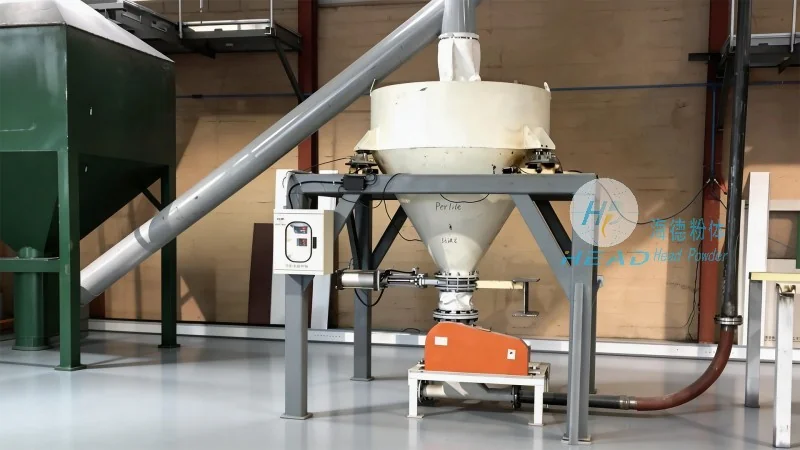
Key Advantages and Practical Applications
Urea powder pneumatic conveying systems offer several advantages over traditional transportation methods. These include reduced labor costs associated with manual handling, enhanced safety by eliminating exposure to dust and powders, and improved product quality through gentle transport that minimizes particle degradation. The systems are also highly flexible, allowing for easy integration with existing production lines and future expansion or modifications.
HeadPowder's systems are designed to address the specific challenges of urea powder transportation, such as dust control and material handling. By leveraging advanced engineering principles and high-quality materials, the company ensures that its systems are durable, efficient, and compliant with industry standards. The working scene characteristics of these systems make them suitable for a wide range of applications, from small-scale agricultural operations to large-scale industrial facilities, providing reliable and cost-effective solutions for urea powder handling.
Conclusion
Urea powder pneumatic conveying systems represent a sophisticated and efficient solution for the transportation of urea, a key component in modern agriculture and industry. With their ability to handle fine powders and adapt to various operational conditions, these systems are essential for optimizing production processes and ensuring product quality. HeadPowder, with its expertise and commitment to excellence, continues to provide cutting-edge pneumatic conveying solutions that meet the evolving needs of its clients, supporting the growth and sustainability of the fertilizer and chemical sectors.