

How to Prevent Pipeline Blockages in the Pneumatic Conveying System for High-Alumina Fly Ash? Key De
High-alumina fly ash, a byproduct of coal combustion, poses unique challenges when transported via pneumatic conveying systems. One of the most critical issues is pipeline blockage, which can lead to system downtime, increased maintenance costs, and reduced operational efficiency. To address this, understanding and implementing the right design parameters is essential. This article explores effective strategies to prevent blockages and highlights the key design parameters that ensure smooth and reliable high-alumina fly ash transport.
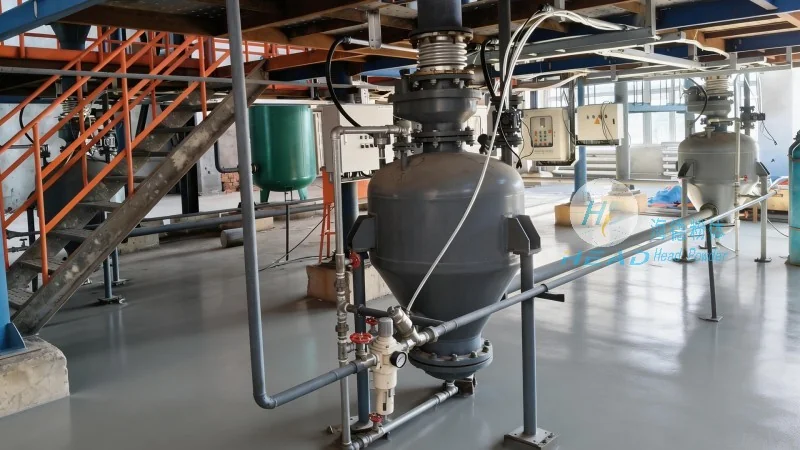
Shandong HeadPowder Engineering Co., Ltd., a leading provider in the field, specializes in the design and implementation of advanced pneumatic conveying solutions tailored to handle challenging materials like high-alumina fly ash. With years of experience, the company has developed robust systems that minimize the risk of blockages while optimizing material handling processes. The following sections delve into the critical design parameters that contribute to successful high-alumina fly ash transportation.
Understanding High-Alumina Fly Ash and Its Conveying Challenges
High-alumina fly ash, also known as FA, is characterized by its fine particle size and high moisture content, which can significantly affect the performance of pneumatic conveying systems. Unlike other bulk materials, its properties make it prone to agglomeration and caking, leading to blockages in pipelines. The key to preventing these issues lies in a well-designed system that considers the material's physical and chemical characteristics. Shandong HeadPowder Engineering Co., Ltd. recognizes these challenges and designs systems that are specifically optimized for high-alumina fly ash, ensuring efficient and safe transport.
Key Design Parameters for Preventing Pipeline Blockages
The success of a pneumatic conveying system for high-alumina fly ash hinges on several critical design parameters. These parameters are carefully selected to balance the material's properties with the system's operational capabilities, thereby minimizing the risk of blockages. The primary parameters include:
1. Air Velocity and Flow Rate
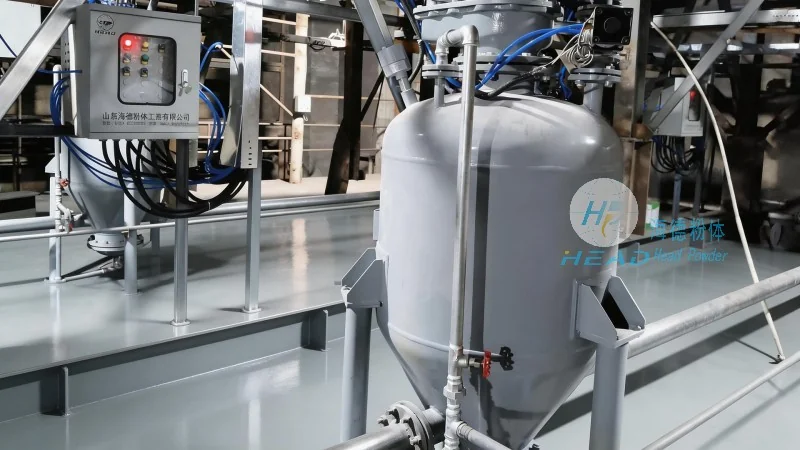
Optimal air velocity is a fundamental parameter in pneumatic conveying. For high-alumina fly ash, the air velocity must be sufficient to maintain the material in suspension while preventing excessive pressure drops that could lead to blockages. Shandong HeadPowder Engineering Co., Ltd. recommends maintaining an air velocity within the range of 20-30 m/s for most applications. This velocity ensures that the particles remain entrained by the air stream, reducing the likelihood of settling and agglomeration. The flow rate, which is directly related to the air velocity, must also be carefully controlled to match the material's bulk density and particle size distribution. A higher flow rate can help maintain consistent air-solid ratios, further reducing blockage risks.
2. Pipeline Diameter and Length
The diameter of the conveying pipeline is another critical factor. Smaller diameters increase the risk of blockages due to higher pressure drops and reduced particle suspension. Conversely, excessively large diameters can lead to higher energy consumption and increased system costs. Shandong HeadPowder Engineering Co., Ltd. typically recommends a pipeline diameter of 100-200 mm for high-alumina fly ash transport, depending on the material flow rate and system layout. The length of the pipeline also plays a role; longer pipelines may require additional air boosters or larger diameter sections to maintain adequate air velocity and prevent pressure buildup that could cause blockages.
3. Solids Loading Ratio (Solids-to-Air Ratio)
Solids loading ratio, or the ratio of material to air, is a key parameter that directly impacts system performance. For high-alumina fly ash, an optimal solids loading ratio is typically between 0.1 and 0.3. This ratio ensures that the material is conveyed efficiently without overloading the system, which can lead to blockages. Shandong HeadPowder Engineering Co., Ltd. uses advanced computational fluid dynamics (CFD) models to calculate the ideal solids loading ratio for each specific application, taking into account factors such as particle size, moisture content, and system pressure. Maintaining the correct ratio is crucial for preventing agglomeration and ensuring smooth material flow.
4. Inlet and Outlet Design
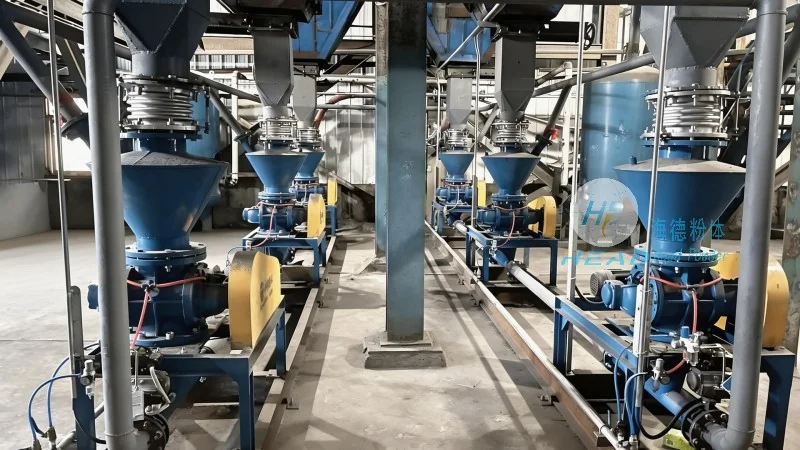
The design of the inlet and outlet components is vital in preventing blockages at the system's entry and exit points. The inlet should be designed to introduce the material into the air stream smoothly, avoiding turbulence that can cause particle separation and settlement. Shandong HeadPowder Engineering Co., Ltd. often uses venturi or rotary feeders for inlets, which provide consistent material feeding and maintain the air-solid mixture's stability. The outlet, on the other hand, must be designed to prevent material deposition and ensure a smooth transition to the receiving hopper or silo. Properly sized and angled outlets help maintain the material's flow and reduce the risk of blockages at the discharge point.
5. System Pressure and Boosting
System pressure is a critical parameter that influences the conveying capacity and the risk of blockages. High-pressure systems can handle larger quantities of material but may increase the risk of pressure surges that could cause blockages. Shandong HeadPowder Engineering Co., Ltd. often uses a combination of positive and negative pressure systems, with boosting stations strategically placed along the pipeline to maintain consistent pressure and velocity. The use of air boosters or vacuum pumps allows for flexible system design, ensuring that the pressure remains within optimal ranges to prevent blockages while meeting the required conveying distance and capacity.
6. Material Conditioning and Pre-treatment
Pre-treatment of high-alumina fly ash can significantly reduce the risk of blockages. Conditioning the material, such as drying or adding anti-caking agents, can improve its flowability and reduce agglomeration. Shandong HeadPowder Engineering Co., Ltd. may recommend pre-treatment steps based on the material's moisture content and particle size. For example, if the fly ash has high moisture content, a drying system may be integrated to reduce moisture levels, making the material less prone to caking. Additionally, the use of agitators or mixers in the feed hopper can help break up any pre-existing agglomerates, ensuring a consistent feed to the conveying system.
Implementation Strategies by Shandong HeadPowder Engineering Co., Ltd.
Shandong HeadPowder Engineering Co., Ltd. employs a systematic approach to design pneumatic conveying systems for high-alumina fly ash. The process begins with a thorough analysis of the material's properties, including particle size distribution, moisture content, and bulk density. Based on this analysis, the company selects the appropriate design parameters, such as air velocity, pipeline diameter, and solids loading ratio. The system is then modeled using CFD software to simulate the material flow and identify potential blockage points. This simulation allows for adjustments to be made before the system is manufactured and installed.
During installation, the company ensures that all components are properly aligned and maintained to prevent misalignment that could cause turbulence and blockages. Regular maintenance, including cleaning of the pipeline and checking for wear and tear, is also part of the service provided by Shandong HeadPowder Engineering Co., Ltd. to ensure the system operates efficiently and reliably over time.
Conclusion
Preventing pipeline blockages in pneumatic conveying systems for high-alumina fly ash requires a comprehensive understanding of the material's properties and the implementation of optimal design parameters. Shandong HeadPowder Engineering Co., Ltd. has established itself as a leader in this field, providing customized solutions that address the unique challenges of high-alumina fly ash transport. By focusing on key parameters such as air velocity, pipeline diameter, solids loading ratio, and system pressure, along with proper inlet and outlet design and material conditioning, the company ensures that its systems deliver reliable and efficient performance. For industries dealing with high-alumina fly ash, partnering with a specialized provider like Shandong HeadPowder Engineering Co., Ltd. is essential to minimize blockages and maximize operational efficiency.