

What is the Pneumatic Conveying of Blended Materials? What are the Design Principles?
For industries dealing with bulk materials, efficient and reliable material handling is crucial. Pneumatic conveying systems offer a solution for transporting blended materials, which are often a mix of different components to achieve specific properties. This technology involves using air or other gases to move powders, granules, or other particulate materials through a pipeline. The process is widely used in sectors such as food, pharmaceuticals, chemicals, and minerals, where maintaining product integrity and controlling flow are essential. Understanding the fundamentals of pneumatic conveying, especially for blended materials, is key to optimizing production processes and ensuring consistent quality.
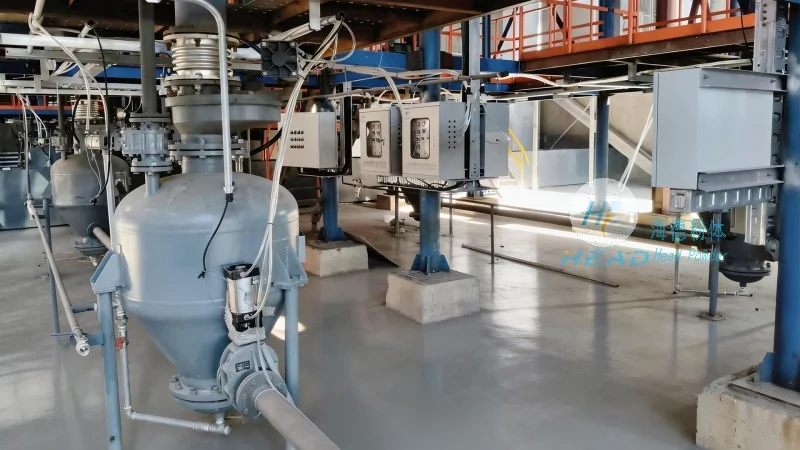
What is Pneumatic Conveying of Blended Materials?
Pneumatic conveying of blended materials refers to the method of transporting a mixture of different bulk materials using air or gas as the conveying medium. Unlike mechanical systems that rely on belts, screws, or buckets, pneumatic systems use pressure differentials or vacuum to move materials. The blended materials are typically fed into a hopper or feeder, where they are mixed with the conveying air. The mixture then travels through a pipeline to the destination point, such as a silo, storage tank, or processing unit. This approach allows for the simultaneous transport of multiple materials, ensuring that the blend ratio is maintained throughout the process. The key advantage of this method is its ability to handle a wide range of materials, including those that are dusty, abrasive, or sensitive to moisture.
Design Principles for Pneumatic Conveying Systems
The design of a pneumatic conveying system for blended materials involves several critical principles to ensure efficiency and reliability. First, the system must be able to handle the specific properties of the blended materials, such as particle size, density, and flowability. The choice of conveying type—whether it's pressure or vacuum—depends on the material characteristics and the distance to be covered. For example, pressure systems are suitable for short distances and high-volume transport, while vacuum systems are better for longer distances or when the material needs to be drawn from a source. The system design also considers the blend ratio, ensuring that the proportion of each component in the mixture is consistent. This is achieved through precise control of the feed rates and the air flow rate. Additionally, the system must incorporate features to prevent material segregation, which can occur if the different components have varying densities or flow characteristics. This may involve using mixers or agitators within the pipeline or hopper to maintain a uniform blend.
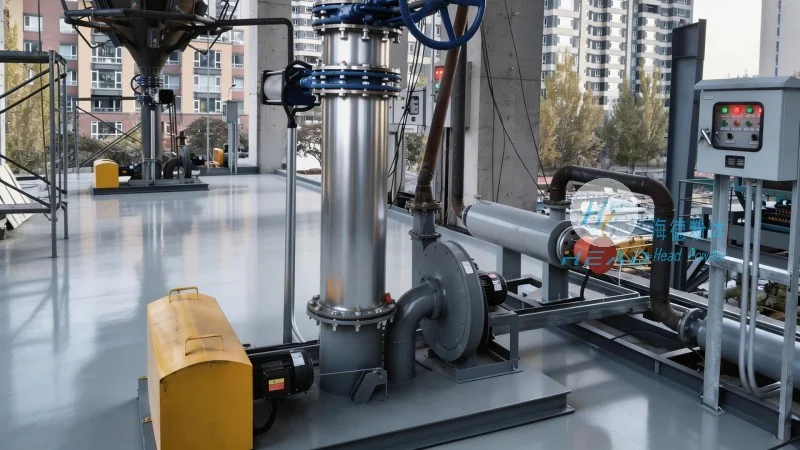
Components of a Pneumatic Conveying System
A typical pneumatic conveying system for blended materials consists of several key components. The primary components include a hopper or feeder for material storage and feeding, a blower or compressor to generate the conveying air, a pipeline system to transport the material, and a receiver or silo for storage. The hopper is designed to hold the blended materials and feed them into the system at a controlled rate. The blower or compressor provides the necessary pressure or vacuum to move the material through the pipeline. The pipeline is usually made of metal or plastic, depending on the material being conveyed, and is equipped with bends, valves, and filters to ensure smooth flow and prevent blockages. The receiver or silo collects the conveyed material and can be used for further processing or storage. Other components may include mixers, agitators, and control systems to regulate the flow and maintain the blend ratio. Each component plays a vital role in the overall performance of the system, and proper selection and integration are essential for optimal operation.
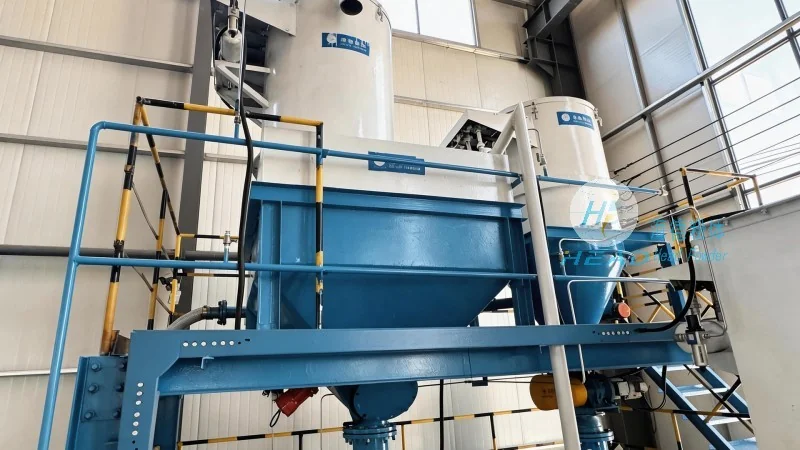
Advantages of Pneumatic Conveying for Blended Materials
Pneumatic conveying offers several advantages when handling blended materials. One of the main benefits is the ability to transport materials over long distances without the need for intermediate storage or handling. This reduces the risk of material segregation and contamination, which can occur with mechanical systems. The system is also flexible, allowing for changes in the blend ratio or material type without major modifications. Additionally, pneumatic conveying can handle a wide range of materials, including those that are difficult to transport mechanically, such as fine powders or abrasive particles. The process is also relatively clean and hygienic, making it suitable for industries like food and pharmaceuticals where product purity is critical. Another advantage is the energy efficiency of the system, especially when compared to other bulk handling methods. The use of air as the conveying medium reduces the need for moving parts and maintenance, leading to lower operational costs over time.
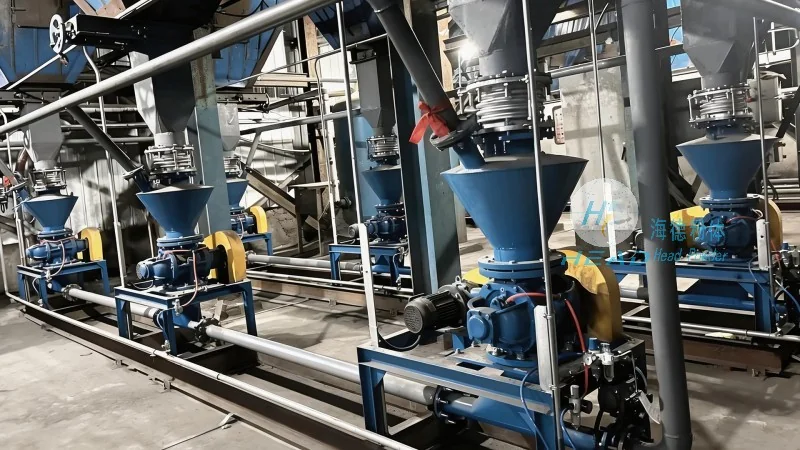
Applications in Different Industries
The use of pneumatic conveying for blended materials is widespread across various industries. In the food industry, for example, blended materials such as flour, sugar, and spices are transported using pneumatic systems to maintain product quality and prevent contamination. The pharmaceutical industry also relies on this technology to handle sensitive materials like powders and granules, ensuring that the blend ratio is consistent and the product remains sterile. In the chemical industry, pneumatic conveying is used to transport raw materials and intermediates, which may be hazardous or reactive. The minerals and mining sector uses pneumatic systems to move ores and concentrates, often over long distances to processing plants. Each industry has specific requirements, such as the need for high purity or the handling of abrasive materials, which influence the design of the pneumatic system. However, the core principles remain the same: efficient transport of blended materials while maintaining product integrity.
Considerations for Design and Implementation
When designing a pneumatic conveying system for blended materials, several factors must be considered to ensure optimal performance. The first consideration is the material properties, including particle size, density, and flowability. These properties determine the type of conveying system (pressure or vacuum) and the required air flow rate. The distance to be covered is another critical factor, as it affects the pressure drop and the size of the blower or compressor needed. The blend ratio is also important, as the system must be able to maintain the desired proportion of each component. This requires precise control of the feed rates and air flow. Additionally, the system must be designed to prevent material segregation, which can be a major issue with blended materials. This may involve using mixers or agitators within the pipeline or hopper. The choice of materials for the pipeline and components is also important, as they must be resistant to corrosion, abrasion, or other factors that may affect the material being conveyed. Finally, the system must be integrated with other equipment, such as storage tanks or processing units, to ensure smooth operation and minimal downtime.