

Principle and Working Scene Characteristics of Cement Dry Ash Pneumatic Conveying Equipment
Shandong HeadPowder Engineering Co., Ltd., a professional manufacturer based in Shandong, China, specializes in the design, development, and production of advanced pneumatic conveying systems for cement dry ash and similar bulk materials. The company's commitment to innovation and quality ensures that its equipment meets the stringent requirements of modern industrial applications.
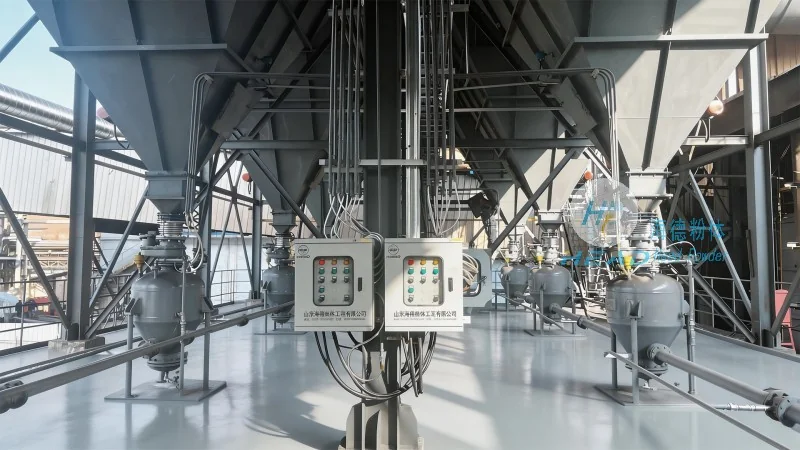
Cement Dry Ash Pneumatic Conveying Equipment: An Overview
At HeadPowder, we provide specialized pneumatic conveying solutions tailored for the efficient transport of cement dry ash. This equipment is engineered to handle bulk materials with precision, ensuring minimal loss and optimal performance in various industrial settings. The system integrates advanced technology to maintain material integrity and operational efficiency, making it a reliable choice for businesses in the cement and related industries.
The Working Principle of Pneumatic Conveying Systems
The core of cement dry ash pneumatic conveying equipment lies in the pneumatic conveying principle, which utilizes air as the medium to transport dry bulk materials. The system typically consists of a hopper, a blower, a pipeline network, and a discharge unit. As the material is fed into the hopper, the blower generates a high-pressure airflow that draws the dry ash particles into the pipeline. The airflow carries the material through the system, allowing for smooth and continuous transport. This method eliminates the need for mechanical components like belts or buckets, reducing maintenance costs and enhancing operational safety.
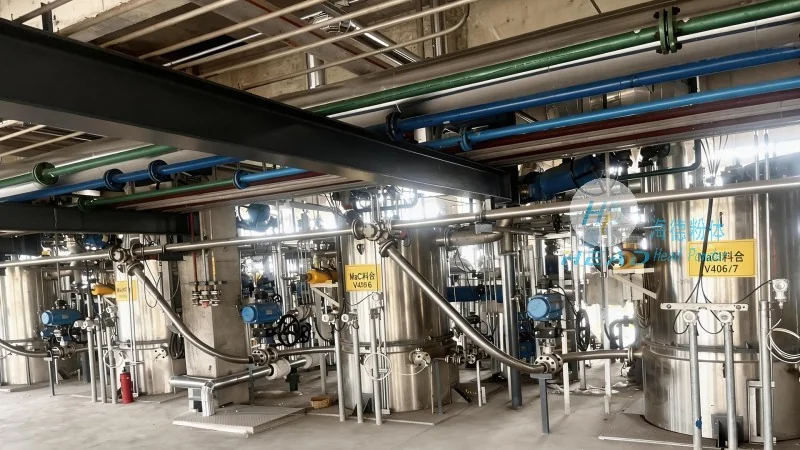
Advantages of the Pneumatic Conveying System
Compared to traditional mechanical conveying methods, the cement dry ash pneumatic conveying equipment offers several advantages. Firstly, it eliminates the risk of material contamination and degradation, as the system is fully enclosed and sealed. This is particularly important for cement dry ash, which can be sensitive to moisture and environmental factors. Secondly, the equipment reduces energy consumption and operational costs by minimizing friction and wear. The use of air as the transport medium also allows for lower maintenance requirements, as there are fewer moving parts compared to mechanical systems. Furthermore, the system provides flexibility in terms of layout and installation, enabling customization to fit specific plant designs and space constraints.
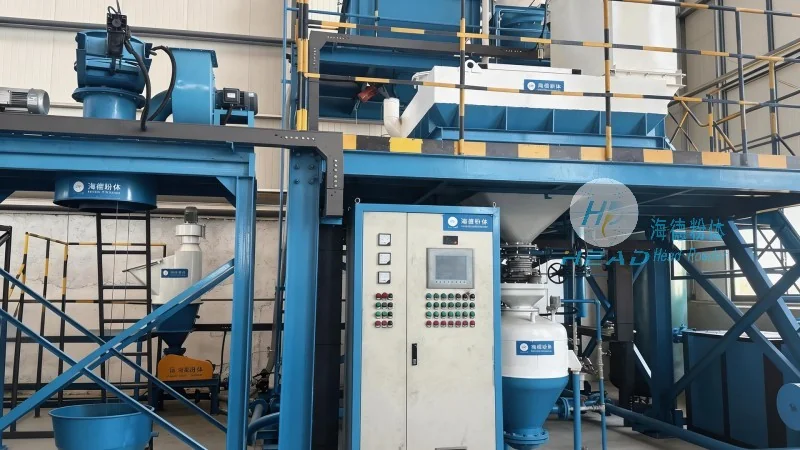
Key Working Scene Characteristics and Applications
The cement dry ash pneumatic conveying equipment from HeadPowder is designed to address the unique challenges of different working environments. In industrial plants, it facilitates the seamless transfer of dry ash from storage silos to processing units, improving workflow efficiency. In construction sites, the equipment supports the rapid delivery of cement dry ash to mixing stations, ensuring timely project execution. The system's adaptability allows it to operate in diverse conditions, from indoor facilities to outdoor industrial sites, with consistent performance. Additionally, the equipment is built to handle varying material properties, such as different particle sizes and moisture levels, making it versatile for a wide range of applications.
Typical Working Scenarios and Practical Applications
In a typical industrial setting, the cement dry ash pneumatic conveying equipment is integrated into a production line where dry ash is stored in large silos. The system efficiently transports the material from the silo to a processing unit, such as a mixer or a grinding machine. This process ensures that the material is delivered in a controlled manner, preventing blockages and maintaining consistent flow rates. The equipment is also suitable for use in cement plants where dry ash is generated as a byproduct and needs to be transported to storage or disposal areas. In construction projects, the system can be used to deliver dry ash to concrete mixing plants, where it is mixed with other ingredients to produce high-quality concrete. The adaptability of the system allows it to handle different material volumes and flow rates, making it suitable for both small-scale and large-scale operations.