

What is a Calcium Phosphate Pneumatic Conveying System? What Are Its Design Principles?
Calcium phosphate, a crucial inorganic compound widely used in various industries such as pharmaceuticals, food processing, and chemical manufacturing, often requires efficient and reliable material handling solutions. The calcium phosphate pneumatic conveying system emerges as a sophisticated technology designed to transport this material safely and effectively. This article delves into the core components and design principles of such systems, providing a comprehensive understanding for professionals in the field.
About Shandong HeadPowder Engineering Co., Ltd.
HeadPowder, the professional engineering company behind these advanced conveying solutions, is headquartered in Shandong, China. With a strong commitment to innovation and quality, HeadPowder specializes in designing and manufacturing customized pneumatic conveying systems tailored to the unique needs of clients handling calcium phosphate and other similar materials. The company’s expertise lies in integrating cutting-edge technology with practical engineering to ensure optimal performance and durability.
Design Principles of Calcium Phosphate Pneumatic Conveying Systems
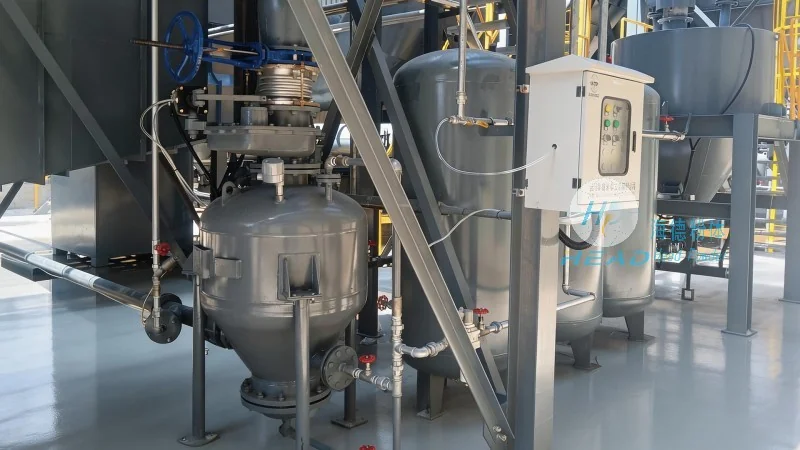
The fundamental principle of pneumatic conveying involves using compressed air or other gases to transport bulk materials through a pipeline. For calcium phosphate, which is often a fine powder with specific handling characteristics, the system design must address challenges like dust generation, material segregation, and system efficiency. Key components typically include a material feed hopper equipped with a rotary valve or screw feeder to control the flow rate, a pressure vessel or airlock to prevent backflow, and a series of pipelines with appropriate diameters and bends to maintain consistent air velocity. The conveying process can be either positive pressure (where air is forced through the material) or negative pressure (where air is drawn through the material), each with its own advantages depending on the application and material properties.
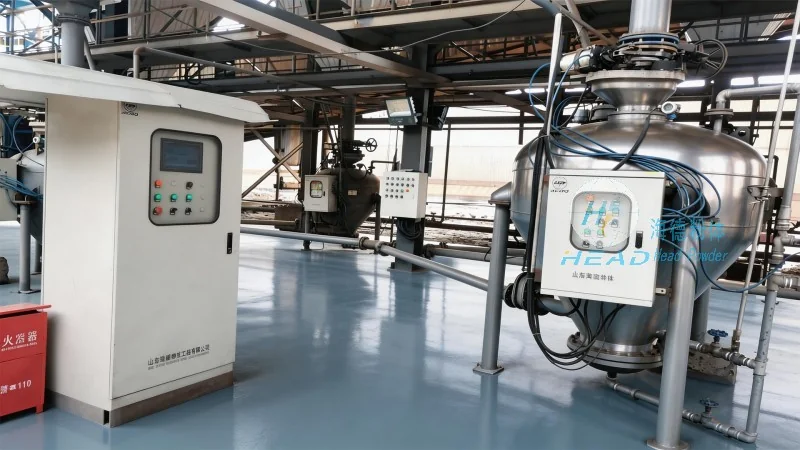
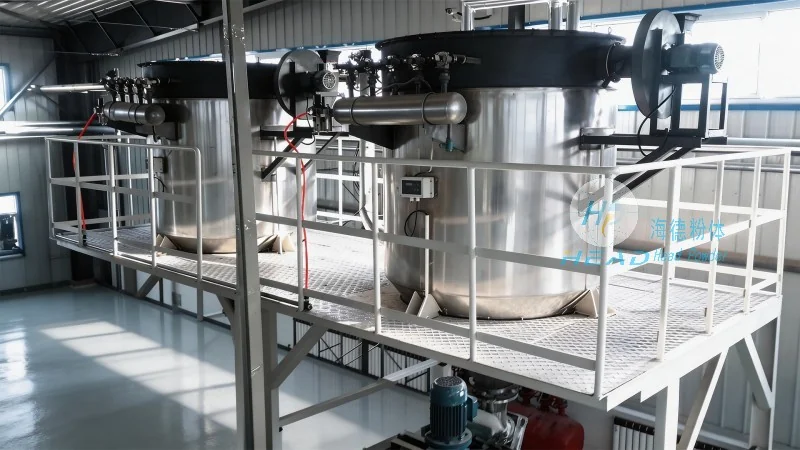
Calcium phosphate’s particle size and moisture content significantly influence the system’s design. Fine powders may require higher air velocities to prevent clogging, while coarser particles might benefit from lower velocities to reduce energy consumption. The system also incorporates separation and filtration equipment to capture any material that may escape the pipeline, ensuring environmental compliance and product purity. HeadPowder’s engineers carefully analyze these factors to develop a system that balances performance, cost, and operational safety.
Advantages of Calcium Phosphate Pneumatic Conveying Systems
Compared to traditional mechanical conveying methods, pneumatic systems offer several advantages when handling calcium phosphate. Firstly, they eliminate the need for moving parts in the conveying line, reducing maintenance requirements and minimizing the risk of material contamination. Secondly, the enclosed pipeline design prevents dust dispersion, enhancing workplace safety and environmental protection. Thirdly, the system allows for precise control over material flow rates and pressure, enabling accurate dosing and processing. Additionally, pneumatic conveying can handle materials with varying properties, including those that are hygroscopic or prone to agglomeration, by adjusting the air flow and system parameters.
Applications in Calcium Phosphate Processing
The calcium phosphate pneumatic conveying system is widely employed in industrial settings where efficient material transport is critical. In pharmaceutical manufacturing, for instance, the system ensures the safe and sterile handling of calcium phosphate powders used in drug formulations. In food processing, it facilitates the transfer of calcium phosphate as a food additive or fortifier, maintaining product quality and consistency. Chemical manufacturers also benefit from these systems when processing calcium phosphate for use in fertilizers, coatings, or other chemical products. The adaptability of the system to different production scales and material types makes it a versatile solution for various industrial applications.
Conclusion
Calcium phosphate pneumatic conveying systems represent a sophisticated and efficient solution for handling this vital material. By understanding the design principles, components, and advantages of such systems, industries can optimize their material handling processes, enhance productivity, and ensure compliance with safety and environmental standards. HeadPowder, with its expertise in engineering and manufacturing, continues to provide customized solutions that meet the evolving needs of clients in the calcium phosphate industry, delivering reliable and high-performance conveying systems.