

What is a Nanoparticle Calcium Carbonate Powder Pneumatic Conveying System? What Are Its Design Prin
Understanding the technology and design principles behind nanoparticle calcium carbonate powder pneumatic conveying systems is crucial for industries that rely on efficient material handling and processing. This article provides a comprehensive overview of such systems, focusing on their operational mechanisms, key components, and the engineering principles that underpin their design.
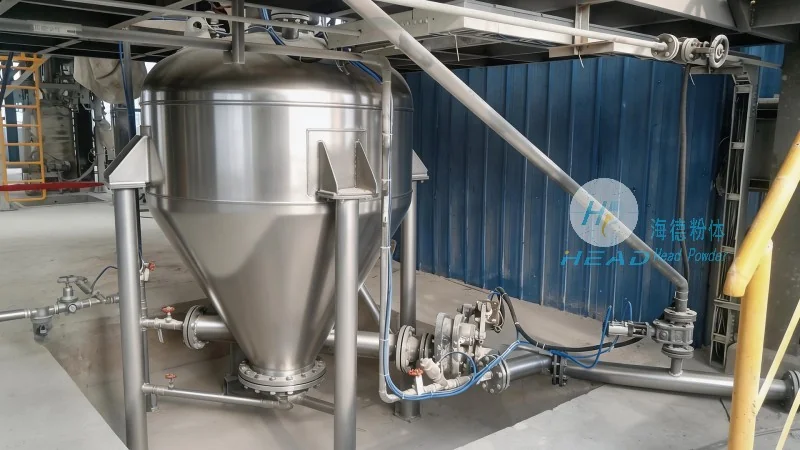
What is a Nanoparticle Calcium Carbonate Powder Pneumatic Conveying System?
A nanoparticle calcium carbonate powder pneumatic conveying system is a specialized industrial equipment designed to transport fine powders, such as nanoparticle calcium carbonate, through a pipeline using pressurized air or gas. This method offers advantages over traditional mechanical conveying systems, particularly for handling materials that are difficult to transport due to their fine particle size, low bulk density, or tendency to agglomerate. The system typically consists of a feeding unit, a conveying line, a control system, and a discharge unit, all working in tandem to ensure reliable and efficient material transport.
Key Components of the Pneumatic Conveying System
The core components of a nanoparticle calcium carbonate powder pneumatic conveying system include:
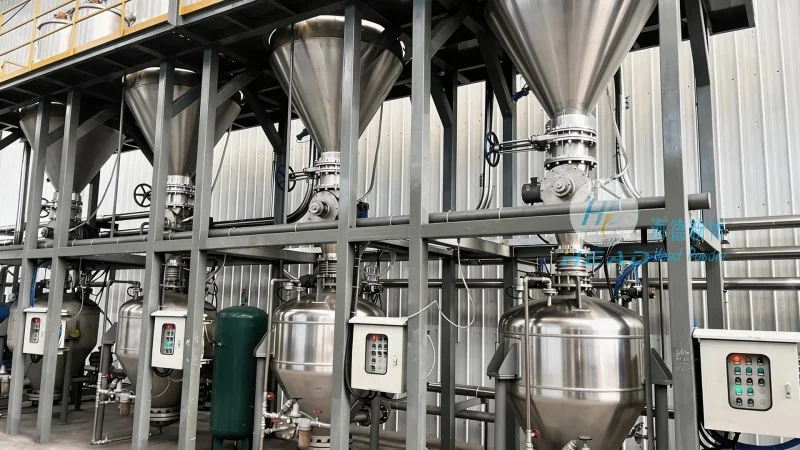
- Feeding Device: This component is responsible for introducing the nanoparticle calcium carbonate powder into the conveying line. It may include a hopper, a rotary valve, or a screw feeder, depending on the system design and the characteristics of the material being handled. The feeding device must ensure a consistent and controlled flow of powder to prevent blockages or uneven conveying.
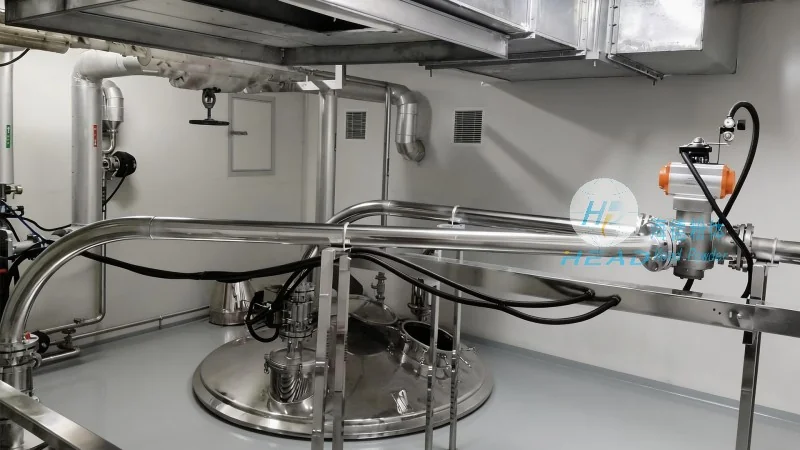
- Conveying Line: The pipeline through which the powder and air mixture travels. The line is usually made of materials like stainless steel or plastic, chosen for their resistance to corrosion and wear from the fine particles. The diameter and length of the line are critical factors that affect the system's performance, as they influence pressure drop and conveying capacity.
- Blower or Compressor: The power source that generates the necessary airflow to move the powder. The choice between a positive displacement blower and a centrifugal compressor depends on the system's requirements, including the pressure needed and the volume of air required. The blower or compressor must be capable of maintaining the required pressure and airflow to ensure stable conveying.
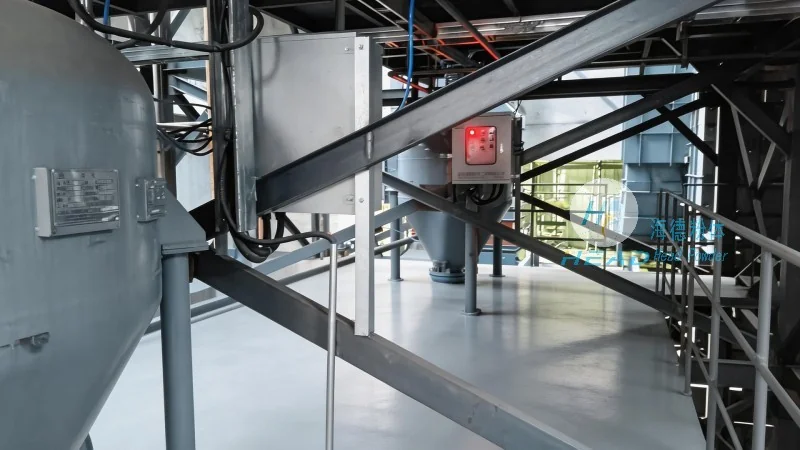
- Control System: A system of sensors, valves, and controllers that monitors and regulates the operation of the conveying system. This includes pressure sensors, flow meters, and control panels that adjust the air pressure and feeding rate in real-time to maintain optimal conveying conditions. The control system helps prevent overloading, underloading, or other operational issues that could affect the system's efficiency.
- Discharge Unit: The component that collects the conveyed powder at the end of the line. It may include a hopper, a rotary valve, or a filter system, depending on the downstream application. The discharge unit must ensure that the powder is collected without loss or contamination, and it may also include a dust collection system to comply with environmental regulations.
Design Principles for Efficient Conveying
The design of a nanoparticle calcium carbonate powder pneumatic conveying system is based on several key principles to ensure optimal performance and reliability:
1. Pressure Drop Management: The pressure drop along the conveying line is a critical factor that affects the system's efficiency. It is influenced by the particle size, density, and flow rate of the powder, as well as the diameter and length of the line. Engineers must calculate the pressure drop accurately to determine the required air pressure and blower capacity. Proper design minimizes energy consumption while maintaining sufficient pressure to move the powder through the system.
2. Particle Size and Flow Characteristics: Nanoparticle calcium carbonate has a very fine particle size, which can lead to high pressure drop and potential blockages if not handled correctly. The design must consider the particle's aerodynamic properties, such as its density and surface area, to ensure that the air velocity is sufficient to keep the particles suspended but not so high as to cause excessive wear on the equipment. The system's design may include features like pulse-jet or rotary valve feeding to maintain consistent flow and prevent agglomeration.
3. Material Compatibility: The materials used in the construction of the conveying system must be compatible with the nanoparticle calcium carbonate powder. Stainless steel is commonly used for its corrosion resistance and durability, while plastic components may be used for non-corrosive applications. The system's design must also consider the potential for particle buildup or wear, and may include features like internal liners or wear-resistant coatings to extend the equipment's lifespan.
4. System Integration and Scalability: The design of the pneumatic conveying system must be integrated with the overall production process, ensuring that it can handle the required throughput and meet the specific requirements of the downstream application. The system should also be scalable, allowing for future expansion or modifications as production needs change. This includes considerations for the system's footprint, energy consumption, and maintenance requirements.
Applications and Benefits
Nanoparticle calcium carbonate powder pneumatic conveying systems are widely used in various industries, including plastics, rubber, paper, and coatings. The benefits of using such systems include:
- Efficient Material Handling: The system provides a reliable and efficient method for transporting fine powders over long distances, without the need for mechanical components that can cause wear or blockages.
- Reduced Downtime: By minimizing the risk of blockages and ensuring consistent flow, the system reduces downtime and maintenance costs associated with traditional conveying methods.
- Improved Product Quality: The system's design helps maintain the purity and quality of the nanoparticle calcium carbonate powder, as it prevents contamination from external sources and minimizes particle degradation during transport.
- Energy Efficiency: Properly designed pneumatic conveying systems can be more energy-efficient than mechanical conveying systems, especially for handling fine powders over long distances.
About Shandong HeadPowder Engineering Co., Ltd.
Shandong HeadPowder Engineering Co., Ltd., commonly known as HeadPowder, is a leading manufacturer and supplier of industrial powder handling equipment. With its headquarters in Shandong, China, the company specializes in designing and manufacturing high-quality nanoparticle calcium carbonate powder pneumatic conveying systems and other related equipment. HeadPowder's products are known for their reliability, efficiency, and durability, making them suitable for a wide range of industrial applications. The company's commitment to quality and customer satisfaction has earned it a reputation as a trusted partner in the powder handling industry.