

Principle and Working Scene Characteristics of Pneumatic Conveying Equipment for Dry Mix Mortar Mate
Pneumatic conveying equipment serves as a vital technology in the production and distribution of dry mix mortar, offering efficient and reliable methods for transporting bulk materials. The system utilizes air to move dry mix mortar components, such as cement, sand, and additives, from one location to another. This approach enhances operational efficiency while minimizing material loss and contamination, making it an ideal solution for modern construction material manufacturing and supply chains.
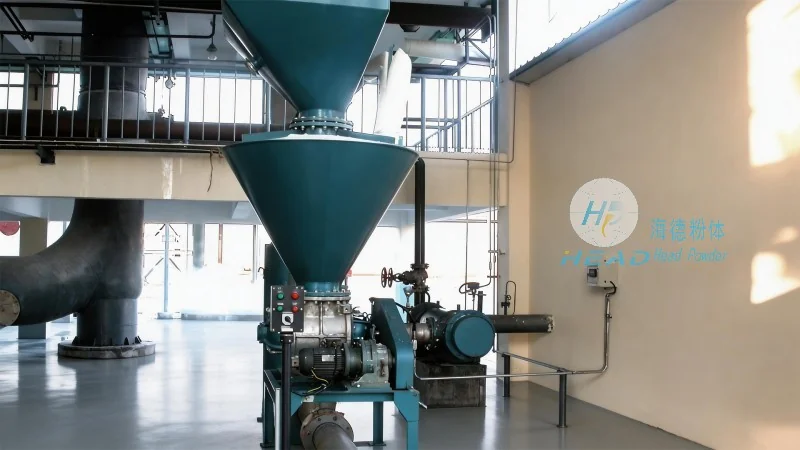
Principle of Operation for Pneumatic Conveying in Dry Mix Mortar Production
The core principle of pneumatic conveying for dry mix mortar materials involves creating a pressure differential or vacuum to move the material through a pipeline. Positive pressure systems introduce compressed air into the material, causing it to become suspended and transported, while negative pressure systems use a vacuum to draw the material. For dry mix mortar, which typically consists of fine particles, positive pressure systems are often preferred due to their ability to handle high material loads and maintain consistent flow rates. The equipment includes feeders, pipelines, airlocks, and dust collectors, all working in tandem to ensure smooth and continuous material transport. Design considerations are tailored to the specific properties of dry mix mortar, such as particle size, moisture content, and bulk density, to optimize performance and prevent blockages or degradation.
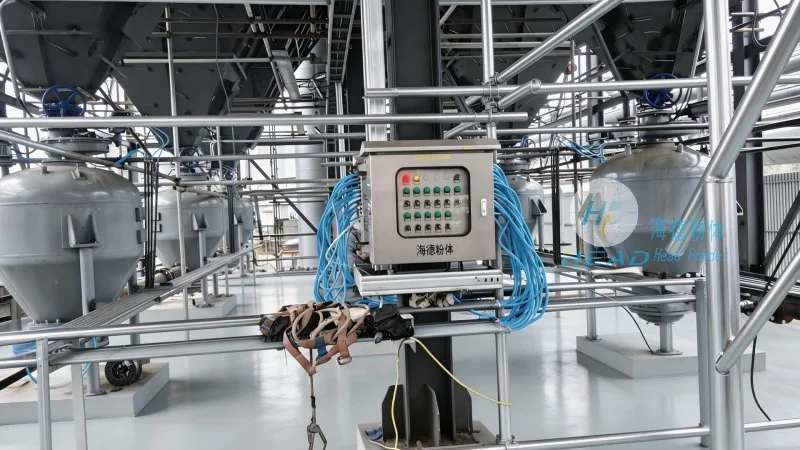
Key Working Scene Characteristics of Pneumatic Conveying Equipment
The working scene characteristics of pneumatic conveying equipment for dry mix mortar are influenced by production scale, transport distance, and environmental conditions. In large-scale manufacturing facilities, these systems are integrated into automated production lines, enabling seamless transfer of raw materials from storage silos to mixing stations and finished product packaging areas. The flexibility of pneumatic conveying allows for vertical, horizontal, or inclined transport, making it suitable for complex industrial layouts. For example, in a factory with multiple production lines, the equipment can be configured to transport dry mix mortar between different processing stages, reducing manual handling needs and improving workflow efficiency.
Application Scenarios in Construction Material Manufacturing
Dry mix mortar is widely used in construction for wall and floor finishes, and pneumatic conveying equipment plays a vital role in delivering materials to construction sites timely and consistently. The equipment is effective for long-distance or multi-stage processing. In a Shandong, China-based plant, the system efficiently moves dry mix mortar from raw material storage to packaging, supporting high-volume production. The reliability of pneumatic conveying systems reduces downtime and maintenance costs, as they handle abrasive particles without significant wear.
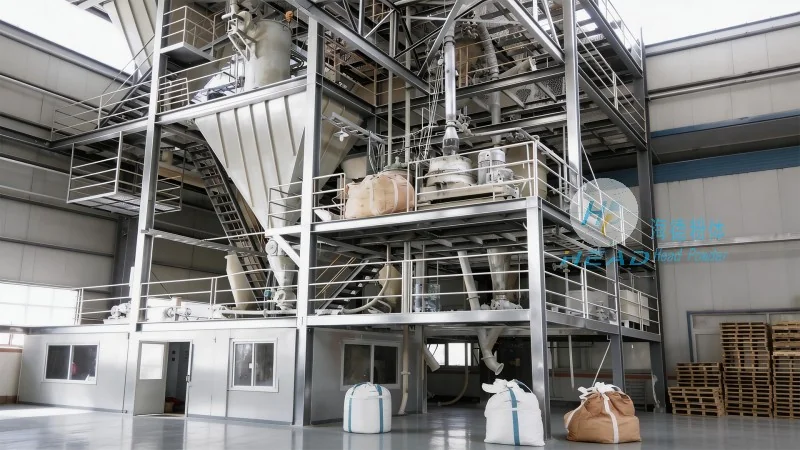
Advantages of Using Pneumatic Conveying for Dry Mix Mortar
Compared to traditional conveyor systems like belt conveyors or bucket elevators, pneumatic conveying offers several advantages for dry mix mortar applications. One key benefit is closed-system transport, minimizing dust emissions and protecting material from moisture and contamination—critical for dry mix mortar’s sensitivity to moisture. Flexibility in layout allows for changes without major structural modifications, and the systems require less floor space. Energy efficiency, especially with positive pressure, lowers operational costs over time. Continuous flow capability ensures uninterrupted production, boosting productivity and performance.