

Operation Process and Working Principle of Pneumatic Conveying for Lithium-Ion Battery Positive Elec
HeadPowder, a leading engineering firm based in Shandong, China, specializes in the design and implementation of advanced pneumatic conveying systems tailored for the lithium-ion battery industry. This article delves into the operational process and underlying principles of such systems, focusing on their role in efficiently handling positive electrode materials for lithium-ion batteries.
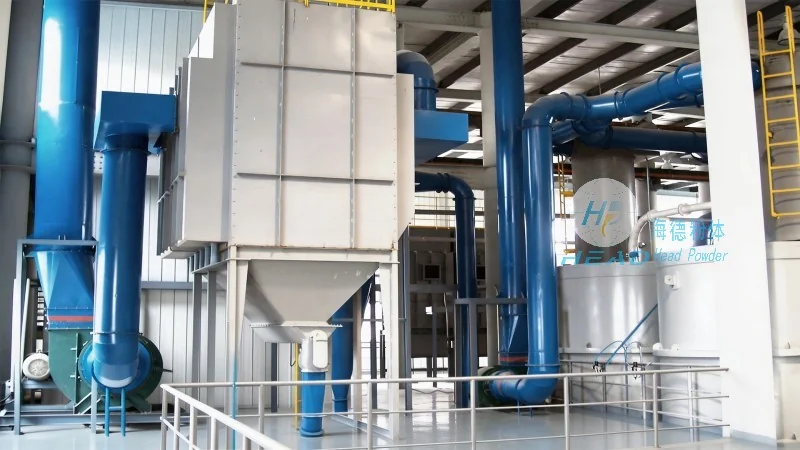
Introduction to Pneumatic Conveying in Lithium-Ion Battery Production
Pneumatic conveying systems have become an integral part of modern lithium-ion battery manufacturing, particularly for the handling of positive electrode materials. These systems offer a dust-free, efficient, and flexible method for transporting powders and granules, which is crucial for maintaining product quality and ensuring safe operation in high-tech battery production lines. The technology involves using air or gas to move materials through a pipeline network, eliminating the need for mechanical components like belts or buckets that might introduce contamination or mechanical stress to the delicate battery materials.
Company Overview: Shandong HeadPowder Engineering Co., Ltd.
HeadPowder, headquartered in Shandong, China, is a professional engineering company dedicated to providing comprehensive solutions for material handling and processing in various industrial sectors, with a strong focus on the battery and energy storage industries. The company leverages its expertise in mechanical engineering, fluid dynamics, and material science to design customized pneumatic conveying systems that meet the stringent requirements of lithium-ion battery manufacturers. By combining advanced technology with local manufacturing capabilities, HeadPowder ensures high-quality, reliable, and cost-effective solutions for its clients.
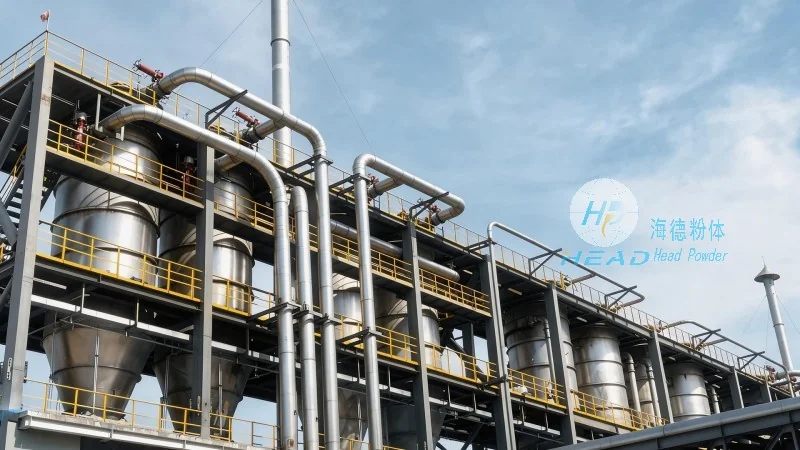
Key Components of a Pneumatic Conveying System for Battery Positive Electrodes
A typical pneumatic conveying system for lithium-ion battery positive electrodes consists of several critical components, each playing a vital role in the overall operation. These components include the material feed hopper, the air supply system (such as a blower or compressor), the conveying pipeline, the control valves, and the discharge unit. The material feed hopper is responsible for storing and feeding the positive electrode powder into the system, ensuring a consistent flow rate. The air supply system generates the necessary pressure or vacuum to move the material through the pipeline. The conveying pipeline, often made of stainless steel or other corrosion-resistant materials, transports the material from the feed point to the discharge point. Control valves regulate the air flow and material flow, allowing for precise control over the conveying process. The discharge unit, such as a rotary valve or a dust collector, collects the material at the end of the pipeline, preventing dust emissions and ensuring a clean working environment.
The Working Principle of Pneumatic Conveying
The core principle of pneumatic conveying is the use of air to create a flow that transports the material particles. There are two main types of pneumatic conveying systems: pressure and vacuum. In pressure systems, the air is supplied under pressure from a blower at the discharge end, pushing the material forward. In vacuum systems, a vacuum pump creates a negative pressure at the discharge end, pulling the material through the pipeline. For lithium-ion battery positive electrode materials, pressure systems are more commonly used due to their ability to handle higher material loads and maintain consistent flow rates. The process begins when the positive electrode powder is fed into the hopper. The blower then generates a high-pressure air stream that entrains the powder particles, forming a dense phase flow. As the mixture travels through the pipeline, the air and material are separated at the discharge point, where the material is collected and the air is either recirculated or vented to the atmosphere.
Operation Process of the Pneumatic Conveying System
The operation of a pneumatic conveying system for lithium-ion battery positive electrodes involves several sequential steps, each carefully controlled to ensure optimal performance and material quality. The process starts with the preparation of the material, which includes drying and sieving to remove moisture and impurities that could affect the battery performance. The prepared powder is then fed into the material hopper at a controlled rate, typically using a screw feeder or a rotary valve. The blower is then activated, and the air pressure is adjusted to the appropriate level for the specific material and pipeline configuration. As the air flows through the pipeline, it picks up the powder particles and transports them to the discharge point. The discharge unit, such as a rotary valve, regulates the flow of material out of the system, ensuring a steady and continuous output. The system is equipped with sensors and control panels that monitor key parameters such as air pressure, material flow rate, and temperature, allowing for real-time adjustments to maintain optimal conditions. Any deviations from the set parameters are immediately detected and corrected by the control system, preventing system failures or material quality issues.
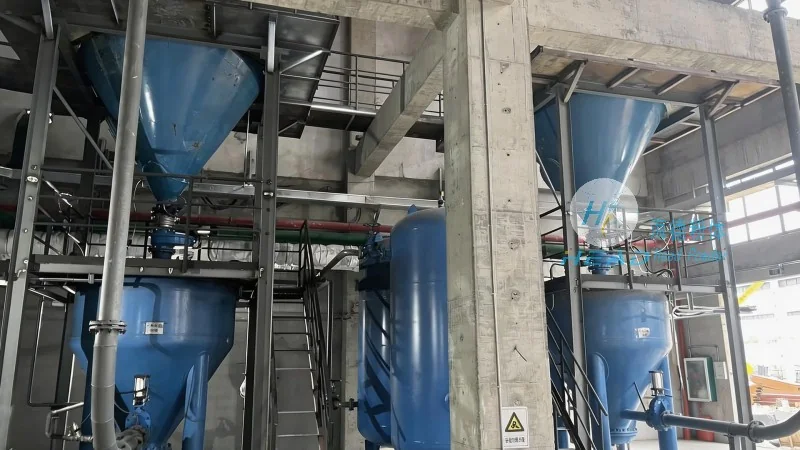
Advantages of Pneumatic Conveying for Battery Positive Electrodes
Pneumatic conveying systems offer several advantages over traditional mechanical conveying methods for handling lithium-ion battery positive electrode materials. These advantages include: 1) Dust-free operation, which minimizes contamination and improves product purity; 2) High efficiency and flexibility, allowing for easy integration into existing production lines and adaptation to varying material types and flow rates; 3) Reduced mechanical stress on the material, which helps maintain the particle size distribution and prevents agglomeration; 4) Lower maintenance costs compared to mechanical systems, as there are fewer moving parts and less wear and tear; 5) Improved safety, as the system operates in a closed environment, reducing the risk of dust explosions and improving workplace safety. These benefits make pneumatic conveying an ideal choice for modern lithium-ion battery manufacturers seeking to enhance their production efficiency and product quality.
Conclusion
In conclusion, pneumatic conveying systems are a critical technology in the production of lithium-ion battery positive electrodes, enabling efficient, safe, and high-quality material handling. Shandong HeadPowder Engineering Co., Ltd., with its expertise and local presence in Shandong, China, provides customized solutions that meet the specific needs of battery manufacturers. By understanding the operation process and working principles of these systems, manufacturers can optimize their production lines, improve product quality, and stay competitive in the rapidly evolving battery industry.