

Operation Process and Working Principle of Automatic Continuous Pneumatic Conveying Lines
Automatic continuous pneumatic conveying lines are advanced industrial equipment designed to transport bulk materials efficiently and safely over long distances. These systems utilize air pressure to move powders, granules, or other particulate materials from one location to another, eliminating the need for traditional mechanical conveyors like belts or buckets. The technology has become a cornerstone in various industries, including food processing, pharmaceuticals, chemicals, and mining, due to its ability to handle sensitive materials without contamination or degradation.
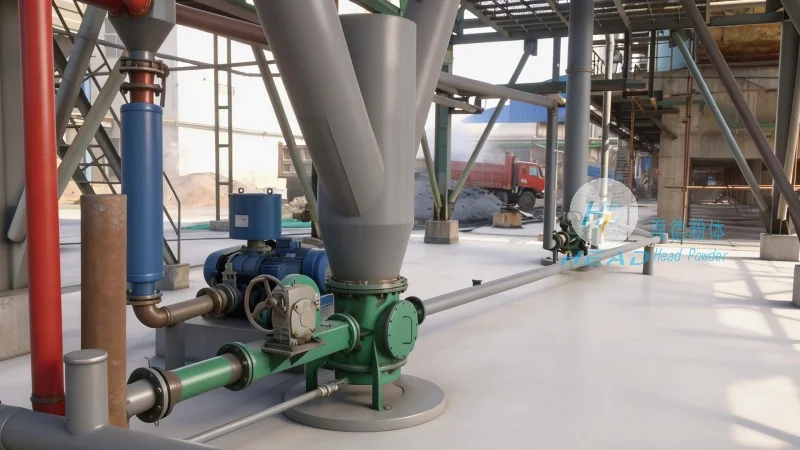
HeadPowder, a leading manufacturer based in Shandong, China, specializes in the design, manufacturing, and installation of high-quality pneumatic conveying systems. With years of experience in the field, the company has developed robust solutions tailored to meet diverse industrial needs. The company’s commitment to innovation and precision engineering ensures that each system is built to deliver optimal performance and reliability.
Company Overview
Shandong HeadPowder Engineering Co., Ltd., commonly known as HeadPowder, is a reputable enterprise dedicated to providing cutting-edge pneumatic conveying solutions. Headquartered in Shandong, China, the company leverages advanced technology and skilled expertise to deliver customized systems that enhance operational efficiency and safety in material handling processes. HeadPowder’s products are widely recognized for their durability, energy efficiency, and adaptability to various material types and application scenarios.
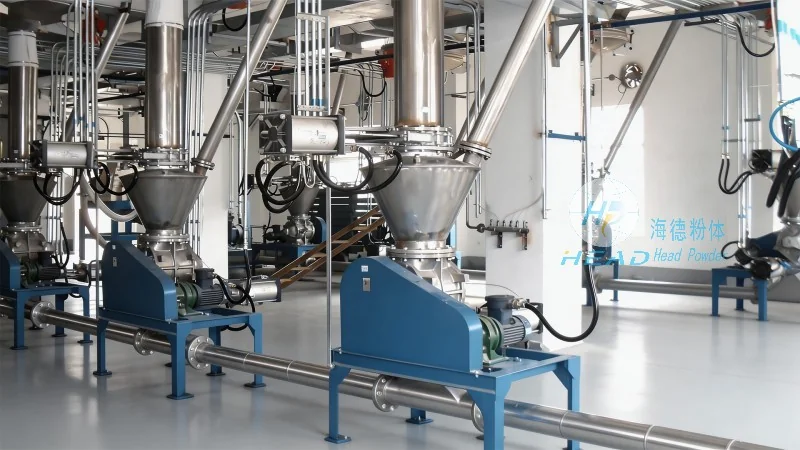
Core Components of Automatic Continuous Pneumatic Conveying Lines
The operation of an automatic continuous pneumatic conveying line involves several key components that work in harmony to ensure smooth material transport. The primary components include the material hopper, which serves as the storage and feeding unit; the air compressor, responsible for generating the necessary air pressure; the conveying pipeline, which transports the material and air mixture; and the discharge unit, where the material is deposited at the destination. Additionally, control systems and sensors are integrated to monitor and regulate the conveying process, ensuring consistent performance and preventing operational issues.
Working Principle of the System
The working principle of an automatic continuous pneumatic conveying line is based on the creation of a low-pressure or high-pressure air stream within the conveying pipeline. The material is fed into the system from the hopper, where it is mixed with the compressed air. The air stream then propels the material particles through the pipeline, maintaining a consistent flow rate. The system operates continuously, allowing for uninterrupted material transport, which is particularly beneficial for high-volume production environments. The control system adjusts the air pressure and flow rate as needed to maintain optimal conveying conditions, ensuring that the material reaches the discharge point without clogging or loss.
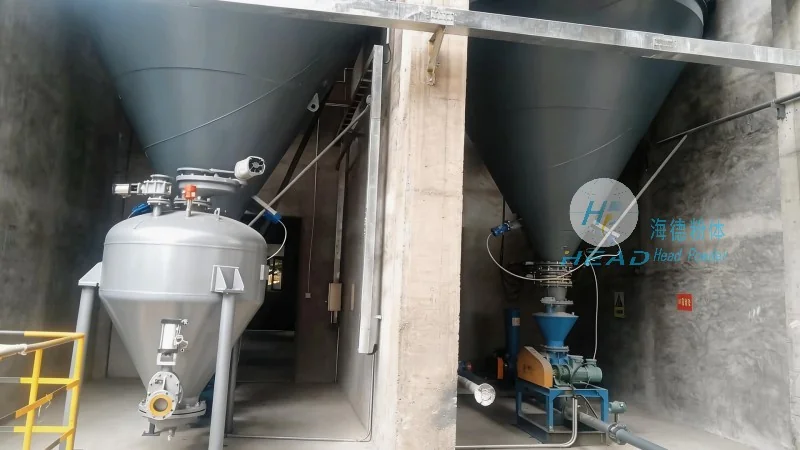
Operation Process: Step-by-Step
The operation process of an automatic continuous pneumatic conveying line can be broken down into several sequential steps. First, the material is loaded into the hopper, where it is stored until needed. The control system then activates the air compressor, which generates the required air pressure. Next, the material is fed into the conveying pipeline as the air stream begins to move. The mixture of material and air travels through the pipeline to the discharge unit, where the material is deposited. Throughout the process, sensors monitor the pressure, flow rate, and material level, providing real-time data to the control system. Any deviations from the set parameters are automatically adjusted to maintain stable operation. This continuous cycle ensures that the system operates efficiently and reliably, minimizing downtime and maximizing productivity.
Advantages and Applications
Automatic continuous pneumatic conveying lines offer numerous advantages over traditional conveying methods. These include reduced labor costs, as the system operates automatically without the need for manual intervention; improved safety, as there are no moving parts in direct contact with the material; and enhanced hygiene, which is critical in industries such as food and pharmaceuticals. The systems are also highly flexible, allowing for easy integration into existing production lines and adaptation to changing material requirements. HeadPowder’s systems are widely used in applications such as powder handling in food processing plants, chemical manufacturing, and mining operations, where efficient and safe material transport is essential.