

Principles and Classification Applications of Corn Flour Pneumatic Conveying
For industrial operations involving corn flour, efficient material handling is crucial to maintain production efficiency and product quality. Pneumatic conveying systems offer a versatile solution for transporting corn flour, leveraging air pressure to move the material through pipelines. This article explores the fundamental principles of corn flour pneumatic conveying, outlines the primary classification methods, and discusses practical applications in various industrial settings. The information is provided by Shandong HeadPowder Engineering Co., Ltd., a leading manufacturer of industrial conveying solutions based in Shandong, China.
Understanding Pneumatic Conveying Principles
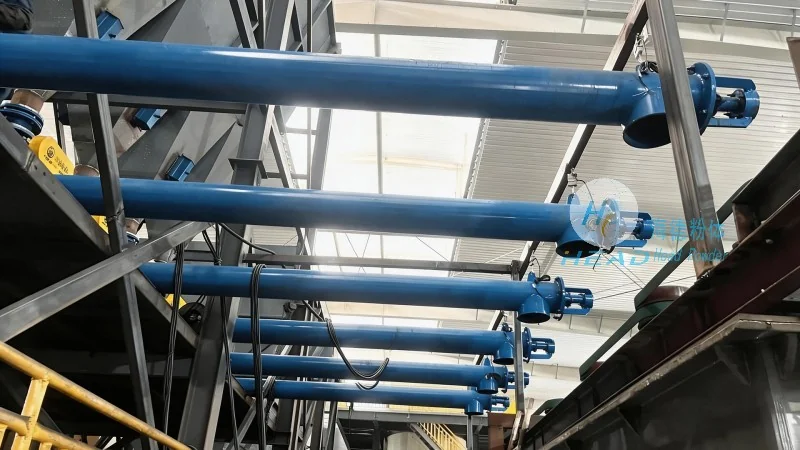
Pneumatic conveying works by using compressed air or vacuum to transport bulk materials like corn flour. The core principle involves creating a flow of air that carries the material particles through a system of pipes. There are two main types of pneumatic conveying systems: positive pressure and negative pressure. Positive pressure systems use a blower to force air and material into the pipeline, while negative pressure systems employ a vacuum to draw material into the system. Both methods are effective for corn flour, with the choice depending on factors such as material characteristics, distance, and system complexity.
Classification of Pneumatic Conveying Systems
Pneumatic conveying systems for corn flour can be classified based on several key parameters, including the air-to-material ratio, particle size, and system pressure. The most common classifications are:
1. Dilute Phase Pneumatic Conveying
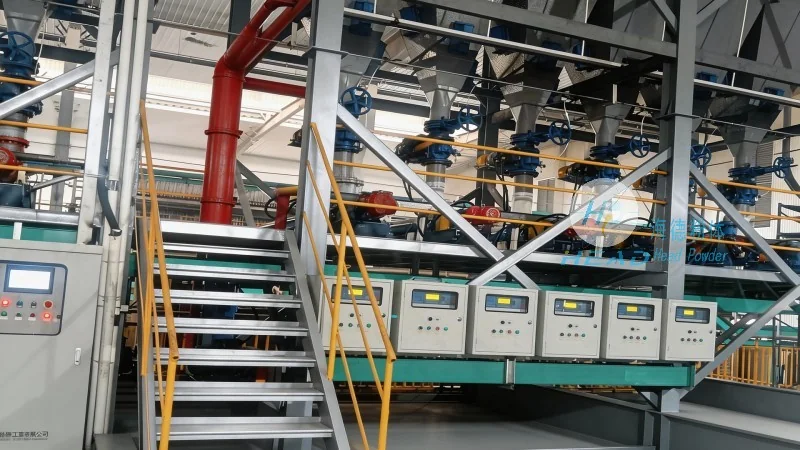
Dilute phase systems operate at a high air-to-material ratio, typically 20 to 100 times the material's volume. In this system, corn flour particles are suspended in the air stream, moving through the pipeline at high velocity. This method is suitable for short to medium distances and is commonly used in applications where the material is relatively dry and free-flowing. The high air velocity helps prevent material buildup and ensures consistent flow.
2. Dense Phase Pneumatic Conveying
Dense phase systems operate at a lower air-to-material ratio, often 1 to 5 times the material's volume. Here, the corn flour particles are carried in a more concentrated stream, with the air acting as a carrier rather than a suspending medium. This method is ideal for longer distances and for materials that are more cohesive or prone to degradation. The slower velocity reduces the risk of particle attrition and helps maintain product integrity.
3. Hybrid Pneumatic Conveying
Hybrid systems combine elements of both dilute and dense phase operations. They may use a combination of positive and negative pressure stages to optimize material transport. For corn flour, hybrid systems are particularly useful when dealing with varying material properties or when transporting over mixed distances. This approach allows for greater flexibility and can improve overall system efficiency.
Applications in Corn Flour Processing
The versatility of pneumatic conveying makes it suitable for a wide range of applications in corn flour processing. Some key applications include:
1. Milling and Grinding Operations
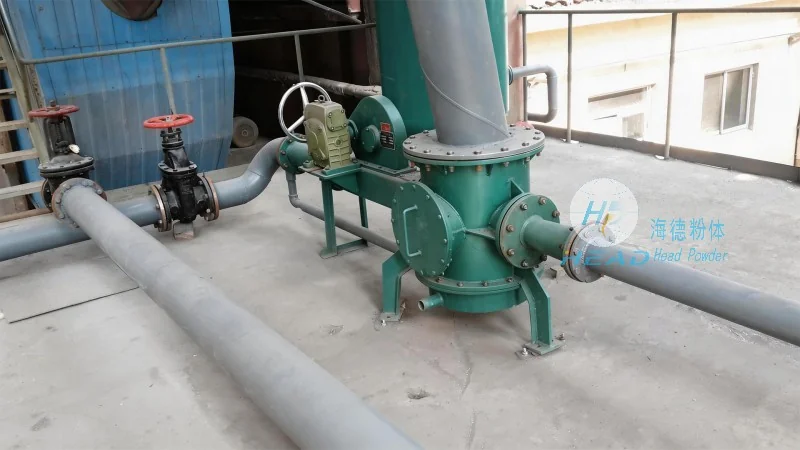
In corn milling facilities, pneumatic conveying is used to transport ground corn flour from grinding mills to storage silos or packaging areas. The system ensures that the material is moved quickly and without contamination, maintaining the quality of the final product. The positive pressure system is often preferred here due to its ability to handle the fine particles without clogging the pipeline.
2. Storage and Handling
Corn flour is often stored in large silos or bulk containers. Pneumatic conveying systems can be integrated with these storage facilities to move the material from storage to processing lines or for distribution to customers. The negative pressure system is commonly used for this application as it allows for gentle handling of the material, preventing segregation or degradation.
3. Packaging and Distribution
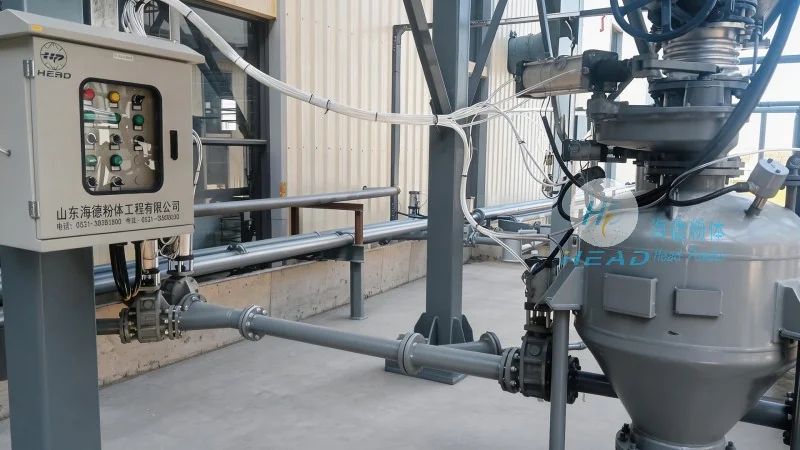
During the packaging stage, pneumatic conveying can be used to transport corn flour from storage to filling machines. This ensures a continuous and efficient flow of material, reducing downtime and improving production throughput. The system's ability to handle fine powders without dust generation is particularly beneficial in food processing environments.
Factors Influencing System Selection
The choice of pneumatic conveying system for corn flour depends on several critical factors. These include the physical properties of the corn flour, such as particle size, moisture content, and flowability. The distance and layout of the conveying system also play a significant role. Additionally, the required flow rate and system pressure must be considered. For example, in high-volume production lines, a dense phase system may be more appropriate to handle the large quantities efficiently, while for shorter distances, a dilute phase system might suffice.
Conclusion
Pneumatic conveying is a reliable and efficient method for handling corn flour in various industrial applications. By understanding the fundamental principles and classification of these systems, manufacturers can select the most suitable technology to meet their specific needs. The integration of advanced materials and control systems has further enhanced the performance and reliability of pneumatic conveying systems, making them an essential component in modern corn flour processing operations.