

What is a Fluorspar Powder Pneumatic Conveying Equipment? And What Are Its Design Principles?
Fluorspar, also known as fluorite, is a mineral widely used in various industrial applications, including chemical manufacturing, metallurgy, and glass production. The efficient handling and transportation of fluorspar powder are crucial for maintaining production efficiency and ensuring product quality. This article introduces the concept of a fluorspar powder pneumatic conveying equipment and delves into its design principles, highlighting the technology's importance in modern industrial processes.
Understanding Pneumatic Conveying Systems for Fluorspar Powder
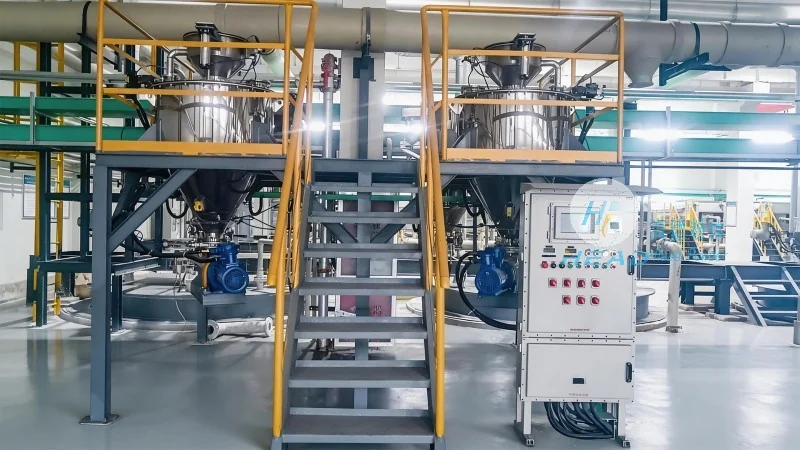
Pneumatic conveying systems are a type of material handling technology that uses compressed air or other gases to transport bulk materials like powders, granules, and small particles through a pipeline. For fluorspar powder, which is often fine and abrasive, specialized equipment is required to ensure reliable and efficient transport. The fluorspar powder pneumatic conveying equipment, developed by Shandong HeadPowder Engineering Co., Ltd., is engineered to meet the unique challenges of handling this mineral, offering a solution that enhances productivity and reduces operational costs.
The Core Components of a Fluorspar Powder Pneumatic Conveying System
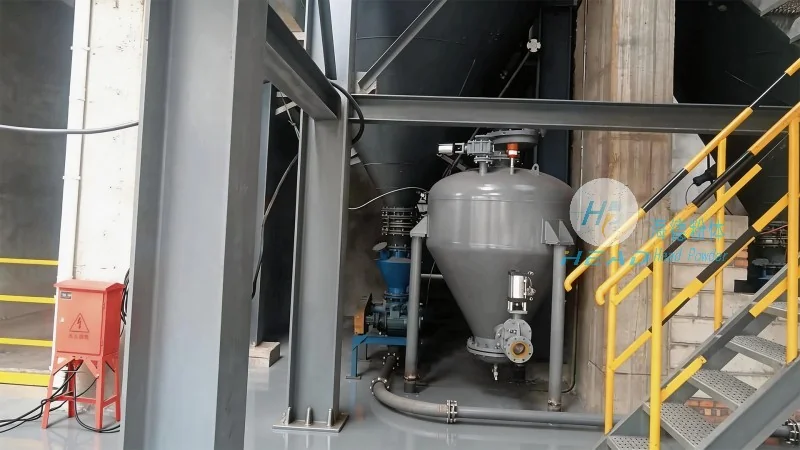
The fluorspar powder pneumatic conveying equipment typically consists of several key components that work in tandem to achieve effective material transport. These components include a material feeder, a conveying pipeline, a gas source (such as a blower or compressor), a control system, and a discharge unit. The material feeder is responsible for feeding the fluorspar powder into the system at a controlled rate, ensuring a consistent flow. The conveying pipeline, often made of corrosion-resistant materials like stainless steel or special alloys, transports the powder and air mixture. The gas source provides the necessary pressure and flow rate to move the material through the pipeline. The control system monitors and adjusts the operation parameters to maintain optimal performance. Finally, the discharge unit collects the transported fluorspar powder and delivers it to the desired destination.
Design Principles for Efficient Fluorspar Powder Pneumatic Conveying
The design of a fluorspar powder pneumatic conveying system is based on several key principles to ensure efficiency, reliability, and durability. One of the primary principles is the selection of appropriate air velocity and pressure. The air velocity must be high enough to prevent the powder from settling in the pipeline but low enough to avoid excessive wear and energy consumption. The pressure is adjusted to maintain the desired flow rate and to overcome any resistance in the pipeline. Another critical principle is the use of appropriate materials for the conveying components. Fluorspar powder is abrasive and can cause wear on the equipment, so components like the feeder, pipeline, and discharge unit are made from materials that can withstand the abrasive nature of the powder. Additionally, the system design considers the particle size distribution of the fluorspar powder, as different particle sizes may require different air velocities and pressure levels for optimal transport. The design also incorporates features to minimize material degradation and contamination, ensuring that the transported fluorspar powder remains in its original state for downstream processing.
The Advantages of Using a Fluorspar Powder Pneumatic Conveying Equipment
Implementing a fluorspar powder pneumatic conveying equipment offers several advantages over traditional material handling methods. First, it provides a dust-free and enclosed system, reducing the risk of dust exposure and environmental contamination. This is particularly important for fluorspar powder, which can be hazardous if inhaled. Second, the system is highly efficient, allowing for continuous and automated material transport, which increases production throughput and reduces labor costs. Third, the equipment is compact and can be integrated into existing production lines, minimizing the need for additional space. Fourth, the system is flexible, allowing for easy adjustment of the conveying rate and destination, making it suitable for various production scenarios. Finally, the use of a pneumatic conveying system reduces the need for manual handling, improving workplace safety and reducing the risk of accidents.
Applications of Fluorspar Powder Pneumatic Conveying Equipment
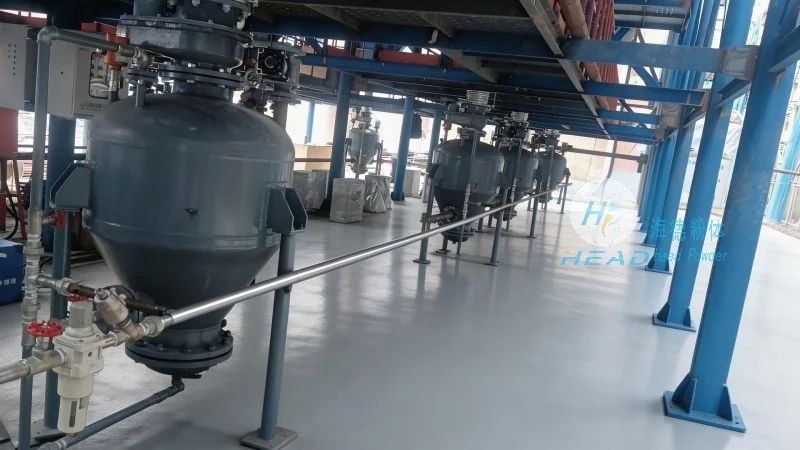
The fluorspar powder pneumatic conveying equipment is widely used in various industries that rely on fluorspar as a raw material. In the chemical industry, it is used to transport fluorspar powder to reactors and processing units, ensuring a consistent supply of raw material for chemical synthesis. In the metallurgy industry, it is used to convey fluorspar to smelting furnaces, where it is used as a flux to remove impurities from metal ores. In the glass industry, it is used to transport fluorspar powder to glass melting furnaces, where it is used as a flux and opacifier to improve the quality of the glass. The equipment is also used in other industries, such as the production of ceramics and paints, where fluorspar is used as a raw material.
Conclusion
In conclusion, the fluorspar powder pneumatic conveying equipment is a critical component in modern industrial processes, providing an efficient and reliable method for handling fluorspar powder. The design principles of this equipment, developed by Shandong HeadPowder Engineering Co., Ltd., focus on ensuring optimal performance, durability, and safety. By using this technology, industries can improve their production efficiency, reduce operational costs, and enhance workplace safety. As the demand for fluorspar continues to grow, the importance of efficient material handling systems like the fluorspar powder pneumatic conveying equipment will only increase, making it a vital investment for any industry that relies on this mineral.