

Principle and Classification Application of Air-Driven Transport for Fluorspar Powder Particles
For industrial operations involving the handling of fluorspar powder, efficient material transport is crucial. This article provides an in-depth exploration of the air-driven transport system, focusing on its working principles and various classification applications. The discussion is centered around the technology used by Shandong HeadPowder Engineering Co., Ltd., a leading provider in the field, based in Shandong, China.
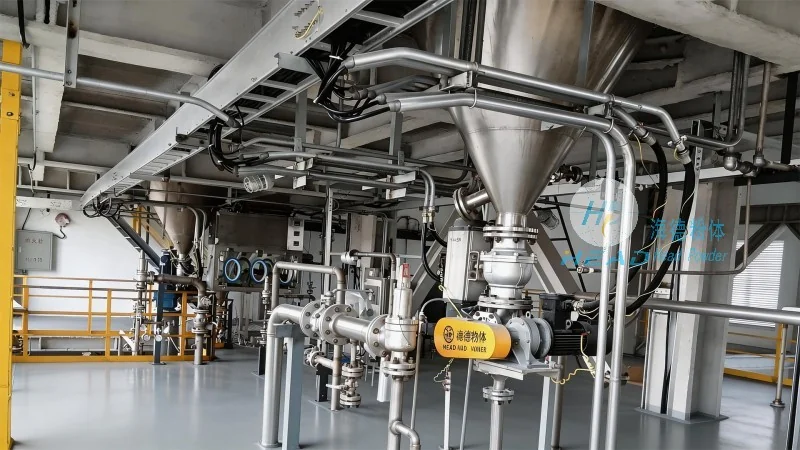
Understanding the Air-Driven Transport Principle
The air-driven transport system, also known as pneumatic conveying, operates by using a stream of air to move solid particles through a pipeline. In the context of fluorspar powder, this method offers several advantages over traditional mechanical conveying systems. The core principle involves creating a pressure differential or using vacuum to draw the powder particles into the conveying line. The process typically begins with the powder being introduced into a hopper or feeder, where it is then fed into the pipeline. As the air flows through the line, it entrains the powder particles, forming a dense phase or dilute phase flow, depending on the system design and operating conditions. This mechanism allows for the continuous and controlled movement of fluorspar powder from the source to the destination, minimizing material loss and ensuring consistent flow rates.
Classification of Air-Driven Transport Systems
There are primarily two classifications of air-driven transport systems: dense phase and dilute phase. Each type has distinct characteristics and is suitable for different applications based on the properties of the fluorspar powder and the operational requirements. Dense phase conveying uses higher air velocities and lower particle concentrations to achieve a more compact flow, which is beneficial for transporting sensitive or abrasive materials like fluorspar powder. This method reduces particle degradation and maintains product quality. Dilute phase conveying, on the other hand, operates at higher velocities and lower concentrations, suitable for longer distances or when the material is less abrasive. The choice between these systems depends on factors such as the particle size distribution, moisture content, and the required conveying distance.
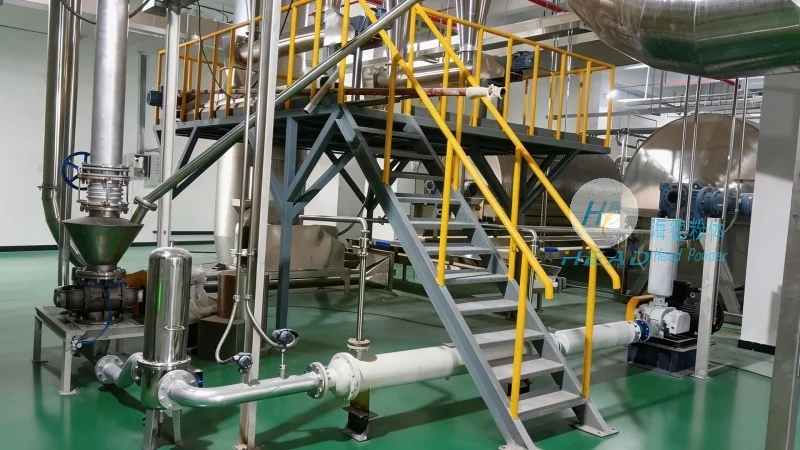
Application Scenarios in Industrial Settings
Shandong HeadPowder Engineering Co., Ltd. has successfully applied air-driven transport technology in various industrial scenarios. One common application is in the mining and processing of fluorspar, where the powder needs to be transported from crushing and grinding units to storage silos or processing facilities. The system ensures that the fluorspar powder is moved efficiently without the need for multiple transfer points or manual handling, which can be hazardous and inefficient. Another application is in the chemical and metallurgical industries, where fluorspar is used as a flux in smelting processes. The air-driven transport system allows for the precise and controlled delivery of the powder to the reaction vessels, ensuring optimal reaction conditions and reducing downtime. Additionally, in the pharmaceutical and food processing sectors, where fluorspar may be used as an additive, the system provides a hygienic and dust-free conveying method, meeting stringent quality and safety standards.
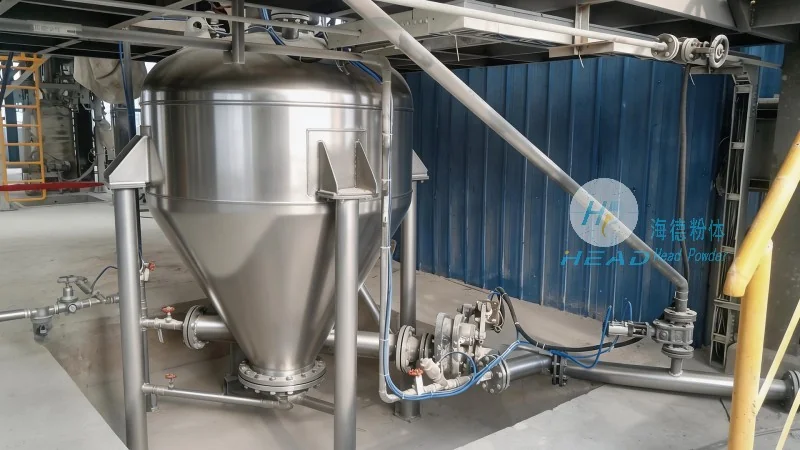
Advantages and Considerations for Air-Driven Transport
Compared to traditional mechanical conveying, air-driven transport offers several advantages for fluorspar powder handling. These include reduced equipment wear and tear, as there are no moving parts in direct contact with the powder, which is particularly important for abrasive materials like fluorspar. The system also provides better containment of dust, which is critical for maintaining a safe working environment and complying with environmental regulations. However, there are considerations to keep in mind when implementing this technology. For instance, the system requires careful design to handle the specific properties of fluorspar powder, such as its particle size and moisture content, to prevent blockages or system inefficiencies. Additionally, the energy consumption of air-driven systems can be higher than mechanical systems, although advancements in technology have led to more energy-efficient designs.
Conclusion and Future Outlook
In conclusion, the air-driven transport system is a highly effective method for handling fluorspar powder, offering efficient, safe, and reliable material transport. Shandong HeadPowder Engineering Co., Ltd. has demonstrated expertise in designing and implementing these systems, catering to the diverse needs of industrial applications. As the demand for efficient material handling solutions continues to grow, the air-driven transport technology is likely to remain a key component in the processing of fluorspar and other fine powders. The ongoing advancements in system design and control technology will further enhance the performance and versatility of these systems, ensuring their continued relevance in the industrial sector.