

Choosing Between Positive Pressure and Negative Pressure for Nanocalcium Carbonate Pneumatic Conveyi
When it comes to transporting nanocalcium carbonate via pneumatic conveying, the choice between positive pressure and negative pressure systems is a critical decision that impacts efficiency, cost, and operational safety. As a leading provider in the field, Shandong HeadPowder Engineering Co., Ltd. (commonly known as HeadPowder) understands the nuances of these systems and the factors that influence their selection for fine particle materials like nanocalcium carbonate.
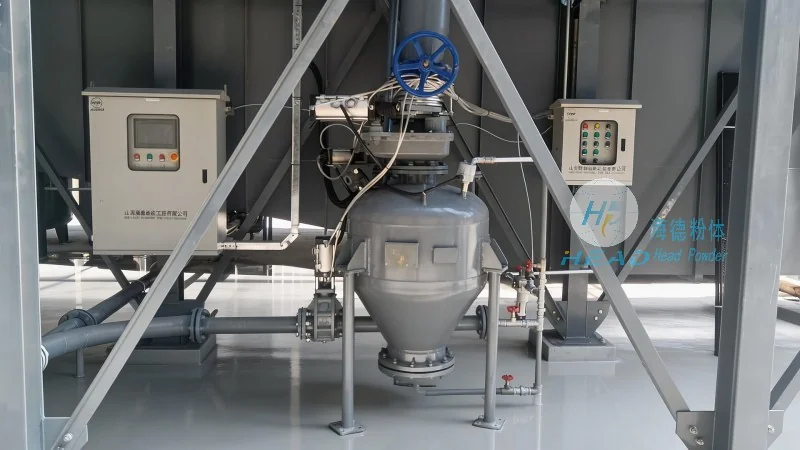
Understanding Pneumatic Conveying Systems for Nanocalcium Carbonate
Pneumatic conveying is a method of transporting bulk materials through a pipeline using air or gas as the conveying medium. For nanocalcium carbonate, which is characterized by its ultra-fine particle size and potential for dust generation, the choice of system design—whether positive or negative pressure—plays a pivotal role in maintaining material integrity and system performance. Both systems are widely used, but they operate on fundamentally different principles and are suited to different operational scenarios.
Positive Pressure Conveying: How It Works and Its Advantages
Positive pressure conveying, also known as pressure or pressure-assisted conveying, operates by injecting high-pressure air or gas into the conveying line. The air is introduced at the inlet, creating a pressure differential that propels the nanocalcium carbonate particles forward. This system is particularly effective for long-distance or high-capacity applications. The advantages of positive pressure systems include the ability to handle longer pipeline lengths, reduced risk of material degradation due to lower air velocities at the inlet, and the capacity to transport materials over vertical and horizontal inclinations. Additionally, positive pressure systems are often more robust and can handle a wider range of particle sizes and moisture content, making them a versatile choice for industrial applications.
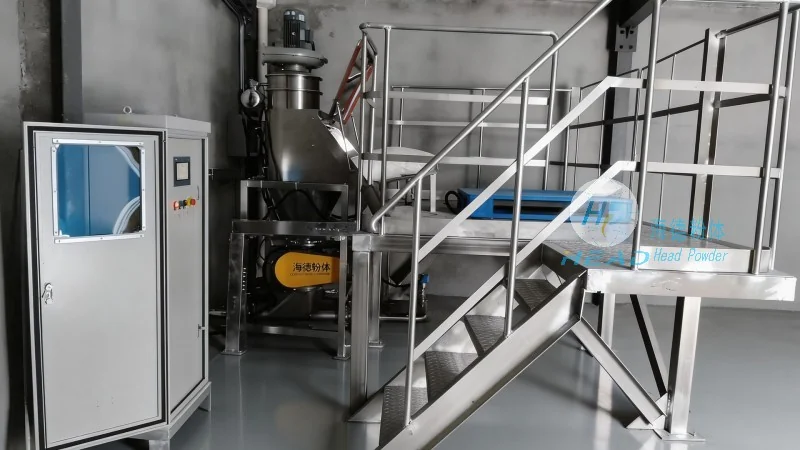
Negative Pressure Conveying: Mechanism and Benefits
Negative pressure conveying, or vacuum conveying, works by creating a low-pressure zone at the inlet of the conveying line. The vacuum draws the nanocalcium carbonate particles into the system, where they are then carried by the air flow to the discharge point. This method is typically used for shorter distances and is often preferred for applications requiring a cleaner environment, as the system is sealed and prevents dust from escaping into the workplace. The benefits of negative pressure systems include lower energy consumption for short-distance transport, simpler system design with fewer components, and reduced noise levels compared to positive pressure systems. However, they are generally less efficient for long-distance or high-capacity operations due to limitations in pressure differential and air flow.
Key Differences Between Positive and Negative Pressure Systems
The primary distinction between positive and negative pressure systems lies in the direction of air flow and the pressure differential. In positive pressure systems, air is forced into the pipeline, creating a pressure higher than the ambient environment. Conversely, negative pressure systems use a vacuum to pull air and material into the system, resulting in a pressure lower than ambient. This fundamental difference affects the system's energy requirements, equipment complexity, and suitability for specific operational conditions. For instance, positive pressure systems require more powerful compressors and are better suited for high-volume, long-distance transport, while negative pressure systems rely on vacuum pumps and are ideal for short-distance, low-volume applications.
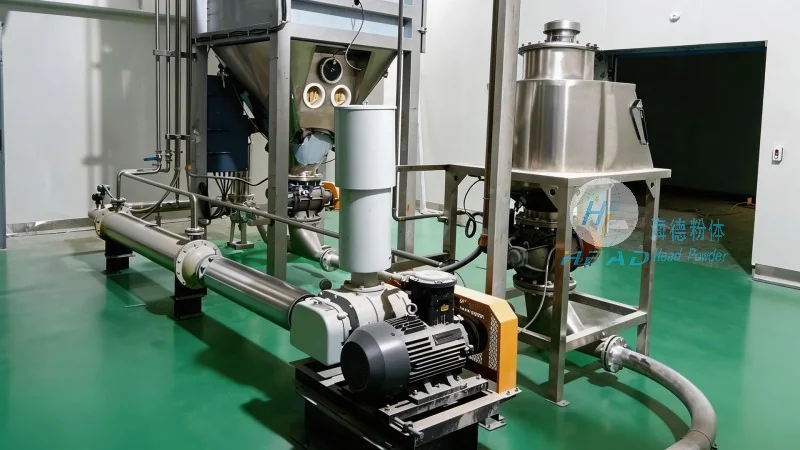
How to Distinguish Between the Two Systems for Nanocalcium Carbonate
Distinguishing between positive and negative pressure systems for nanocalcium carbonate involves evaluating several key factors, including the required transport distance, material characteristics, and operational environment. First, consider the distance between the loading and discharge points. If the distance is over 100 meters or involves significant vertical elevation changes, a positive pressure system is often more suitable due to its ability to maintain pressure and material flow over longer distances. For shorter distances, typically under 50 meters, a negative pressure system may suffice and offer cost savings. Second, assess the particle size and dust generation potential of the nanocalcium carbonate. Fine particles like nanocalcium carbonate are prone to agglomeration and dust, and positive pressure systems can help mitigate this by maintaining higher air velocities at the inlet, which reduces particle settling. However, negative pressure systems are better at containing dust, making them preferable in environments where dust control is a priority. Third, evaluate the system's energy efficiency and operational cost. Positive pressure systems generally consume more energy due to the need for high-pressure air, while negative pressure systems are more energy-efficient for short distances. Finally, consider the available space and infrastructure. Positive pressure systems require additional space for compressors and may need more robust piping, whereas negative pressure systems are more compact and easier to integrate into existing facilities.
Conclusion: Making the Right Choice with HeadPowder Engineering
Choosing between positive pressure and negative pressure for nanocalcium carbonate pneumatic conveying requires a careful analysis of operational requirements, material properties, and cost considerations. Shandong HeadPowder Engineering Co., Ltd. specializes in providing tailored solutions that address these factors, ensuring optimal performance and efficiency. By understanding the differences in system design, pressure management, and operational benefits, businesses can select the most appropriate conveying method for their nanocalcium carbonate applications. Whether opting for the long-distance capabilities of positive pressure or the dust-containment advantages of negative pressure, HeadPowder offers expert guidance and customized systems to meet the unique needs of each client. With a focus on quality, reliability, and customer satisfaction, HeadPowder Engineering Co., Ltd. is the trusted partner for pneumatic conveying solutions in the nanocalcium carbonate industry.