

Working Principle and Features of Boron Nitride Pneumatic Conveying Equipment
Understanding the working principle and features of boron nitride pneumatic conveying equipment is crucial for industries that rely on efficient material handling solutions. This equipment, manufactured by Shandong HeadPowder Engineering Co., Ltd., a leading company based in China, plays a vital role in transporting boron nitride powder and other fine powders with precision and reliability.
Working Principle of Boron Nitride Pneumatic Conveying Equipment
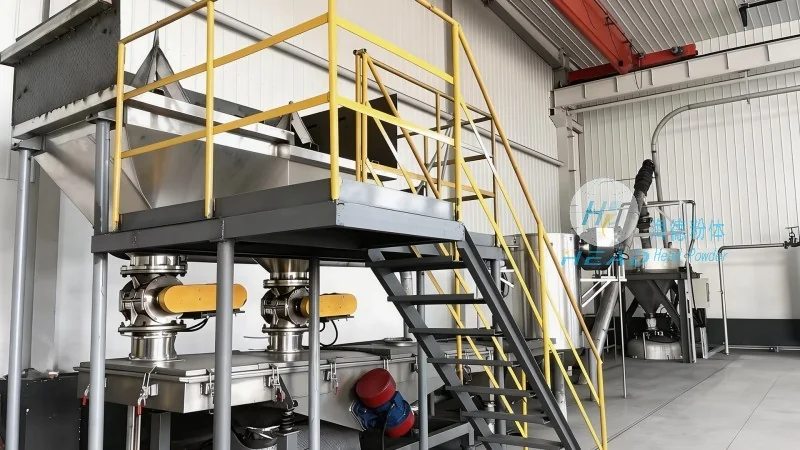
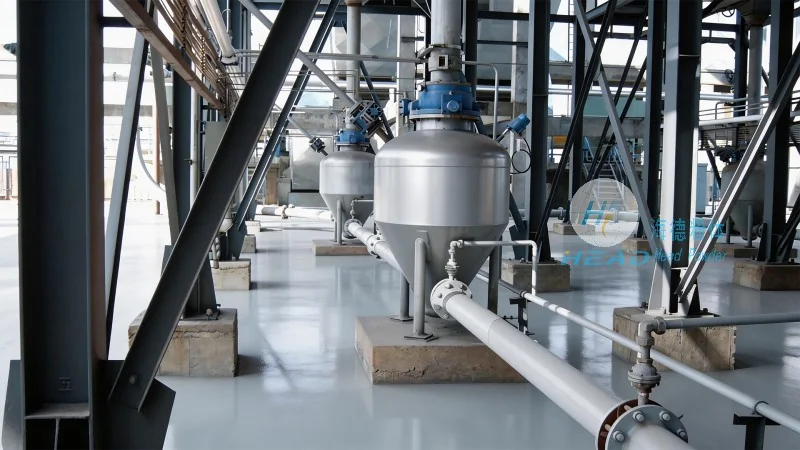
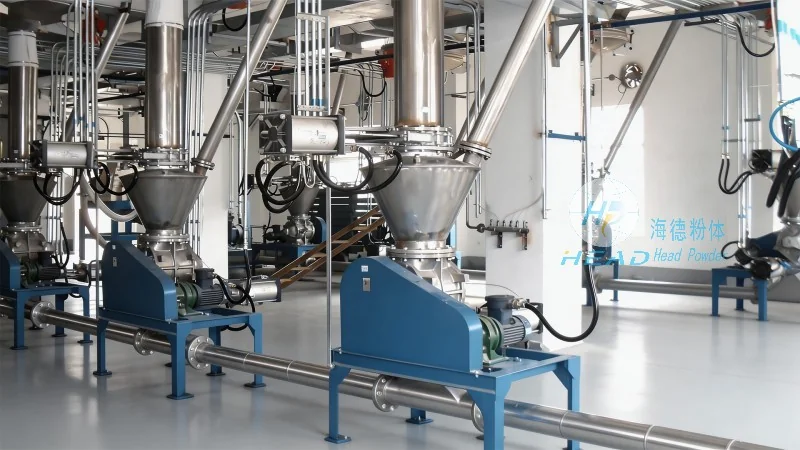
The working principle of boron nitride pneumatic conveying equipment involves a closed-loop system where compressed air is used to create a pressure gradient that moves the powder. The process begins with the material being fed into a hopper equipped with a rotary valve, which controls the flow rate and prevents backflow. Compressed air, typically supplied by an industrial blower, is introduced into the conveying line, creating a high-velocity air stream that entrains the powder particles. As the air and powder mixture travels through the pipeline, it passes through a filter to remove any entrained dust or debris, ensuring the material remains clean. The mixture then reaches a receiver or silo, where the air is separated from the powder, and the powder is collected for further processing. This entire process is controlled by a system of valves, sensors, and a control panel, allowing for precise regulation of the conveying parameters, such as air pressure and flow rate. The design is optimized to handle the unique properties of boron nitride, including its high thermal stability and low friction, which are essential for maintaining product integrity during transport.
Key Features of Boron Nitride Pneumatic Conveying Equipment
Boron nitride pneumatic conveying equipment from Shandong HeadPowder Engineering Co., Ltd. offers several distinctive features that enhance its performance and usability. One of the primary advantages is its ability to handle fine powders without causing agglomeration or degradation, thanks to the gentle handling provided by the air flow. The system is also designed for low maintenance, with components that are resistant to corrosion and wear, ensuring long-term operational efficiency. Another notable feature is the integration of dust collection systems, which capture any airborne particles and prevent environmental contamination. The equipment can be customized to meet specific process requirements, such as varying conveyor lengths or material flow rates, making it adaptable to different industrial applications. The use of high-quality materials in the construction, including corrosion-resistant metals and durable seals, further contributes to the equipment's durability and reliability. Additionally, the equipment is equipped with safety features like pressure relief valves and emergency shut-off mechanisms, ensuring operational safety in industrial environments.