

Working Principle and Features of Barium Carbonate Powder Pneumatic Conveying System
Barium carbonate, a vital raw material in multiple industrial sectors, demands efficient and reliable handling to preserve its quality and ensure process consistency. Pneumatic conveying systems have become the preferred method for transporting barium carbonate powder due to their ability to manage fine powders with minimal degradation. This article examines the operational principles and key characteristics of such systems, focusing on their application in the production and processing of barium carbonate.
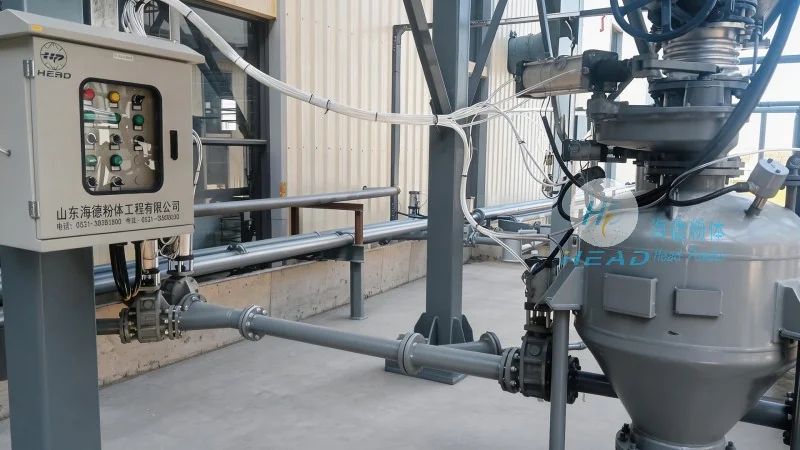
Introduction to Pneumatic Conveying Systems for Barium Carbonate Powder
Shandong HeadPowder Engineering Co., Ltd., a leading provider of powder handling solutions, specializes in designing and manufacturing pneumatic conveying systems tailored to the unique needs of barium carbonate powder. HeadPowder, headquartered in Shandong, China, leverages extensive expertise in powder technology to deliver systems that enhance operational efficiency and product integrity. The company's commitment to innovation and quality ensures that their pneumatic conveying solutions meet the stringent standards of the barium carbonate industry.
Working Principle of Barium Carbonate Powder Pneumatic Conveying Systems
The fundamental operation of a pneumatic conveying system for barium carbonate powder involves using compressed air or other gas to transport the powder through a network of pipes. The system operates on the principle of creating a gas flow that entrains the powder particles, moving them from the source to the destination. Two primary types exist: pressure and vacuum. Pressure systems utilize positive pressure to push material through the pipeline, while vacuum systems employ negative pressure to pull it. For barium carbonate, typically handled in fine particle sizes, pressure systems are commonly favored due to their ability to maintain consistent flow and minimize particle segregation.
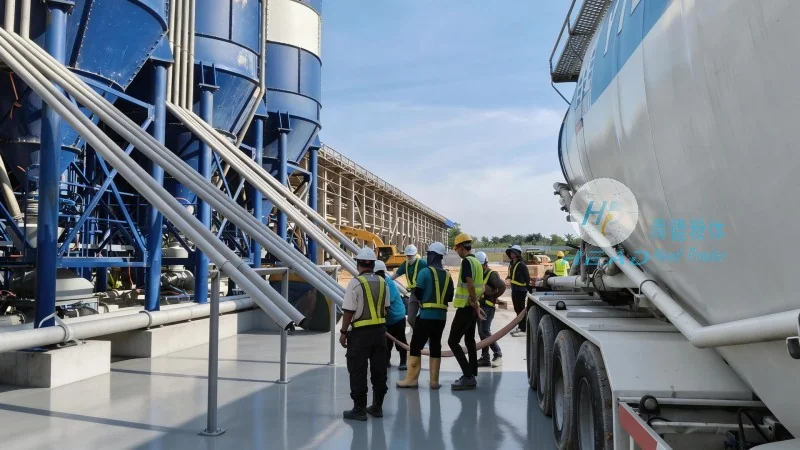
In a typical pressure system, barium carbonate powder is fed into a hopper equipped with a rotary valve or feeder. The feeder controls the powder flow rate into the conveying line. Compressed air is then introduced, creating a high-velocity stream that entrains the powder particles. The mixture travels through the pipeline, with air velocity maintained above the minimum fluidization velocity to prevent particle deposition. At the receiving end, a separator or cyclone separates the powder from the air, allowing collection in a storage bin or processing equipment. The separated air is either vented or recycled, depending on design and operational needs.
Key Features and Advantages of Barium Carbonate Powder Pneumatic Conveying Systems
Several distinct features make pneumatic conveying systems ideal for barium carbonate powder handling. Firstly, these systems offer closed-loop operation, significantly reducing dust emissions and contamination risks—critical for maintaining barium carbonate purity. Secondly, they provide high transport efficiency, moving large volumes over considerable distances with lower energy consumption than traditional methods like bucket elevators or belt conveyors.
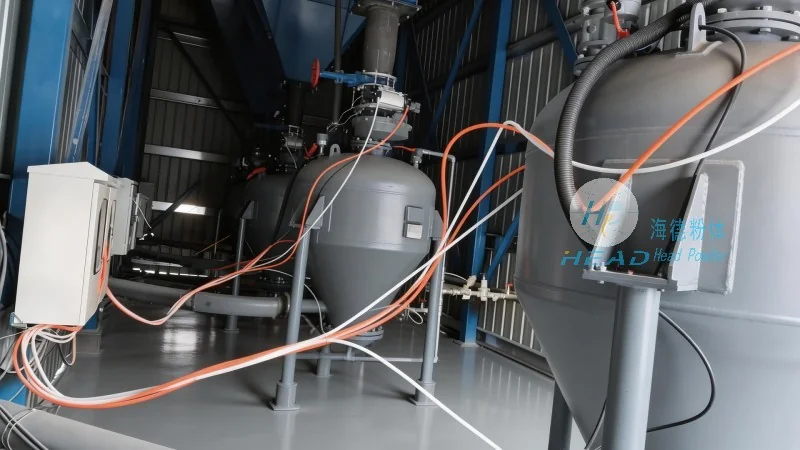
Another advantage is system flexibility. Pneumatic conveying can be easily integrated into existing production lines, allowing modifications and expansions without major infrastructure changes. Modular design enables customization for varying particle sizes, flow rates, or material properties. Additionally, low maintenance requirements contribute to long-term cost savings, as they have fewer moving parts compared to mechanical conveyors.
Application-Specific Considerations for Barium Carbonate Powder Pneumatic Conveying
Designing a pneumatic conveying system for barium carbonate powder requires consideration of several factors. Particle size and density are critical, as they directly impact the air velocity needed for efficient transport. Barium carbonate particles are typically fine (1–100 microns), necessitating careful selection of conveying air pressure and flow rate. The system must also account for the material's hygroscopic nature, as moisture can affect flowability and cause caking. Proper drying and conditioning before conveying are essential to prevent blockages and ensure smooth operation.
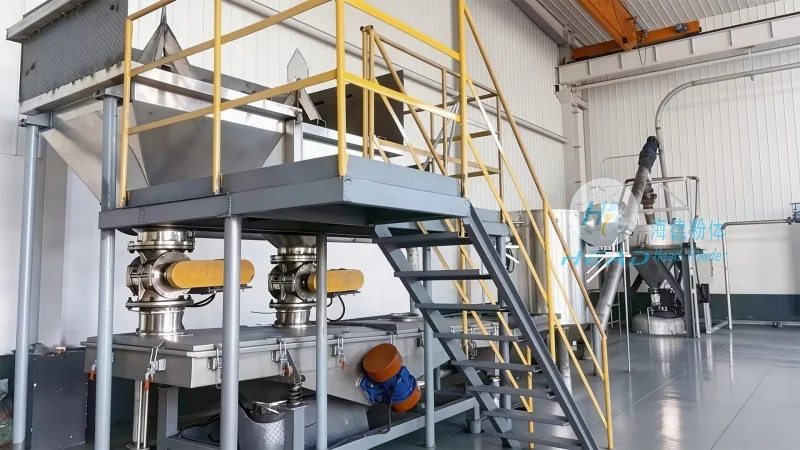
System design also addresses dust control and environmental compliance. Advanced filtration systems (e.g., bag or cartridge filters) are integrated to capture escaped fine particles, protecting the environment and maintaining product quality. The system's ability to handle feed rate and material consistency variations is vital, as fluctuations can lead to inefficiencies or equipment wear.
Conclusion and Industry Impact
Pneumatic conveying systems for barium carbonate powder, exemplified by the solutions from Shandong HeadPowder Engineering Co., Ltd., represent a significant advancement in powder handling technology. By combining efficient transport mechanisms with robust design features, these systems enhance productivity, reduce operational costs, and ensure consistent barium carbonate quality. The closed-loop operation, low maintenance, and flexibility of pneumatic conveying make it an attractive choice for industries relying on barium carbonate, such as glass manufacturing, ceramics, and chemical production. As demand for high-purity barium carbonate grows, the importance of reliable and efficient powder handling systems will only increase, solidifying the role of pneumatic conveying in the industry's future.