

Principle and Working Scene Characteristics of Sulfate Nickel Crystallization Material Conveying Lin
HeadPowder, a leading engineering company based in Shandong, China, specializes in the design and implementation of advanced material handling systems tailored for industrial applications. This article focuses on the principle and operational characteristics of a sulfate nickel crystallization material conveying line, a critical component in the production processes of nickel sulfate, a key raw material for lithium-ion batteries and other industrial chemicals.
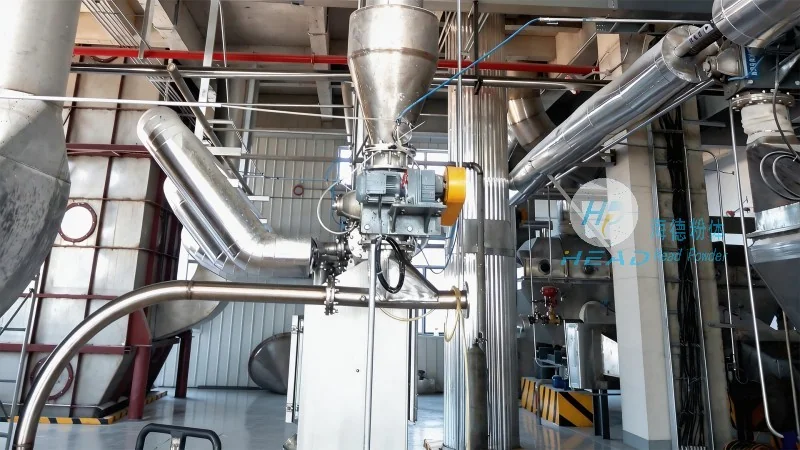
Understanding the Core Principle of Sulfate Nickel Crystallization Material Conveying
The conveying line for sulfate nickel crystallization operates on the principle of efficient material transport from the crystallization tank to subsequent processing stages. The system typically integrates several key components, including a screw conveyor, a belt conveyor, or a pneumatic conveying system, depending on the specific characteristics of the crystallized material. The primary goal is to ensure a continuous, controlled flow of the crystalline material while maintaining minimal product degradation and energy efficiency.
Key Components and Their Functions in the Conveying System
At the heart of the conveying line are components engineered to handle the unique properties of sulfate nickel crystals. For instance, a heavy-duty screw conveyor may be employed to move the solid crystals from the crystallization vessel to a storage hopper or a drying unit. The screw design, with its helical flights, ensures that the material is moved without excessive friction or breakage, preserving the crystalline structure. Additionally, a belt conveyor system might be used for longer horizontal or inclined transport distances, utilizing reinforced belts capable of withstanding the abrasive nature of the crystals.
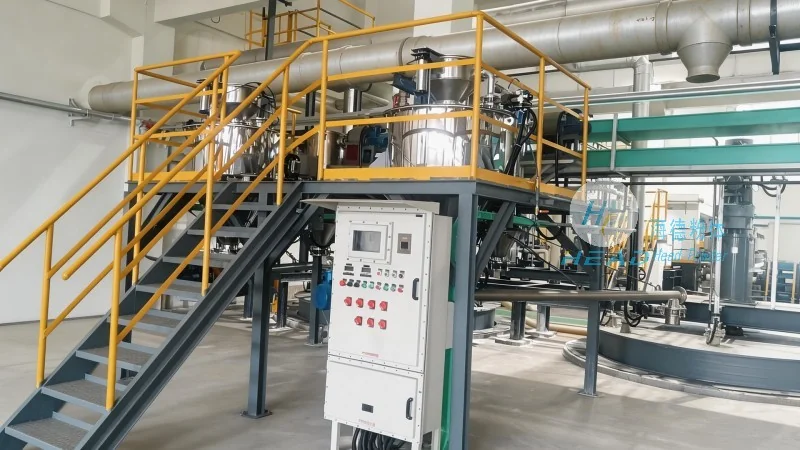
Working Scene Characteristics: Industrial Application and Operational Efficiency
The working scene characteristics of this conveying line are tailored to the demands of modern industrial production, particularly in the battery materials sector. The system is designed to operate in a high-capacity, continuous mode, supporting the large-scale production requirements of nickel sulfate. Key operational characteristics include high throughput rates, consistent material handling, and minimal downtime due to maintenance. The integration of sensors and control systems allows for real-time monitoring of the conveying process, ensuring that any deviations in flow or material quality are promptly detected and addressed.
Application in Battery Material Production: Ensuring Quality and Consistency
In the context of lithium-ion battery production, the quality of sulfate nickel is paramount. The conveying line plays a crucial role in maintaining the purity and crystalline integrity of the material. By employing gentle handling methods and precise control mechanisms, the system minimizes contamination and ensures that the material meets the stringent specifications required for battery cathode production. This not only enhances product quality but also contributes to the overall efficiency of the battery manufacturing process.
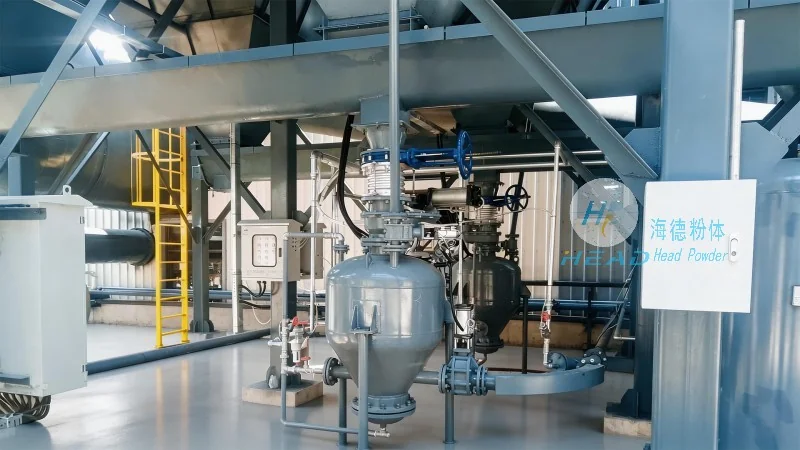
Customization and Scalability: Adapting to Diverse Production Needs
HeadPowder recognizes that industrial production environments vary widely, and thus, the conveying line is designed with flexibility in mind. The system can be customized to accommodate different production scales, from small-scale laboratory operations to large-scale commercial plants. This adaptability is achieved through modular design, allowing components to be added or modified as production needs evolve. Additionally, the company’s engineering expertise ensures that the conveying line is optimized for the specific characteristics of the sulfate nickel material, such as its moisture content, particle size, and flowability.
Conclusion: The Role of Advanced Conveying Systems in Modern Manufacturing
For companies like Shandong HeadPowder Engineering Co., Ltd., the sulfate nickel crystallization material conveying line represents a critical advancement in industrial material handling. By combining robust engineering principles with practical operational considerations, the system enhances production efficiency, maintains product quality, and supports the growing demands of the battery and chemical industries. As the demand for high-quality nickel sulfate continues to rise, such advanced conveying systems will remain essential in ensuring the smooth and efficient operation of modern manufacturing facilities.