

Principle and Working Scene Characteristics of Stearic Acid Sodium Powder Pneumatic Conveying System
Stearic acid sodium, also known as sodium stearate, is a widely used chemical compound in various industrial applications. The efficient handling and transportation of stearic acid sodium powder are crucial for maintaining production efficiency and product quality. Pneumatic conveying systems have emerged as a reliable solution for transporting such powders, offering advantages like dust-free operation, reduced material degradation, and improved safety. This article explores the principle and working scene characteristics of a stearic acid sodium powder pneumatic conveying system, highlighting its technical aspects and practical applications.
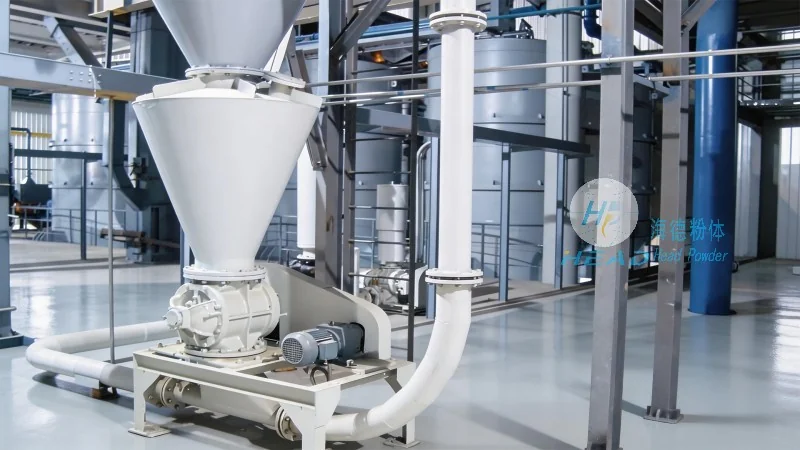
Introduction to Stearic Acid Sodium Powder Pneumatic Conveying
HeadPowder, a leading provider in the field, specializes in engineering and manufacturing advanced pneumatic conveying systems tailored to the needs of chemical and material processing industries. The company, based in Shandong, China, has extensive experience in designing systems that ensure the safe and efficient transport of fine powders like stearic acid sodium. The system under discussion combines proven pneumatic conveying technologies with customized solutions to meet diverse operational requirements.
Core Principle of the Pneumatic Conveying System
The fundamental principle of a pneumatic conveying system for stearic acid sodium powder involves the use of air or gas to transport the material through a pipeline network. The system typically operates under positive or negative pressure, depending on the specific application and material characteristics. In a positive pressure system, air is blown into the pipeline, creating a flow that carries the powder particles. Conversely, negative pressure systems draw air and powder from the source, using suction to move the material. The design of the system, including the choice of air velocity, pipeline diameter, and the configuration of components like feeders, cyclones, and filters, is critical to achieving optimal performance. For stearic acid sodium, which is a fine powder with specific flow properties, the system must be engineered to prevent agglomeration, maintain consistent flow rates, and minimize particle degradation during transport.
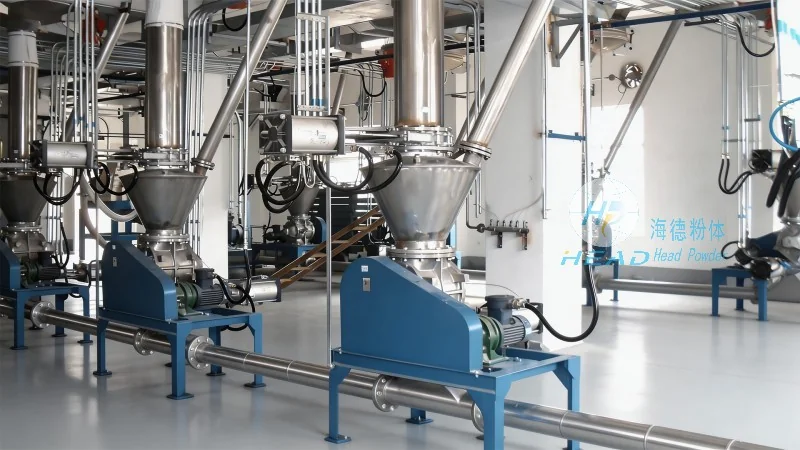
Key Components and Their Functions
The stearic acid sodium powder pneumatic conveying system consists of several key components, each playing a vital role in the overall operation. The primary components include the material feeder, which ensures a controlled and consistent feed of the powder into the system; the conveying line, which transports the material from the source to the destination; the separation equipment, such as cyclones or filters, which separate the powder from the air stream; and the control system, which monitors and regulates the operation of the entire system. The material feeder, often a rotary valve or a screw feeder, is designed to handle the fine nature of stearic acid sodium, preventing blockages and ensuring smooth material flow. The conveying line is typically made of corrosion-resistant materials like stainless steel to accommodate the chemical properties of the powder. The separation equipment is crucial for maintaining product purity and preventing dust emissions, which is essential for compliance with environmental regulations. The control system uses sensors and controllers to adjust air pressure, flow rates, and other parameters in real-time, ensuring stable and efficient operation.
Working Scene Characteristics and Applications
The working scene characteristics of the stearic acid sodium powder pneumatic conveying system are tailored to specific industrial environments, ensuring adaptability and efficiency. These systems are commonly used in applications such as chemical manufacturing, pharmaceutical processing, food processing, and material handling in various industries. The system's ability to handle fine powders without causing dust or contamination makes it ideal for applications where product quality and safety are paramount. For instance, in the chemical industry, the system can transport stearic acid sodium from storage silos to processing units, ensuring a continuous and controlled supply of raw material. In pharmaceutical applications, the system's dust-free operation is critical for maintaining sterile conditions and preventing cross-contamination. The working scene characteristics also include the system's scalability, allowing it to be customized for different production capacities and material volumes. Whether for small-scale laboratory use or large-scale industrial production, the system can be adjusted to meet the specific needs of the application.
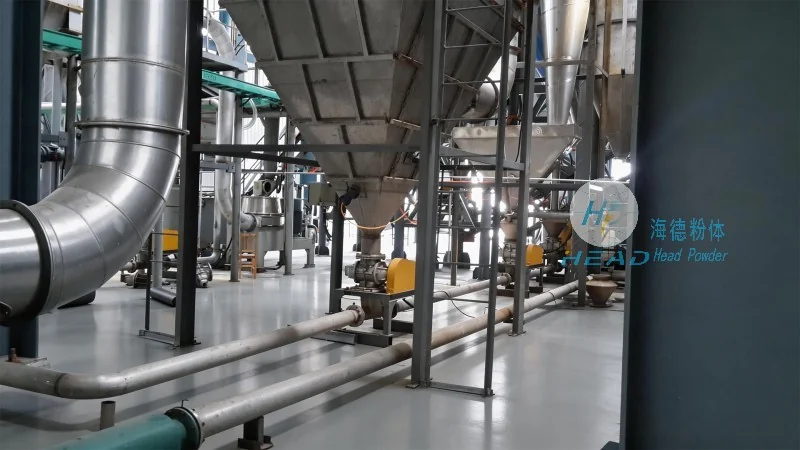
Advantages and Benefits of the System
The stearic acid sodium powder pneumatic conveying system offers several advantages that make it a preferred choice for many industries. One of the key benefits is its dust-free operation, which reduces the risk of inhalation and improves workplace safety. Unlike traditional bulk handling methods, the system minimizes dust generation, making it suitable for environments where dust control is essential. Another advantage is the reduced material degradation, as the system operates at controlled velocities and temperatures, preventing the breakdown of the powder particles. This is particularly important for stearic acid sodium, which can degrade if exposed to high temperatures or mechanical stress. The system also offers improved efficiency and productivity, as it allows for continuous and automated material transport, reducing labor costs and increasing production throughput. Additionally, the system's compact design and ease of installation make it suitable for both new and existing facilities, providing a cost-effective solution for material handling needs.
Conclusion and Future Outlook
In conclusion, the stearic acid sodium powder pneumatic conveying system is a sophisticated and efficient solution for transporting fine powders in various industrial applications. With its reliable operation, dust-free environment, and reduced material degradation, the system offers significant advantages over traditional handling methods. HeadPowder, with its expertise and experience, continues to develop and refine these systems to meet the evolving needs of the industry. As industries strive for higher efficiency, safety, and product quality, pneumatic conveying systems like this will remain a critical component in material handling processes. The future outlook for such systems is promising, with ongoing advancements in technology and materials that will further enhance their performance and adaptability.