

Operation Process and Working Principle of HeadPowder's Polystyrene Powder Pneumatic Conveying Equip
HeadPowder, a leading engineering company based in Shandong, China, specializes in the design and manufacturing of advanced pneumatic conveying systems for various powder materials. This article provides a detailed overview of the operation process and working principle of their polystyrene powder pneumatic conveying equipment, highlighting key components, operational steps, and technical aspects that ensure efficient and reliable material handling.
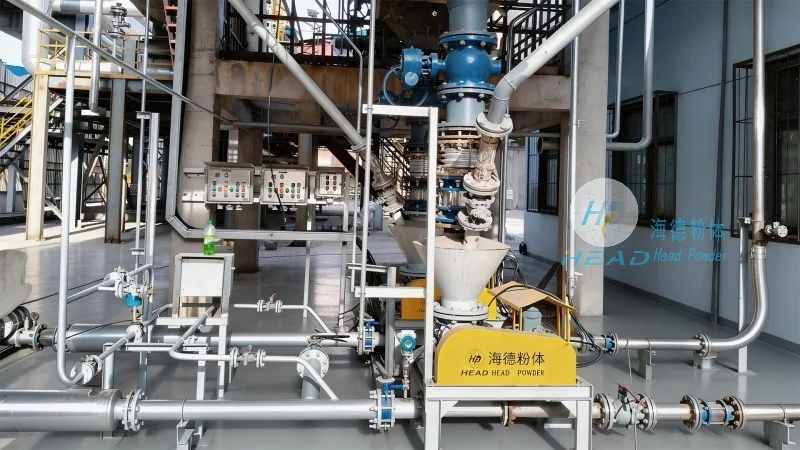
Overview of Polystyrene Powder Pneumatic Conveying Equipment
Polystyrene powder, a widely used thermoplastic material in industries such as packaging, electronics, and construction, requires specialized handling due to its fine particle size and potential for static charge accumulation. HeadPowder's pneumatic conveying equipment is engineered to address these challenges by utilizing air as the conveying medium, enabling safe and efficient transport of polystyrene powder from storage silos or processing units to downstream equipment like mixers, extruders, or packaging lines.
Key Components of the Pneumatic Conveying System
The polystyrene powder pneumatic conveying system developed by HeadPowder typically consists of several critical components that work in tandem to achieve seamless material transport. These components include a hopper or storage silo for powder storage, a rotary airlock valve to control the flow of powder into the conveying line, a venturi or pressure vessel to create the necessary air flow and pressure differential, a pipeline network for transporting the powder-air mixture, and a receiver or discharge hopper where the powder is deposited. Additionally, the system may incorporate accessories like filters to remove air contaminants, pressure regulators to maintain stable air pressure, and vacuum or pressure pumps to manage the conveying pressure as needed.
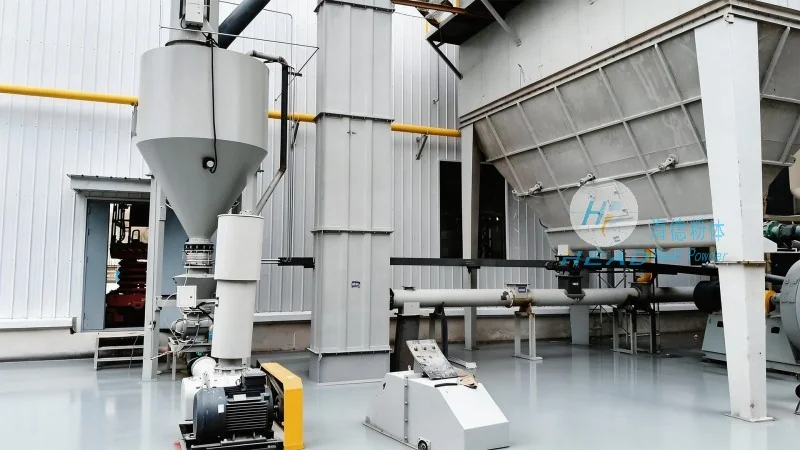
Working Principle of the Pneumatic Conveying Process
The operation of the polystyrene powder pneumatic conveying equipment follows a systematic process that ensures consistent and controlled material transfer. The process begins with the powder being discharged from the storage silo into the hopper. A rotary airlock valve then regulates the flow of powder into the conveying line, preventing backflow and maintaining a steady feed rate. Simultaneously, an air compressor or vacuum pump generates the required air pressure or vacuum, which is introduced into the pipeline. As the air flows through the venturi or pressure vessel, it creates a low-pressure zone that draws the polystyrene powder particles into the air stream, forming a powder-air mixture. This mixture travels through the pipeline at high velocity, transporting the powder to the receiver or discharge point. At the receiving end, a second rotary airlock valve or a filter separates the powder from the air, allowing the polystyrene powder to be collected in the discharge hopper while the air is either recirculated or vented to the atmosphere.
Operation Process Step-by-Step
The operation of HeadPowder's polystyrene powder pneumatic conveying equipment can be broken down into the following sequential steps:
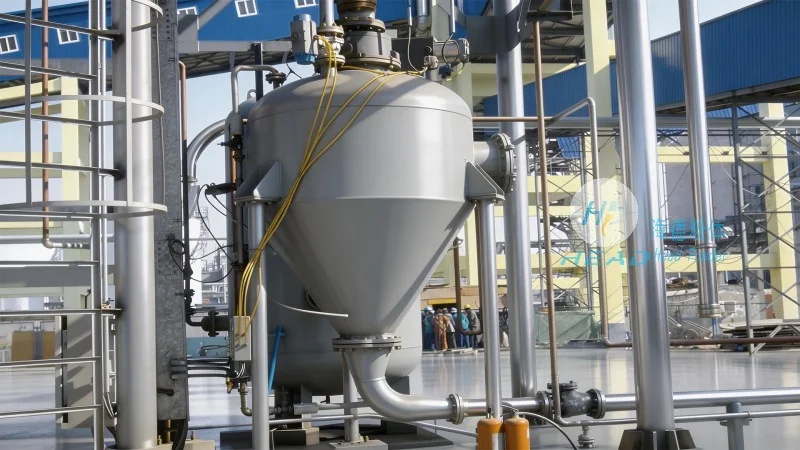
- Powder Loading: Polystyrene powder is stored in a silo or hopper, which is equipped with a level indicator to monitor the powder inventory. The hopper is connected to the conveying system via a rotary airlock valve, which controls the initial flow of powder into the system.
- Air Supply Initiation: The air compressor or vacuum pump is activated, establishing the necessary pressure or vacuum in the conveying line. This step ensures that the air flow is sufficient to create the required pressure differential for powder transport.
- Powder Conveying: As the air flows through the venturi or pressure vessel, it draws the polystyrene powder particles into the air stream. The mixture travels through the pipeline at a controlled velocity, maintaining the powder in suspension and preventing particle settling or blockage.
- Discharge and Separation: At the receiving end, the powder-air mixture enters a receiver or discharge hopper. A rotary airlock valve or a filter separates the polystyrene powder from the air, ensuring that the powder is deposited in the hopper without contamination from air particles. The separated air may be recirculated back to the system or vented to the environment, depending on the system design.
- System Monitoring and Control: Throughout the operation, the system is monitored using sensors and control panels to track parameters such as pressure, flow rate, and powder level. Automated controls adjust the air flow and powder feed rate to maintain optimal conveying conditions, ensuring consistent performance and preventing system failures.
Advantages of HeadPowder's Pneumatic Conveying Equipment
HeadPowder's polystyrene powder pneumatic conveying equipment offers several advantages over traditional mechanical conveying methods, including:
- Efficient Material Handling: The system enables high-capacity transport of polystyrene powder over long distances with minimal energy consumption, making it suitable for large-scale industrial applications.
- Reduced Downtime and Maintenance: The absence of moving parts in the conveying line (excluding the rotary airlock valves) reduces the risk of mechanical failure and lowers maintenance requirements, resulting in lower operational costs.
- Safe and Clean Operation: Pneumatic conveying minimizes dust generation and exposure to airborne particles, improving workplace safety and environmental compliance. The system also prevents cross-contamination between different powder batches.
- Flexibility in System Design: HeadPowder's equipment can be customized to accommodate various process requirements, including different conveying distances, powder types, and downstream equipment configurations.
Conclusion
HeadPowder's polystyrene powder pneumatic conveying equipment represents a reliable and efficient solution for handling fine polystyrene powder in industrial settings. By understanding the operation process and working principle of this system, users can optimize their material handling operations, improve productivity, and ensure compliance with safety and environmental standards. With its robust design and advanced control features, this equipment is a valuable asset for companies operating in the polystyrene processing industry.