

Types, Characteristics, and Application Ranges of Sulfate Potash Pneumatic Conveying
Sulfate potash, a vital component in modern agriculture and chemical industries, demands efficient and reliable transport solutions for its handling. Pneumatic conveying systems have emerged as a preferred method for moving sulfate potash due to their ability to handle fine powders, reduce contamination risks, and operate with minimal maintenance. This article delves into the various types of sulfate potash pneumatic conveying systems, their defining characteristics, and the diverse application ranges where they are widely utilized.
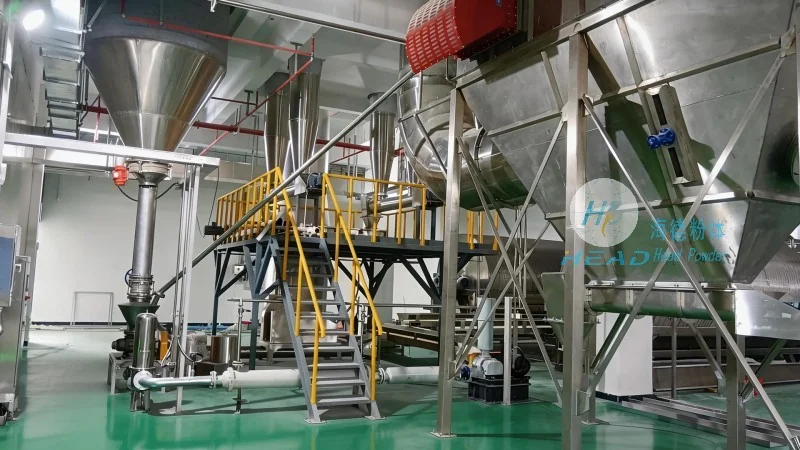
Types of Sulfate Potash Pneumatic Conveying Systems
The primary classification of pneumatic conveying systems for sulfate potash includes dilute-phase and dense-phase systems, each tailored to specific material properties and operational needs.
Dilute-phase systems operate by suspending sulfate potash particles in a high-velocity air stream. This method is suitable for materials with low to moderate dust generation and is commonly employed for short to medium-distance transport. The system typically utilizes a positive displacement blower or high-pressure air compressor to generate the necessary airflow. Key advantages of dilute-phase systems include lower energy consumption and a simpler design compared to dense-phase alternatives.
Dense-phase pneumatic conveying systems, conversely, transport sulfate potash in a low-velocity air stream with a higher air-to-material ratio. This approach is particularly effective for materials prone to bridging or agglomeration, as the slower air velocity minimizes particle degradation risks. Dense-phase systems are often used for longer-distance transport and when the material requires gentle delivery to avoid breakage.
Key Characteristics of Sulfate Potash Pneumatic Conveying
Several critical characteristics determine the performance and suitability of sulfate potash pneumatic conveying systems. These include material handling capacity, pressure drop, system efficiency, and the capability to handle varying particle sizes and moisture content.
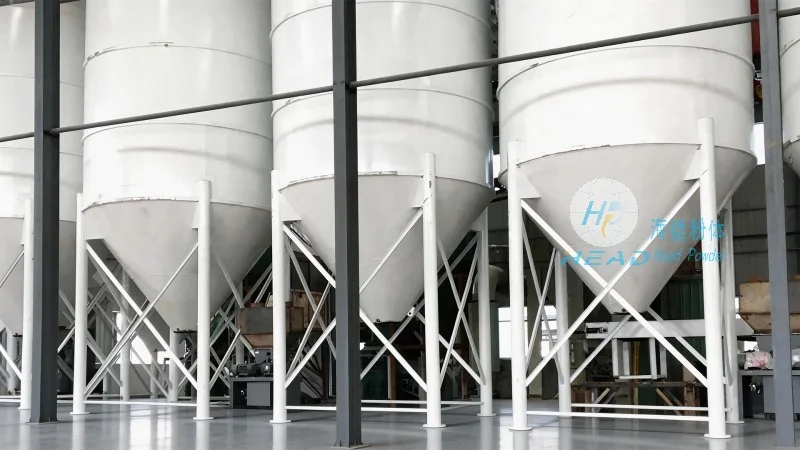
Material handling capacity, which refers to the volume of sulfate potash transported per unit time, is influenced by system design, air velocity, and material properties. Efficient systems are engineered to maximize capacity while maintaining stable operation and minimizing energy use.
Pressure drop, indicating airflow resistance within the conveying line, is a vital factor. Proper design minimizes pressure drop to ensure consistent performance and reduce the load on the air compressor or blower. Factors such as pipe diameter, length, and fittings all impact pressure drop.
System efficiency is crucial for industrial applications, directly affecting operational costs. Efficient systems optimize air velocity, pressure, and layout to balance performance and energy use.
The ability to handle varying particle sizes and moisture content is also essential. Sulfate potash can range from fine powders to larger granules, and moisture affects flow properties. Advanced systems incorporate air classifiers or moisture control mechanisms to ensure stable handling under different conditions.
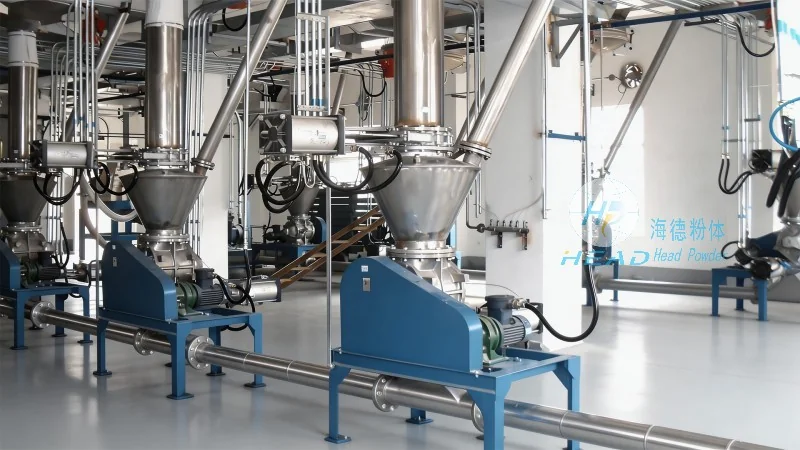
Application Ranges of Sulfate Potash Pneumatic Conveying
Sulfate potash pneumatic conveying systems are widely applied across industries due to their adaptability and efficiency. Major application ranges include fertilizer production, chemical processing, and agricultural material handling.
In the fertilizer industry, these systems transport sulfate potash from storage silos to blending and packaging facilities. The ability to handle fine powders and maintain product purity is critical for meeting quality standards. They are often integrated with other processing equipment to form a seamless production line.
In chemical processing, sulfate potash serves as a raw material for potassium-based compounds and fertilizers. Pneumatic conveying systems move the potash from storage to reaction vessels or processing units. Gentle handling preserves chemical properties, ensuring product quality and reducing waste.
In agricultural and industrial settings, sulfate potash is used as a soil amendment and in various industrial applications. Pneumatic conveying systems transport the material from storage to application sites, such as farms or plants. They are designed to handle large volumes efficiently and safely, preventing spillage or contamination.