

Working Principle and Characteristics of Pneumatic Conveying for Crystal Particles
Shandong HeadPowder Engineering Co., Ltd. specializes in providing advanced pneumatic conveying solutions for crystal particles, leveraging a deep understanding of material handling and fluid dynamics. The working principle of these systems involves utilizing a pressurized or vacuum system to transport solid particles through a pipeline using air or gas as the conveying medium. The process typically begins with a feeding mechanism that introduces the crystal particles into the conveying line. This may be a rotary valve, a star feeder, or a hopper with a controlled discharge system, depending on the particle size and flow characteristics. The feeding device ensures a consistent and controlled flow of particles into the pipeline, preventing blockages and maintaining uniform conveying rates.
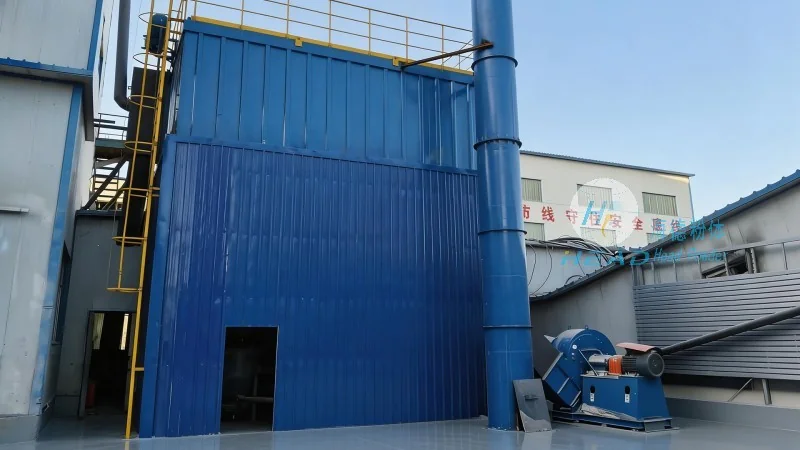
The conveying medium, usually air or a specific gas, is introduced into the pipeline either by a blower or a vacuum pump. In a pressurized system, the air is compressed and forced through the pipeline, creating a positive pressure that propels the particles forward. The velocity of the air is critical; it must be sufficient to overcome the gravitational and frictional forces acting on the particles but not so high as to cause excessive wear on the pipeline or damage to the crystal particles. The air velocity is often optimized based on the particle size, density, and shape, as well as the pipeline diameter and length.
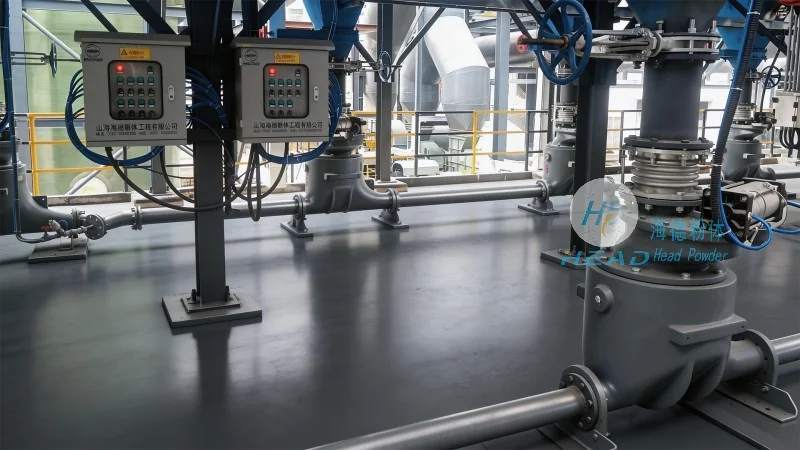
As the particles are carried by the air stream, they experience a series of interactions. The air flow around the particles creates drag forces that help lift and move them along the pipeline. The design of the pipeline, including bends, expansions, and contractions, is carefully engineered to minimize pressure losses and maintain the air velocity necessary for stable conveying. Specialized components such as cyclones or separators may be used at the discharge end to separate the particles from the air stream, allowing the crystal particles to be collected in a receiving hopper or silo while the air is either recirculated or vented to the atmosphere.
Key Characteristics of Pneumatic Conveying for Crystal Particles
When evaluating pneumatic conveying systems for crystal particles, several distinct characteristics stand out as advantages and considerations. One of the primary benefits is the ability to transport materials in a closed system, which enhances safety by containing dust and preventing contamination from external sources. This is particularly important for crystal particles, which may be sensitive to moisture or environmental factors. The closed pipeline also reduces the risk of product degradation or loss during transport, ensuring that the final product maintains its quality and purity.
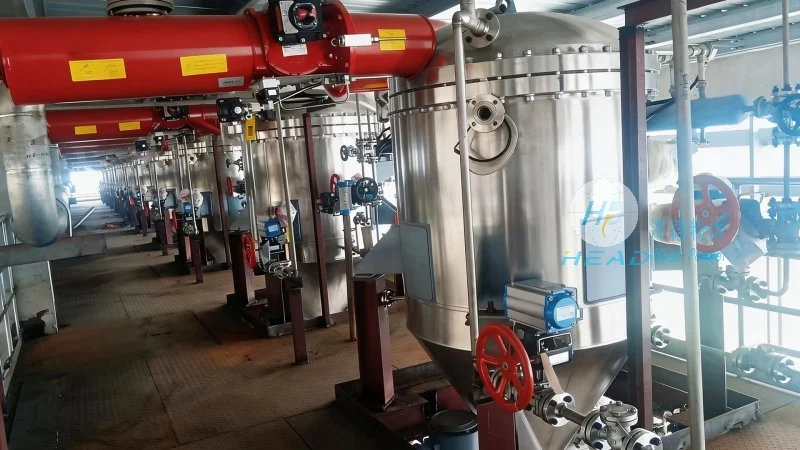
Another significant characteristic is the flexibility of the system. Pneumatic conveying can handle a wide range of particle sizes, from fine powders to larger granules, and can be adapted to various production line configurations. The system can be easily integrated with other processing equipment, such as mixers, classifiers, or packaging machines, allowing for seamless material flow from one stage to the next. This adaptability makes it suitable for both small-scale laboratory applications and large-scale industrial operations.