

[WOKING PRINCIPLE AND FEATURES OF CATALYST POWDER CONVEYING SYSTEMS]
The catalyst powder conveying system is a specialized equipment designed for the efficient and safe transportation of catalyst powders in industrial processes. Such systems are crucial in various chemical and petrochemical applications where catalysts are used as essential components in reactions, requiring precise handling to maintain product quality and operational efficiency. This article will explore the working principle and key features of these systems, providing a comprehensive overview for professionals in the field.
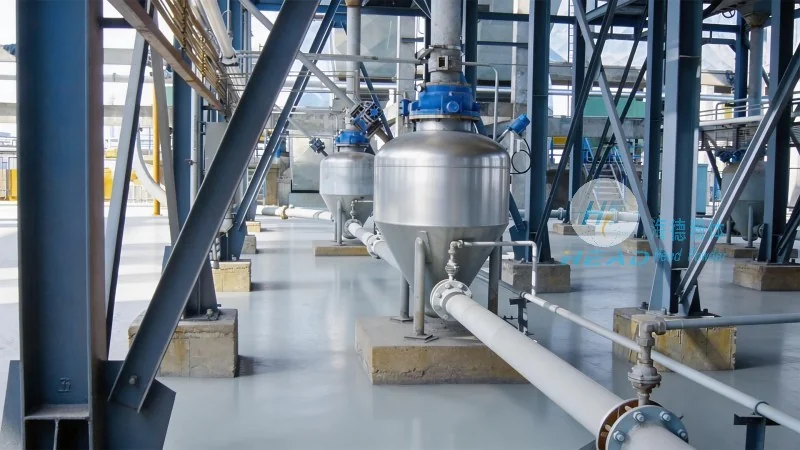
Working Principle of the Catalyst Powder Conveying System
The core working principle of a catalyst powder conveying system revolves around the use of pneumatic or mechanical methods to transport fine powders. The system typically consists of several key components, including a hopper for material storage, a feeder to control the flow rate, a conveying line (often equipped with airlocks or rotary valves), and a receiver for the discharged material.
In pneumatic conveying systems, the catalyst powder is suspended in a stream of air and transported through the pipeline. The air velocity is carefully controlled to ensure that the powder particles remain in suspension without causing excessive wear on the system components. The pressure drop along the pipeline is managed to maintain the flow rate and prevent blockages. Mechanical conveying systems, on the other hand, utilize screw conveyors, belt conveyors, or bucket elevators to move the powder, relying on mechanical force rather than air pressure.
Key Features of the Catalyst Powder Conveying System
Several distinct features make catalyst powder conveying systems particularly suitable for handling sensitive materials like catalysts:
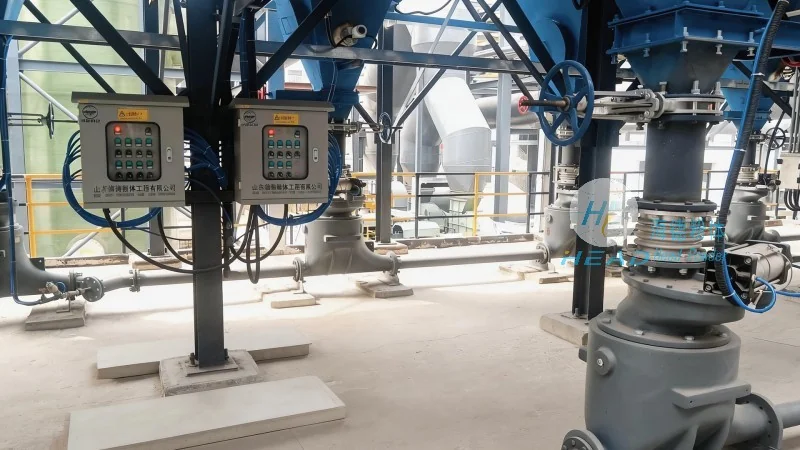
1. **Low Particle Damage**: The design of the conveying components, such as the use of smooth, non-abrasive surfaces and controlled air velocities, minimizes the mechanical stress on the catalyst particles. This is critical because catalyst activity can be significantly affected by particle size and structural integrity.
2. **Sealability and Contamination Control**: The system incorporates airlocks and sealed connections to prevent dust leakage and cross-contamination between different batches of catalysts. This ensures that the product remains pure and meets the stringent quality standards required in pharmaceutical and specialty chemical industries.
3. **Adjustable Flow Control**: Advanced control systems allow operators to precisely regulate the flow rate of the catalyst powder. This feature is essential for maintaining consistent reaction conditions in downstream processes, such as catalytic reactors, where the amount of catalyst directly impacts the reaction rate and product yield.
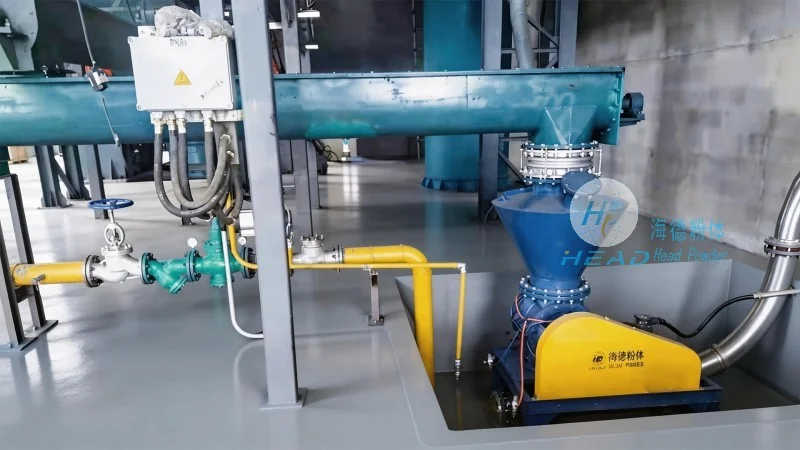
4. **Dust-Free Operation**: The enclosed design of the system, combined with efficient filtration and dust collection mechanisms, ensures that the operation is conducted in a clean environment. This not only protects the environment but also enhances workplace safety by reducing the risk of respiratory hazards associated with fine powder handling.
5. **Scalability and Flexibility**: Modern catalyst powder conveying systems are designed to be scalable, allowing them to be adapted to different production capacities and process requirements. They can be integrated with existing industrial setups or used as standalone units, providing flexibility in system design and expansion.
Technical Specifications and Application Scenarios
The technical specifications of a catalyst powder conveying system vary based on the specific application and the type of catalyst being handled. Key parameters include the conveying capacity (typically measured in kilograms per hour), the maximum particle size (usually ranging from 1 to 200 microns for most catalyst powders), and the operating pressure or air flow rate.
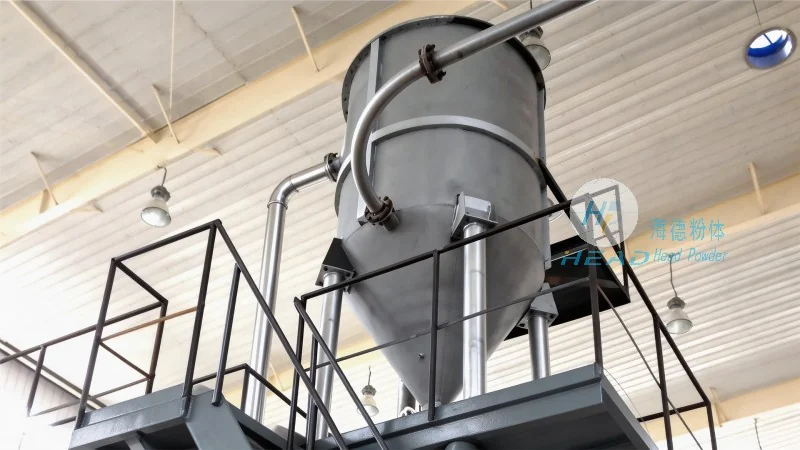
These systems are widely used in the production of pharmaceuticals, fine chemicals, and petrochemicals. For example, in the pharmaceutical industry, they are employed to transport active pharmaceutical ingredients (APIs) that require high purity and minimal contamination. In the petrochemical sector, they are used to convey catalysts for processes like cracking and reforming, where the efficiency of the catalyst directly impacts the quality of the final fuel products.
Company Profile: Shandong HeadPowder Engineering Co., Ltd.
Shandong HeadPowder Engineering Co., Ltd., operating under the brand name "headpowder," is a leading manufacturer of specialized powder handling equipment. With its headquarters in Shandong, China, the company has established itself as a trusted provider of catalyst powder conveying systems and other industrial powder processing solutions. HeadPowder's products are designed to meet the demanding requirements of various industries, combining advanced technology with rigorous quality control to ensure reliable performance and long service life.
The company's commitment to innovation and customer satisfaction has enabled it to serve a diverse range of clients, from small-scale chemical manufacturers to large multinational corporations. By leveraging years of experience in powder technology, HeadPowder continuously improves its products to address the evolving needs of the market, providing tailored solutions that enhance operational efficiency and product quality.