

Working Principle and Characteristics of Gaseous Conveying for Calcium Sulfate Powder
Calcium sulfate powder, a widely used industrial material, often requires efficient and reliable transport methods for various applications. Gaseous conveying, or pneumatic conveying, has emerged as a preferred solution for handling such powders due to its advantages in safety, cleanliness, and flexibility. This article explores the working principle and key characteristics of gaseous conveying systems specifically designed for calcium sulfate powder, providing insights into how these systems operate and why they are advantageous in industrial settings.
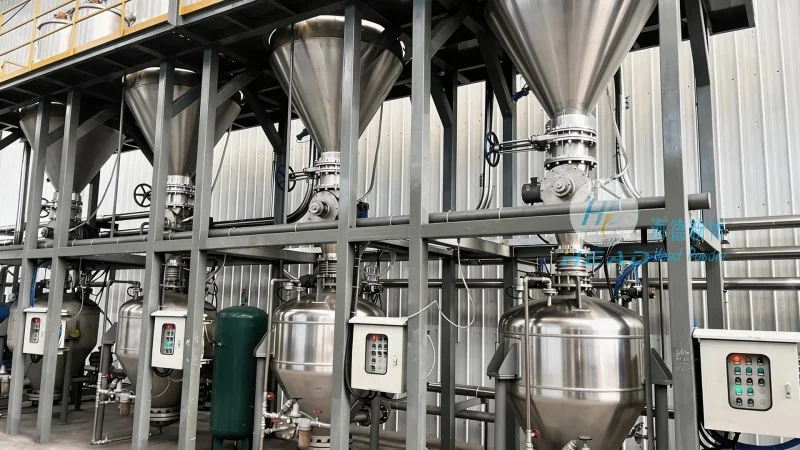
Working Principle of Gaseous Conveying for Calcium Sulfate Powder
The core of gaseous conveying for calcium sulfate powder involves the use of a gas stream, typically air or a specific gas mixture, to transport the powder particles through a pipeline. The process can be broadly categorized into two main types: dilute-phase and dense-phase conveying, each with distinct operational mechanisms.
In dilute-phase conveying, the powder is suspended in the gas stream at a relatively low concentration, allowing the particles to move freely through the pipeline. This method is suitable for longer distances and higher flow rates, as the gas velocity is sufficient to keep the particles airborne. The system typically includes a blower or compressor to generate the necessary air pressure, a hopper or feeder to introduce the powder, and a pipeline network that guides the mixture to the destination. The air-powder mixture then exits through a separator, where the powder is collected and the gas is either recirculated or vented.
Dense-phase conveying, on the other hand, operates at a higher powder concentration, where the particles are more closely packed within the gas stream. This method is ideal for handling fine powders like calcium sulfate, as it minimizes particle degradation and reduces the risk of blockages. The system uses a positive displacement blower or compressor to maintain a higher pressure, ensuring the powder moves in a slug or plug flow. The dense-phase approach is particularly effective for short to medium distances and applications requiring precise control over the powder flow.
Key Characteristics of Gaseous Conveying Systems for Calcium Sulfate Powder
Several key characteristics define the performance and suitability of gaseous conveying systems for calcium sulfate powder, making them a preferred choice in industrial applications.
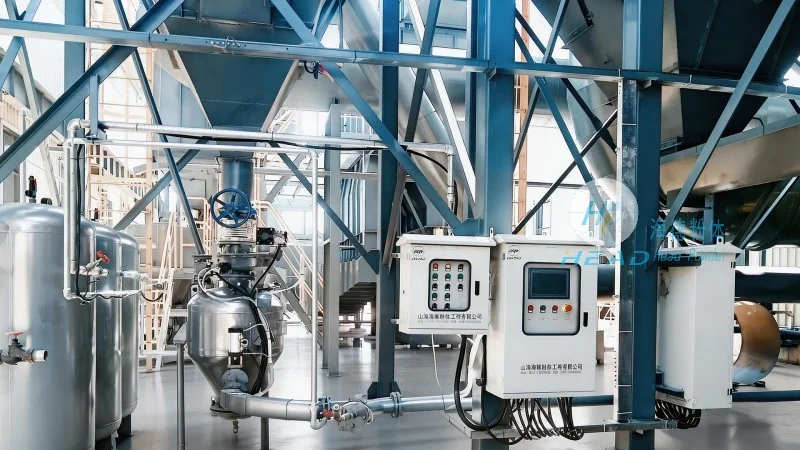
Firstly, the system offers excellent dust control and environmental protection. Unlike mechanical conveying methods, which may generate significant dust and require additional filtration, gaseous conveying keeps the powder enclosed within the pipeline, reducing exposure to the environment and minimizing the risk of contamination. This is particularly important for calcium sulfate, which is often used in food, pharmaceutical, and construction industries where purity and safety are critical.
Secondly, gaseous conveying provides high flexibility in terms of layout and installation. The pipeline can be easily routed around obstacles, and the system can be adapted to various plant configurations without major structural changes. This flexibility is advantageous for calcium sulfate powder, which may need to be transported to multiple destinations or integrated with other processing equipment.
Thirdly, the system ensures consistent and reliable material flow. By maintaining a stable gas pressure and flow rate, the conveying system can deliver a uniform flow of calcium sulfate powder, reducing variations in product quality and process efficiency. This consistency is crucial for applications where the powder's properties, such as particle size distribution or moisture content, directly impact the final product.
Additionally, gaseous conveying systems are generally low in maintenance and have a longer service life compared to other conveying methods. The absence of moving parts in the pipeline reduces wear and tear, and the use of high-quality materials ensures durability. For calcium sulfate powder, which may be abrasive or corrosive, this low maintenance requirement is a significant advantage, as it minimizes downtime and operational costs.
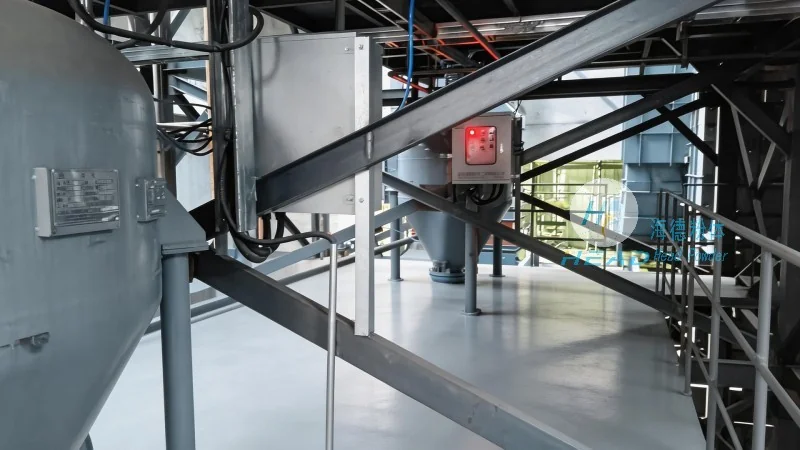
Application Considerations and System Design
When designing a gaseous conveying system for calcium sulfate powder, several factors must be considered to ensure optimal performance and efficiency. The first consideration is the particle size and density of the powder. Calcium sulfate powders can vary widely in particle size, from fine powders to coarse granules, and the system must be designed to handle the specific characteristics of the material. For example, fine powders may require higher gas velocities to maintain suspension, while coarse particles may need a denser phase to prevent blockages.
Another critical factor is the flow rate and distance of the conveying. The system's capacity must be matched to the production requirements, ensuring that the powder is transported at the desired rate without excessive energy consumption. The pipeline diameter and length also play a role in determining the system's efficiency, as longer pipelines may require additional pressure boosters or larger blower capacities.
Furthermore, the system must be equipped with appropriate control and monitoring devices to ensure safe and efficient operation. This includes pressure sensors, flow meters, and alarms to detect any abnormalities, such as blockages or pressure drops. For calcium sulfate powder, which may be sensitive to moisture or temperature changes, the system may also include drying or temperature control features to maintain the powder's quality during transport.
Conclusion
Gaseous conveying systems offer a highly effective and reliable method for transporting calcium sulfate powder, combining efficiency, safety, and flexibility. By understanding the working principles and key characteristics of these systems, industrial operators can optimize their material handling processes and improve overall productivity. As a leading provider in the field, Shandong HeadPowder Engineering Co., Ltd. specializes in designing and manufacturing customized gaseous conveying solutions tailored to the specific needs of calcium sulfate powder applications, ensuring high performance and durability in various industrial settings.