

Principle and Operational Scenarios of Metal Powder Pneumatic Conveying Systems
For industries dealing with metal powders, efficient and reliable material handling is crucial to maintaining production efficiency and product quality. Pneumatic conveying systems have emerged as a preferred solution for transporting metal powders due to their ability to handle fine particles, minimize contamination, and operate in a closed environment. This article explores the fundamental principles of metal powder pneumatic conveying lines and highlights key operational characteristics across various industrial applications.
Understanding the Core Principles of Metal Powder Pneumatic Conveying
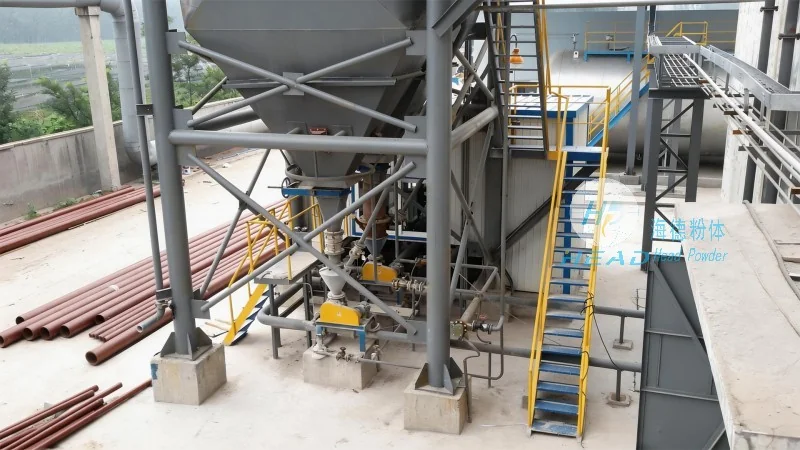
The operation of a metal powder pneumatic conveying system relies on the principles of fluid dynamics and particle transport. At its essence, the system uses compressed air or other gases to move metal powders through a network of pipes. The process typically involves several key components: a material feed hopper, a conveying line (often equipped with valves and bends), and a discharge unit. The compressed air creates a pressure differential that propels the metal powder particles forward, while the design of the system ensures minimal particle degradation and consistent flow rates.
One of the primary advantages of this method is the ability to handle abrasive and sensitive metal powders without causing contamination or degradation. The closed system design prevents exposure to external contaminants, which is critical for applications where product purity is paramount. Additionally, pneumatic conveying systems can be designed to operate at different pressures, ranging from low to high pressure, allowing for flexibility in handling various powder characteristics and distances.
Key Operational Characteristics and Application Scenarios
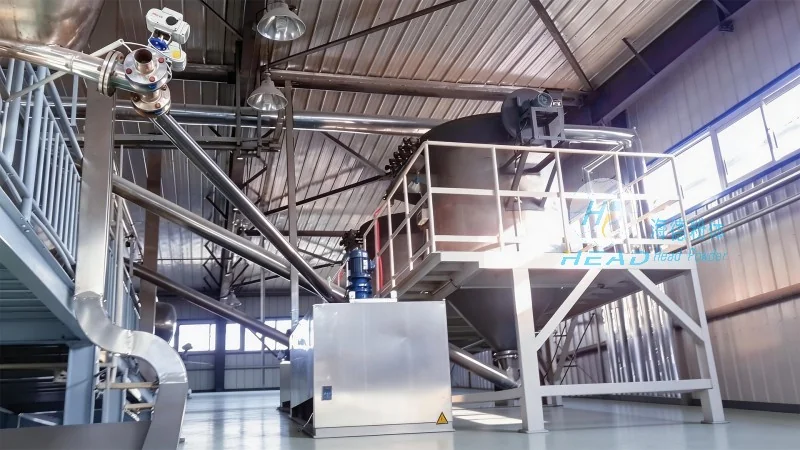
The effectiveness of metal powder pneumatic conveying lines is influenced by several operational characteristics that adapt to different industrial needs. These include the conveying velocity, which determines the speed at which the powder moves through the system, and the system's capacity, which refers to the volume of material that can be transported per unit time. The design also considers factors such as particle size distribution, moisture content, and the specific properties of the metal powder being handled.
In industrial settings, metal powder pneumatic conveying systems are widely used in applications such as powder metallurgy, pharmaceuticals, and chemical processing. For instance, in powder metallurgy, these systems are essential for transporting metal powders used in the production of sintered components, where consistent particle flow is critical to achieving uniform material properties. In the pharmaceutical industry, the closed and sterile design of the system ensures that metal powders used in drug formulations remain free from contaminants, meeting stringent regulatory standards.
Another significant application is in the chemical processing sector, where metal powders are used as catalysts or raw materials. The ability of pneumatic conveying to handle abrasive and reactive powders safely makes it an ideal choice for these environments. Furthermore, the system's flexibility allows for integration into existing production lines, reducing downtime and enhancing overall operational efficiency.
Company Profile: Shandong HeadPowder Engineering Co., Ltd.
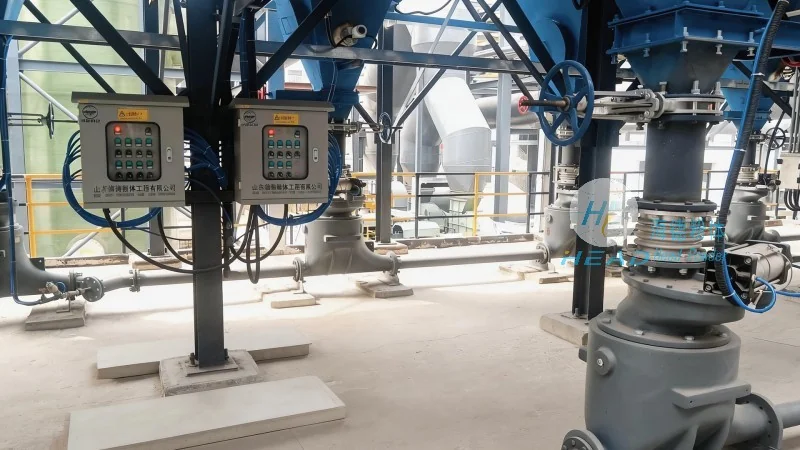
As a leading provider of pneumatic conveying solutions, Shandong HeadPowder Engineering Co., Ltd. specializes in designing and manufacturing customized metal powder pneumatic conveying systems tailored to the unique requirements of various industries. With a focus on innovation and quality, the company leverages advanced engineering principles to develop systems that optimize material handling while minimizing operational costs. HeadPowder's expertise in material science and fluid dynamics ensures that their solutions are not only efficient but also durable and reliable, meeting the demands of modern industrial production.
HeadPowder's commitment to customer satisfaction is reflected in their comprehensive approach to system design, which includes thorough analysis of material properties, operational conditions, and client-specific needs. By collaborating closely with clients, the company ensures that the final pneumatic conveying system is optimized for performance, safety, and longevity. The company's facilities, located in Shandong, China, are equipped with state-of-the-art technology and skilled professionals who are dedicated to delivering high-quality products and services.