

Principle and Working Scene Characteristics of Powder Conveying Line for Battery Anode Materials
HeadPowder, a leading engineering company based in Shandong, China, specializes in the design and manufacturing of advanced powder conveying systems tailored for the battery industry. This article explores the fundamental principles behind powder conveying lines used for battery anode materials and highlights the key characteristics of their operational environments.
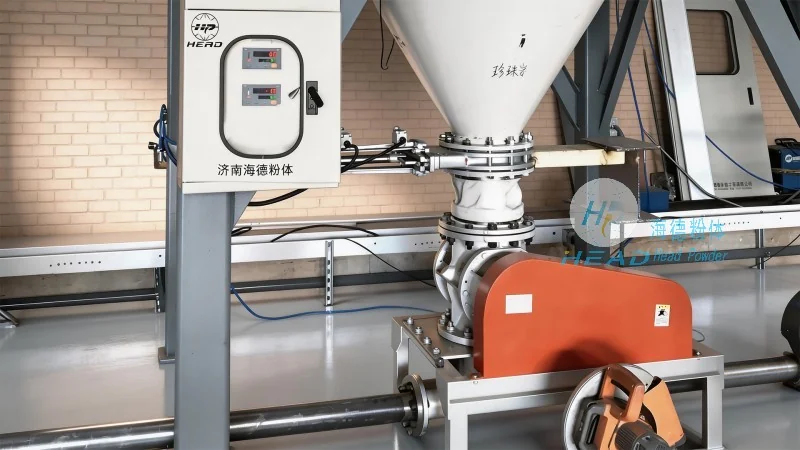
Principle of the Powder Conveying Line
The powder conveying line for battery anode materials operates on the principle of efficient, controlled movement of fine powders from one processing stage to another. These systems typically integrate multiple components, including feeders, conveyors, and control units, to ensure consistent and reliable material flow. The core function is to transport raw materials or intermediate products with minimal loss and maximum safety, which is critical in battery production where material purity and uniformity directly impact battery performance.
Key components of such a system include rotary feeders, which regulate the flow rate of powders, and pneumatic or mechanical conveyors that transport the material through pipelines. Advanced control systems are often employed to monitor and adjust parameters like pressure, flow rate, and temperature in real-time, ensuring optimal operation under varying conditions. The design also emphasizes dust control and environmental safety, as handling fine powders requires measures to prevent contamination and protect operators.
Working Scene Characteristics
The operational environment of a powder conveying line for battery anode materials is characterized by high precision and efficiency requirements. These systems are commonly found in large-scale battery manufacturing facilities where anode material production involves multiple steps, such as mixing, drying, and granulation. The working scene typically includes:
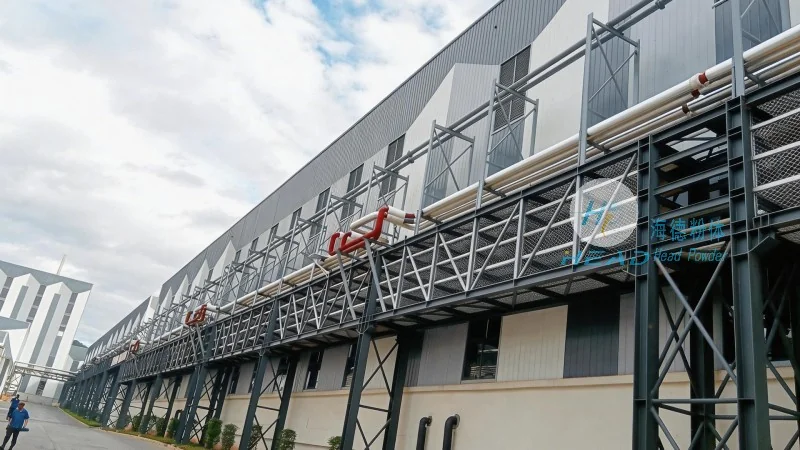
1. **High Automation and Integration**: Modern powder conveying lines are integrated with other production equipment, such as mixing tanks and granulators, to form a seamless production line. This integration allows for automated material transfer, reducing manual intervention and improving production throughput.
2. **Variety of Material Handling**: The system is designed to handle a range of anode materials, including graphite, silicon, and other conductive additives. Each material may have different physical properties, such as particle size and moisture content, which the conveying line must accommodate through adjustable settings.
3. **Space Efficiency and Layout Flexibility**: In battery production plants, space is often limited, and the conveying line is designed to fit within the available footprint while maintaining optimal material flow paths. The layout may vary depending on the plant's configuration, with some systems featuring vertical or horizontal conveyors to optimize space utilization.
4. **Safety and Environmental Compliance**: Given the nature of powder handling, the working scene emphasizes safety measures like dust collection systems and explosion-proof designs. Compliance with industrial safety standards is essential to protect both personnel and equipment.
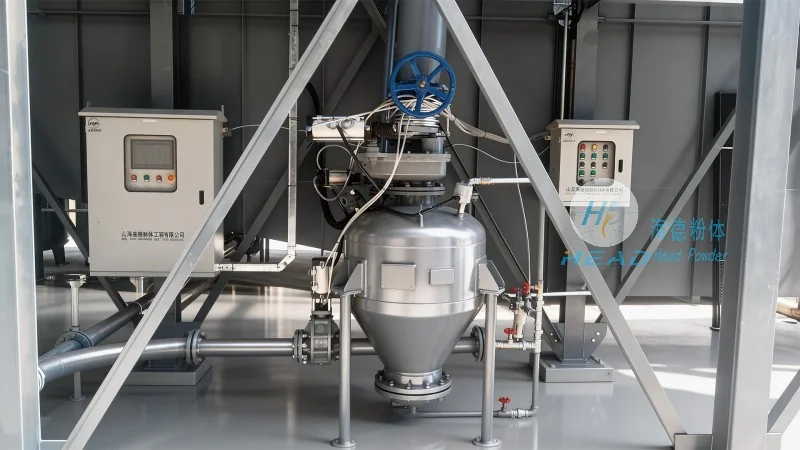
Application Scenarios
HeadPowder's powder conveying lines are applied in various stages of battery anode material production. For instance, in the initial mixing stage, the system can transport raw powders to the mixing equipment, ensuring a uniform blend of ingredients. During the drying process, the conveying line may transport wet or moist materials to drying ovens, where the material is heated to remove moisture. After drying, the material is conveyed to granulation equipment for size reduction, and then to the final packaging or storage area.
In large-scale battery manufacturing, the efficiency of the powder conveying line directly impacts the overall production capacity. By minimizing downtime and ensuring consistent material flow, these systems contribute to higher yields and better product quality. The working scene characteristics, such as high automation and space efficiency, make the powder conveying line a critical component in modern battery production facilities.
Conclusion
HeadPowder Engineering Co., Ltd., based in Shandong, China, provides advanced powder conveying solutions tailored to the specific needs of battery anode material production. The principles of efficient material handling and the operational characteristics of these systems ensure they are well-suited for the demanding environments of modern battery manufacturing. By integrating technology and engineering expertise, HeadPowder delivers reliable and high-performance powder conveying lines that enhance productivity and product quality in the battery industry.