

Principles and Application Scenarios of Pneumatic Conveying for Cement Raw Material Powders
HeadPowder, a leading engineering firm based in Shandong, China, specializes in the design and implementation of advanced pneumatic conveying systems tailored for the transportation of cement raw material powders. This technology is pivotal in modern cement production, offering efficient, reliable, and flexible solutions to move bulk powders over varying distances and within diverse industrial settings. The company's expertise in material handling and process engineering ensures that each system is optimized for the specific requirements of cement plants, from small-scale operations to large industrial facilities.
The Fundamental Principles of Pneumatic Conveying
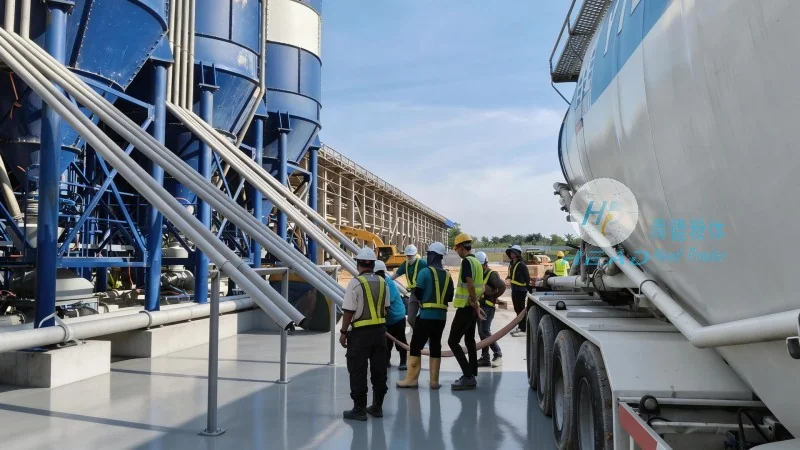
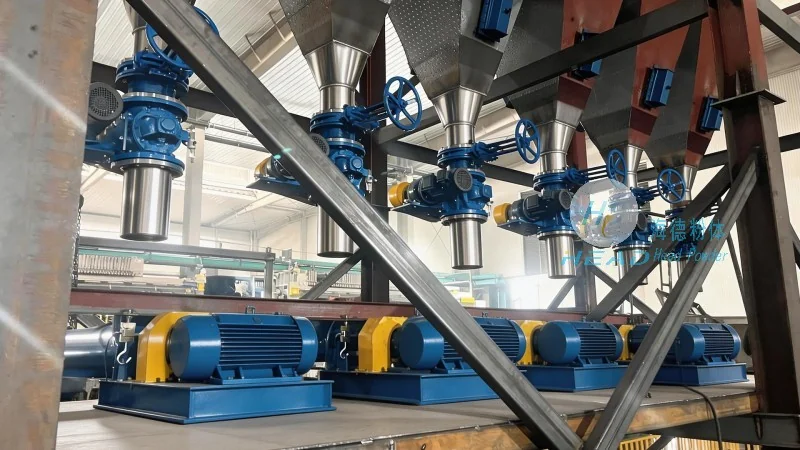
Pneumatic conveying operates on the principle of using air or gas to transport particulate materials through a pipeline system. In the context of cement raw materials, which include limestone, clay, iron ore, and other minerals, the system typically employs a combination of positive and negative pressure or a vacuum-assisted mechanism. The process involves feeding the raw material powder into a hopper, where it is then drawn or pushed through the pipeline by a fan or blower. The air flow creates a drag force that lifts and transports the particles, ensuring consistent and controlled movement. Key components include the hopper, feeder, pipeline, and receiver, each playing a critical role in maintaining the efficiency and safety of the operation. The feeder controls the material flow rate, preventing overloading and ensuring a steady supply to the pipeline. The pipeline, usually made of stainless steel or other corrosion-resistant materials, transports the material and air mixture to the receiver, where the material is separated from the air and collected.
Key Advantages of Pneumatic Conveying for Cement Raw Materials
Compared to traditional methods like belt conveyors or bucket elevators, pneumatic conveying offers several distinct advantages for cement raw material handling. Firstly, it provides a dust-free environment, significantly reducing the risk of dust explosions and improving workplace safety. This is particularly important in cement plants, where raw materials are often fine and prone to generating dust. Secondly, the system is highly flexible, allowing for changes in material flow direction and distance without major structural modifications. This flexibility is beneficial when plant layouts are modified or when additional processing equipment is added. Thirdly, it minimizes material degradation, as the particles are not subjected to abrasion or impact during transport. Unlike belt conveyors, which can cause wear and tear on the material, pneumatic conveying maintains the integrity of the raw materials, leading to better quality in the final cement product. Additionally, pneumatic conveying systems can be integrated with other processing equipment, such as grinding mills and preheaters, to create a seamless production line. This integration enhances overall plant efficiency and reduces downtime. These benefits make it an ideal choice for modern cement plants seeking to enhance operational efficiency and reduce maintenance costs.
Application Scenarios and Operational Characteristics
The effectiveness of pneumatic conveying for cement raw materials is highly dependent on the specific operational conditions and material properties. For instance, in large-scale cement production facilities, the system is often used to transport raw materials from storage silos to grinding mills over long distances, typically ranging from 50 to 500 meters. The choice between positive pressure and negative pressure systems depends on factors such as the material's moisture content, particle size, and the required conveying distance. Positive pressure systems are generally preferred for short to medium distances, as they are more energy-efficient and easier to maintain. The fan pressurizes the entire pipeline, ensuring that the material is continuously transported without the need for vacuum assistance. Negative pressure systems, on the other hand, are suitable for longer distances or when handling materials that are prone to dust generation. The fan creates a vacuum at the receiver end, drawing the material and air mixture through the pipeline. This mode is particularly effective for conveying materials from multiple sources to a central processing unit. The conveying velocity is typically 20 to 30 times the terminal velocity of the particles, ensuring that the material remains suspended and transported efficiently. The terminal velocity is the speed at which a particle falls under the influence of gravity, and it is influenced by the particle size, density, and shape. By maintaining a velocity above the terminal velocity, the system prevents material settling and ensures smooth transport.
System Design and Customization by HeadPowder
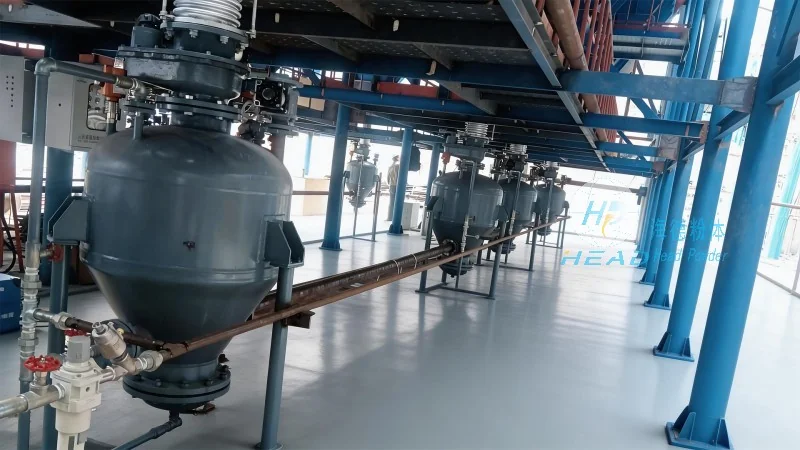
HeadPowder Engineering Co., Ltd., with its headquarters in Shandong, China, specializes in designing customized pneumatic conveying systems that meet the unique requirements of each cement plant. The company's engineers work closely with clients to assess their specific material characteristics, such as particle size distribution, bulk density, and moisture content, to determine the optimal conveying velocity and system configuration. The design process includes selecting the appropriate fan or blower capacity, determining the pipeline diameter and layout, and specifying the materials of construction to ensure durability and resistance to corrosion. For example, if the raw material contains high levels of moisture, the system may include a drying section or a moisture control device to prevent material caking or blockages. The company also considers the plant's layout and available space when designing the system, ensuring that the equipment fits seamlessly into the existing infrastructure. HeadPowder provides comprehensive installation and commissioning services, ensuring that the system operates at peak efficiency from the outset. The commissioning process involves testing the system under various load conditions, adjusting the fan speed and pressure, and verifying that the material flow rate meets the required specifications. The company's commitment to quality and innovation has made it a trusted partner for many cement manufacturers seeking reliable and efficient raw material handling solutions. By leveraging advanced engineering and years of industry experience, HeadPowder delivers systems that not only meet but exceed the performance expectations of its clients.
Conclusion and Future Trends
Pneumatic conveying for cement raw material powders remains a critical technology in the modern cement industry, offering a reliable and efficient means of transporting bulk materials. As cement production continues to evolve, with increasing emphasis on sustainability and efficiency, the demand for advanced material handling solutions will only grow. HeadPowder Engineering Co., Ltd. is at the forefront of this evolution, providing customized systems that enhance plant performance and support the industry's transition to more sustainable practices. By focusing on innovation, quality, and client satisfaction, the company is positioned to continue leading the way in pneumatic conveying technology for cement raw materials. The future of cement production lies in the integration of advanced technologies, and HeadPowder is well-equipped to support this transition with its expertise and commitment to excellence.