

Principle and Working Scene Characteristics of Denitration Urea Powder Pneumatic Conveying Equipment
Denitration urea powder pneumatic conveying equipment is a specialized system designed to transport urea powder, a key component in denitration processes, efficiently and reliably. This equipment plays a crucial role in industrial applications where precise and controlled movement of urea powder is essential for maintaining the performance of denitration systems. The following sections will explore the fundamental principles behind this equipment and the specific working scene characteristics that define its operational effectiveness.
Principle of Denitration Urea Powder Pneumatic Conveying Equipment
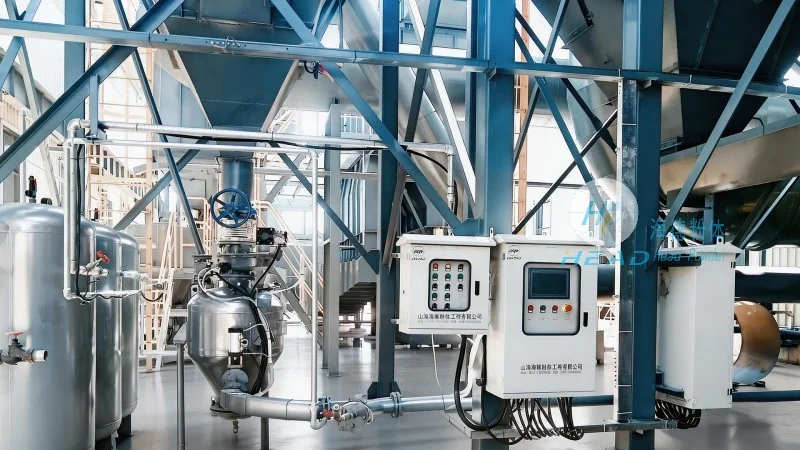
The core principle of denitration urea powder pneumatic conveying equipment revolves around the use of air as the conveying medium to transport urea powder particles. This pneumatic conveying method leverages the force of compressed air to create a flow that moves the powder from the source to the destination. The system typically consists of several key components, including a feeder, a conveying line, a receiver, and a control system. The feeder ensures a consistent and controlled feed of urea powder into the conveying line, while the compressed air is introduced to generate the necessary pressure and velocity for particle movement. The conveying line, often made of durable materials such as stainless steel or special polymers, is designed to withstand the abrasive nature of urea powder and maintain airtight integrity. The receiver is responsible for collecting the urea powder at the end of the conveying line, and the control system monitors and adjusts the air pressure, flow rate, and feed rate to optimize the conveying process. By utilizing pneumatic conveying, this equipment eliminates the need for mechanical components like belts or screws, reducing maintenance requirements and minimizing the risk of product contamination. The air flow can be either positive pressure (where air is blown through the line) or negative pressure (where air is drawn through the line), depending on the specific application and the distance between the source and destination. The choice of pressure type depends on factors such as the distance to be covered, the particle size and density of the urea powder, and the required conveying capacity. Overall, the principle of this equipment is to achieve efficient, clean, and low-maintenance transport of denitration urea powder, ensuring that the powder reaches its intended destination without degradation or loss.
Working Scene Characteristics of Denitration Urea Powder Pneumatic Conveying Equipment
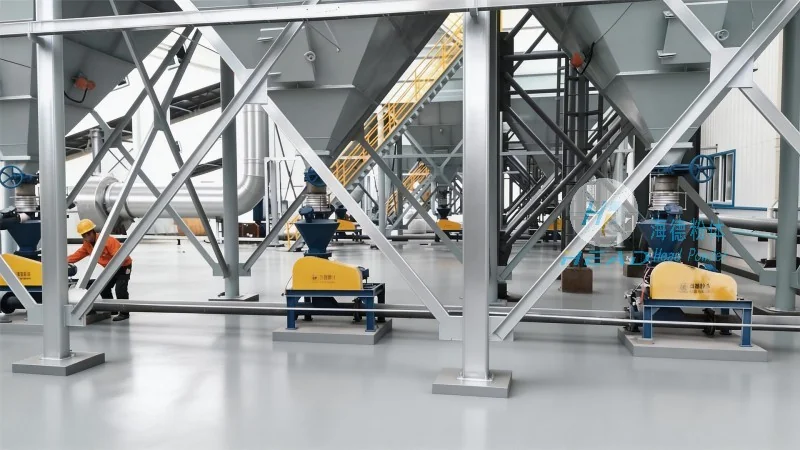
The working scene characteristics of denitration urea powder pneumatic conveying equipment are tailored to meet the specific demands of industrial denitration processes. These characteristics include high conveying efficiency, minimal product degradation, and adaptability to various operational conditions. In industrial settings, the equipment is often used in conjunction with denitration reactors or other processing units, where the urea powder needs to be transported from storage silos or feed hoppers to the reaction chambers. The working scene typically involves large-scale operations with high throughput requirements, making the efficiency of the conveying system critical to overall production rates. The equipment is designed to handle varying particle sizes and moisture contents of urea powder, ensuring consistent performance even with fluctuations in raw material quality. The working environment may include high temperatures or corrosive conditions, which the equipment's materials and design are engineered to withstand. For example, stainless steel components are commonly used to prevent corrosion from urea and other chemicals, while special coatings or linings may be applied to the conveying line to reduce wear and tear. The working scene also considers the need for safety and environmental compliance, as urea powder is a hazardous material in some contexts. The equipment is equipped with safety features such as pressure relief valves, dust collection systems, and emergency shut-off mechanisms to prevent accidents and ensure compliance with regulations. Additionally, the working scene may involve integration with other industrial systems, such as automated feeding and control systems, to achieve seamless operation. The characteristics of the working scene, including the layout of the facility, the distance between components, and the available space, influence the design and configuration of the pneumatic conveying equipment. For instance, in a compact industrial plant, the equipment may use a compact design with shorter conveying lines and higher pressure systems to fit within limited space. In contrast, in a large-scale industrial complex, the equipment may use longer conveying lines with intermediate receivers and booster units to cover greater distances. The working scene characteristics also include the need for maintenance and serviceability, as the equipment must be easily accessible for routine checks and repairs. The design of the equipment, including access panels and service points, ensures that maintenance can be performed efficiently without disrupting production. Overall, the working scene characteristics of denitration urea powder pneumatic conveying equipment are designed to optimize performance, safety, and operational efficiency in industrial denitration processes.
About Shandong HeadPowder Engineering Co., Ltd.
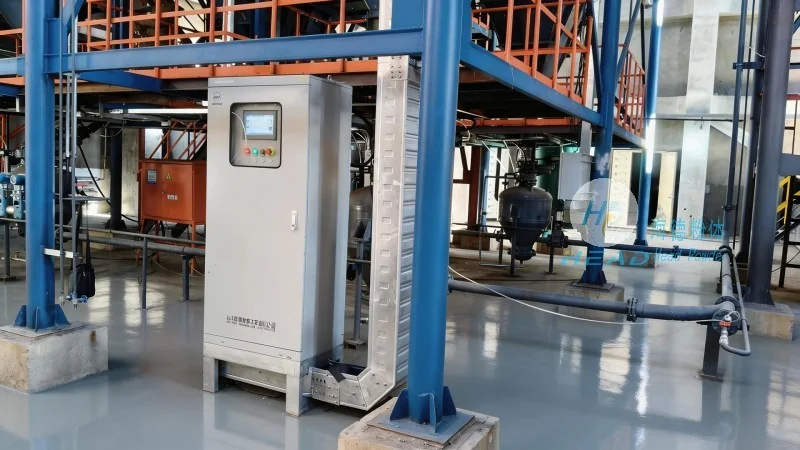
Shandong HeadPowder Engineering Co., Ltd., commonly known as headpowder, is a leading manufacturer and supplier of specialized powder handling equipment, including denitration urea powder pneumatic conveying systems. With a strong focus on innovation and quality, the company has established itself as a trusted partner in the industrial sector, providing reliable and efficient solutions for powder transport and processing. Headpowder's expertise lies in the design, development, and manufacturing of pneumatic conveying equipment tailored to the unique needs of various industries, including chemical, pharmaceutical, and environmental applications. The company's products are engineered to meet international standards and are backed by rigorous quality control processes to ensure durability and performance. Headpowder's team of experienced engineers and technicians work closely with clients to understand their specific requirements and provide customized solutions that enhance operational efficiency and reduce costs. The company's commitment to customer satisfaction and technical excellence has earned it a reputation for delivering high-quality products and exceptional service. Headpowder's facilities are located in Shandong, China, where the company leverages advanced manufacturing technologies and a skilled workforce to produce top-tier equipment. The company's dedication to research and development ensures that its products remain at the forefront of technological advancements in powder handling. By partnering with headpowder, clients gain access to reliable and efficient denitration urea powder pneumatic conveying equipment that meets their specific operational needs and contributes to the success of their industrial processes.