

Principles and Operational Characteristics of Powder Pneumatic Conveying Systems in Petrochemical In
HeadPowder, a leading engineering firm based in Shandong, China, specializes in the design, installation, and maintenance of advanced powder pneumatic conveying systems tailored for the petrochemical sector. These systems are critical for efficiently transporting bulk powders, such as chemicals, catalysts, and raw materials, within industrial facilities. The following content explores the fundamental principles behind these systems and highlights key operational characteristics that define their effectiveness in real-world applications.
Understanding the Core Principles of Powder Pneumatic Conveying
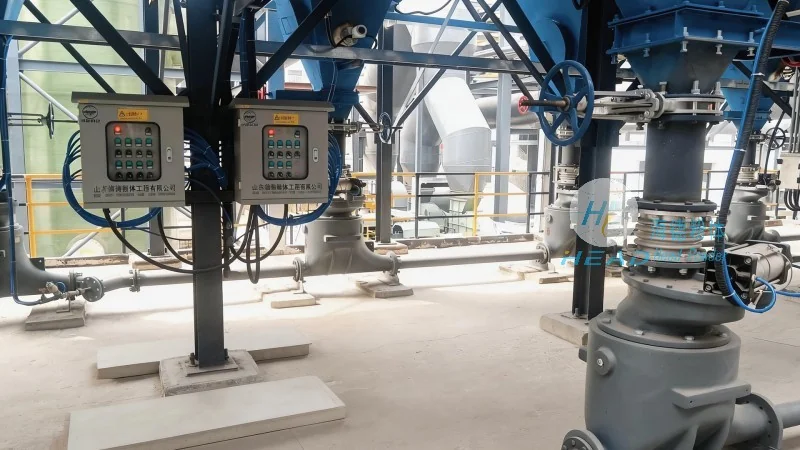
Powder pneumatic conveying systems operate on the principle of using compressed air or other gases to transport particulate materials through a pipeline. This method eliminates the need for mechanical components like belts or buckets, reducing maintenance costs and enhancing safety. The system typically consists of a hopper for material storage, a feeder to control the flow rate, a conveying line, and a receiver for the discharged material. The choice of conveying mode—such as dilute-phase or dense-phase—depends on factors like material properties, distance, and required flow rate. Dilute-phase systems use high-velocity air to suspend particles, while dense-phase systems employ lower velocities to push material in a plug flow, minimizing particle degradation and ensuring precise delivery.
Operational Characteristics in Petrochemical Environments
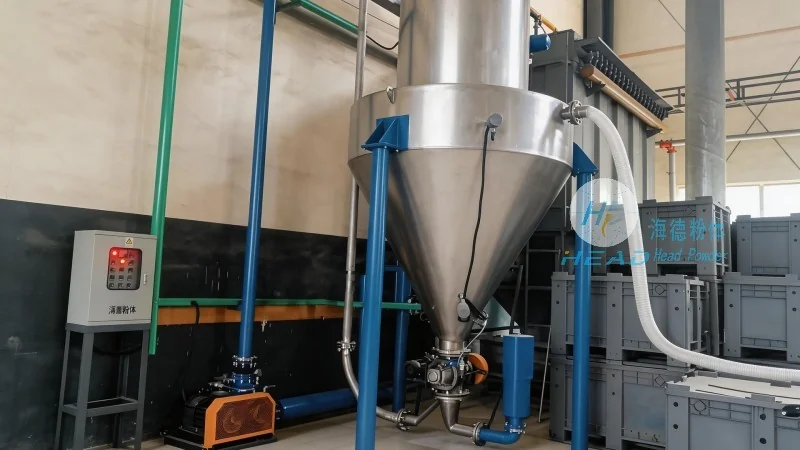
In the petrochemical industry, powder pneumatic conveying systems must meet stringent requirements for reliability, safety, and material integrity. Key operational characteristics include: high efficiency in material transport, which minimizes downtime and operational costs; flexibility in handling diverse materials, from fine powders to bulk solids; and adaptability to varying production scales, allowing seamless integration into existing industrial processes. Additionally, these systems are designed to operate under hazardous conditions, with features like explosion-proof motors and sealed pipelines to prevent dust explosions and ensure worker safety. The ability to handle abrasive or corrosive materials without degradation is another critical characteristic, as petrochemical powders often contain such components.
Real-World Application Scenarios
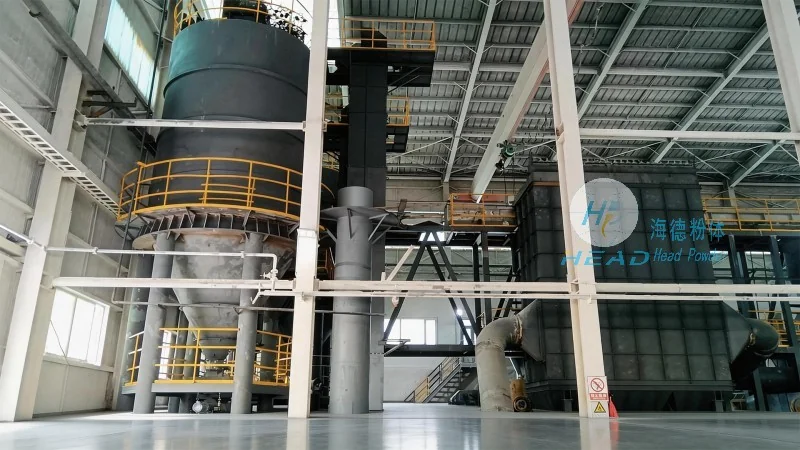
HeadPowder's powder pneumatic conveying systems have been successfully implemented in various petrochemical work scenarios, including: chemical processing plants for transporting catalysts and reagents; refineries for moving raw materials like limestone or clay; and pharmaceutical facilities for handling fine powders with strict purity standards. In each case, the system's design is customized to address specific challenges, such as long-distance transport, high-temperature environments, or the need for precise dosing. For example, in a chemical processing plant, the system may be configured to handle high-temperature powders while maintaining consistent flow rates, ensuring smooth production continuity. In a refinery, the system could be integrated with existing equipment to optimize material handling and reduce manual labor.
Conclusion
HeadPowder Engineering Co., Ltd., located in Shandong, China, provides comprehensive solutions for powder pneumatic conveying systems in the petrochemical industry. By leveraging advanced engineering principles and tailored operational characteristics, these systems enhance efficiency, safety, and material integrity in industrial applications. The company's expertise in designing and implementing such systems ensures that clients in the petrochemical sector can achieve reliable, cost-effective material transport solutions tailored to their specific needs.