

Principle and Working Scene Characteristics of Pneumatic Conveying for Manganese Silicate Materials
HeadPowder, a leading provider in material handling solutions, specializes in the design and implementation of pneumatic conveying systems for various industrial applications. This article delves into the fundamental principles of pneumatic conveying for manganese silicate materials and highlights the key characteristics of working scenes where such systems are effectively utilized.
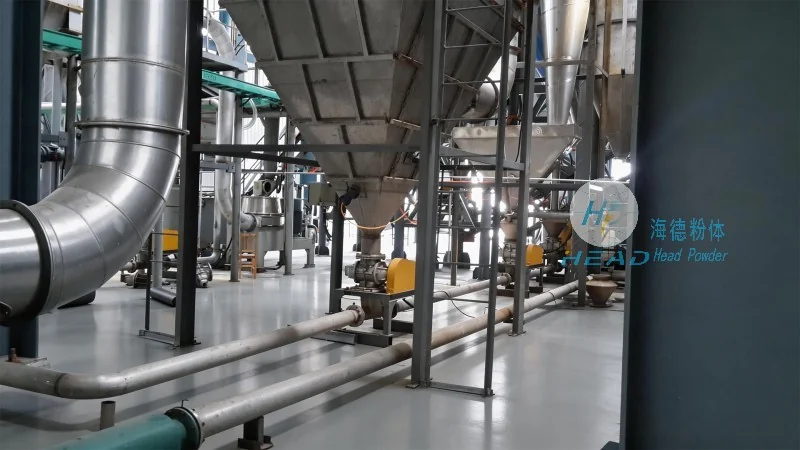
Introduction to Pneumatic Conveying for Manganese Silicate Materials
Pneumatic conveying is a method of transporting bulk materials through a pipeline using a moving gas stream, typically air or a combination of air and other gases. For manganese silicate materials, which are often used in chemical, metallurgical, and agricultural industries, this technology offers a flexible and efficient means of material transport. The process involves feeding the material into a hopper, where it is then drawn into a pipeline by a fan or blower that generates the necessary airflow. The material is carried along the pipeline by the gas stream, and upon reaching the destination, it is discharged into a receiving hopper or storage silo.
Principle of Pneumatic Conveying
The core principle of pneumatic conveying for manganese silicate materials revolves around the interaction between the material particles and the gas flow. The system operates based on the balance between the drag force exerted by the gas on the particles and the gravitational force pulling the particles downward. In a typical conveying system, the material is introduced into the pipeline at a controlled rate, and the air velocity is maintained above the minimum conveying velocity required to keep the particles suspended and moving forward. This ensures that the material travels smoothly without clogging or deposition, which are common issues in other material handling methods like belt conveyors or screw conveyors.
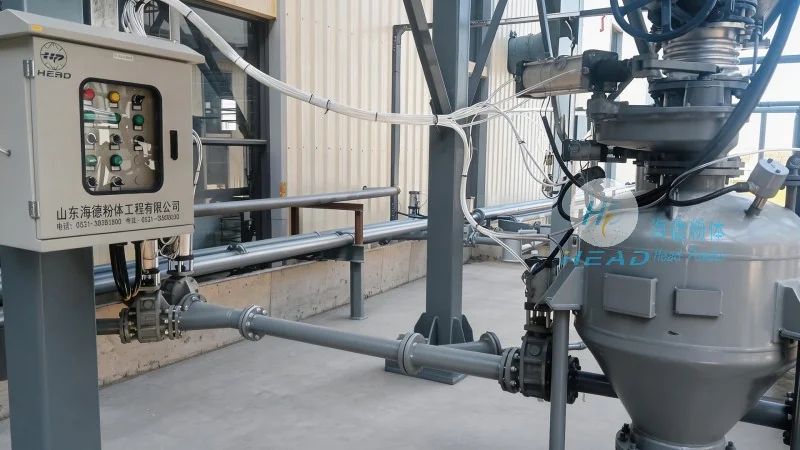
Working Scene Characteristics
The effectiveness of pneumatic conveying systems for manganese silicate materials is significantly influenced by the characteristics of the working scenes where they are deployed. These characteristics include the particle size distribution, moisture content, and bulk density of the material, as well as the layout of the facility and the distance to be covered. For instance, in chemical plants producing manganese silicate compounds, the system may need to handle fine powders with high moisture content, requiring specialized equipment such as rotary valves and cyclone separators to prevent blockages and ensure efficient separation of the conveyed material from the air stream.
In metallurgical applications, where manganese silicate is used as a flux or additive in steel production, the conveying system must be capable of handling larger, more abrasive particles. The working scene may involve multiple transfer points and varying elevation changes, necessitating the use of pressure or vacuum conveying systems depending on the specific requirements. Additionally, the presence of dust and the need for environmental control in such industrial settings makes the selection of appropriate filtration and ventilation systems crucial for maintaining safety and compliance with regulatory standards.
Advantages of Pneumatic Conveying in Manganese Silicate Handling
Compared to traditional material handling methods, pneumatic conveying offers several advantages for manganese silicate materials. These include the ability to transport materials over long distances without the need for multiple transfer points, reduced risk of contamination due to enclosed systems, and lower maintenance costs as there are fewer moving parts compared to mechanical conveyors. Furthermore, the flexibility of pneumatic systems allows for easy integration with other processing equipment, such as mixers, reactors, and storage tanks, enabling seamless material flow throughout the production process.
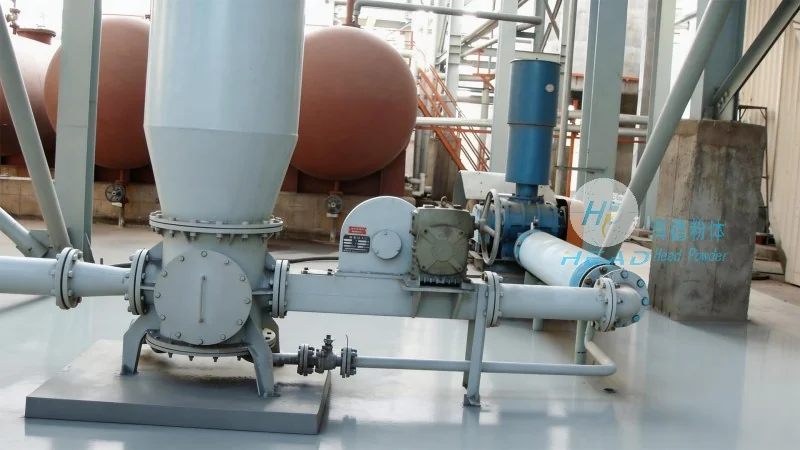
Application Examples in Industrial Settings
HeadPowder has successfully implemented pneumatic conveying systems for manganese silicate materials in various industrial settings. For example, in a chemical manufacturing facility in Shandong, China, the company designed a pressure conveying system that transports fine manganese silicate powders from a raw material storage silo to a high-speed mixer, covering a distance of over 100 meters. The system was equipped with a high-efficiency cyclone separator and a dust collection system to ensure minimal environmental impact and compliance with local regulations. Another application involved a metallurgical plant where the system was used to convey larger manganese silicate particles from a crushing and screening area to a furnace, integrating with the existing production line to improve overall efficiency and reduce labor costs.
Conclusion
Pneumatic conveying is a highly effective and versatile method for handling manganese silicate materials, offering significant advantages in terms of efficiency, flexibility, and safety. By understanding the fundamental principles and working scene characteristics, industries can optimize their material handling processes and improve overall productivity. HeadPowder, with its expertise in engineering and design, continues to provide tailored pneumatic conveying solutions that meet the specific needs of its clients, ensuring reliable and efficient material transport in various industrial applications.