

Operation Process and Working Principle of Pneumatic Conveying for Sanding Powder
Pneumatic conveying is a critical technology in material handling, particularly for sanding powders used in various industrial applications. The process involves transporting dry bulk materials like sanding powders through a pipeline using air or gas as the conveying medium. This method offers advantages such as high efficiency, flexibility, and the ability to handle materials in a closed system, minimizing dust and contamination. For companies dealing with sanding powders, understanding the operation process and working principle of pneumatic conveying is essential for optimizing production and ensuring product quality.
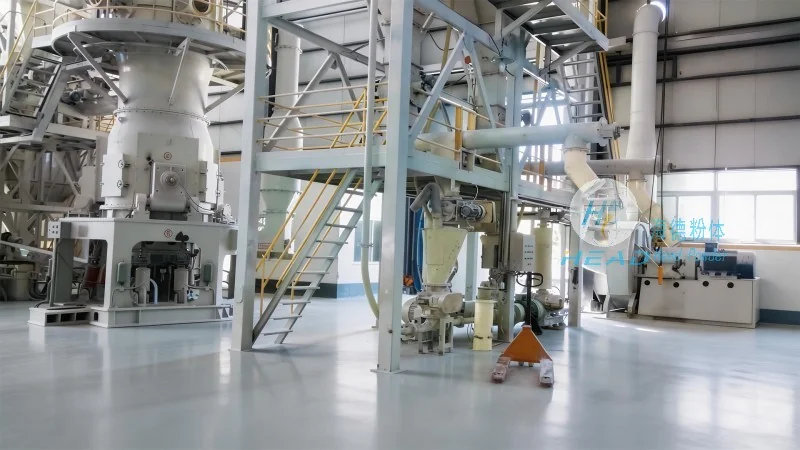
The Operation Process of Pneumatic Conveying for Sanding Powder
The operation process of pneumatic conveying for sanding powder typically involves several key steps. First, the sanding powder is loaded into a hopper or storage bin. From there, the material is fed into the conveying line via a feeder, such as a rotary valve or a screw feeder. The feeder controls the flow rate of the powder, ensuring a consistent and controlled discharge into the pipeline. Next, the conveying air is introduced into the system, either by a positive displacement blower or a venturi system. The air velocity is adjusted to maintain the powder in a suspended state, preventing blockages and ensuring smooth transport. The conveying line may include bends, elbows, and filters to direct the flow and capture any fine particles. Finally, the sanding powder is discharged at the receiving end, where it is collected in a container or transferred to the next processing stage. Throughout the process, monitoring equipment tracks pressure, flow rate, and air quality to maintain optimal performance.
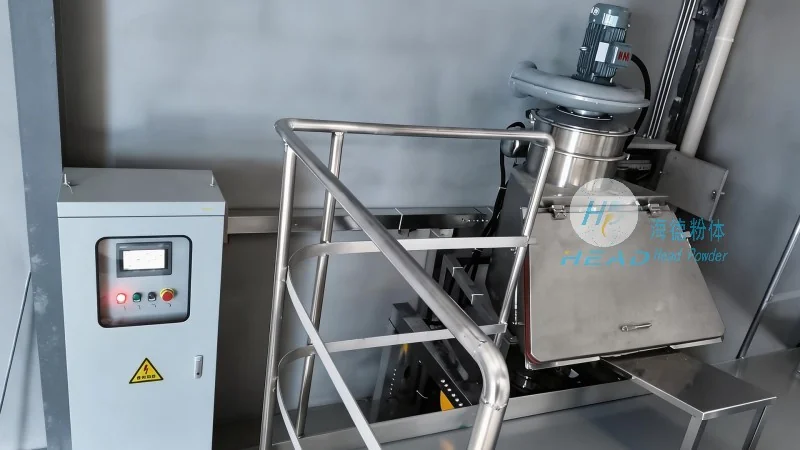
Working Principle of Pneumatic Conveying for Sanding Powder
The working principle of pneumatic conveying for sanding powder is based on the interaction between the conveying air and the powder particles. In a positive pressure system, a blower or compressor generates high-pressure air that pushes the powder through the pipeline. The air velocity must be sufficient to overcome the gravitational force and the friction between the particles and the pipe walls, keeping the powder suspended. The air-powder mixture travels through the pipeline, with the air carrying the powder particles. In a negative pressure (or vacuum) system, a vacuum pump creates a low-pressure environment that draws the powder into the pipeline. The air then carries the powder from the source to the destination. The key to effective conveying is maintaining the right air-to-powder ratio, which balances the energy consumption with the conveying efficiency. For sanding powders, which are often fine and abrasive, the system design must consider factors like particle size distribution, moisture content, and flow properties to prevent clogging and ensure reliable operation.
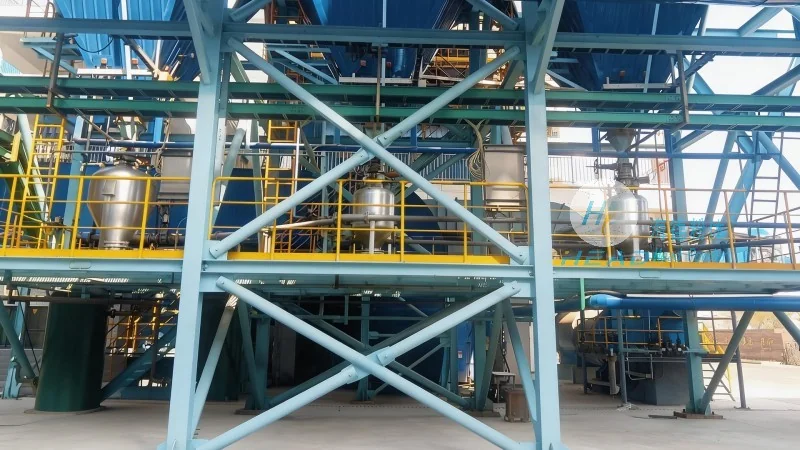
Key Components in Pneumatic Conveying Systems for Sanding Powder
Several key components are essential for the proper functioning of pneumatic conveying systems used for sanding powder. The hopper or storage bin is the initial component where the sanding powder is stored. It is designed to hold the material and provide a consistent feed to the feeder. The feeder, such as a rotary valve or a screw feeder, regulates the flow of the powder into the conveying line. The feeder must be able to handle the specific characteristics of sanding powder, including its fine particle size and potential for caking. The blower or compressor is the power source that generates the conveying air. It provides the necessary pressure or vacuum to move the powder through the pipeline. The pipeline itself is typically made of stainless steel or other corrosion-resistant materials to withstand the abrasive nature of sanding powder and prevent contamination. Bends and elbows are used to change the direction of the flow, and they are designed with smooth transitions to minimize pressure loss and prevent particle accumulation. Filters are installed at the receiving end to capture any fine particles that may have escaped the conveying process, ensuring that the delivered sanding powder is clean and free from contaminants. Finally, monitoring and control systems are used to track the performance of the conveying system, allowing operators to adjust parameters like air flow and pressure to maintain optimal operation.