

Calcium Nitrite Technical Parameters and Conveying System Process
Shandong HeadPowder Engineering Co., Ltd., a leading enterprise in the field of chemical engineering, specializes in the production and application of calcium nitrite. This document provides a detailed overview of the technical parameters of calcium nitrite and the corresponding conveying system process, aiming to assist clients in understanding the product's characteristics and application methods.
Technical Parameters of Calcium Nitrite
Calcium nitrite (Ca(NO₂)₂) is a white to off-white crystalline powder, widely recognized for its role as a corrosion inhibitor and deoxidizer in industrial applications. The technical parameters of calcium nitrite are critical for ensuring its effectiveness and safety in various processes. The purity of the product is a primary parameter, typically ranging from 98% to 99.5% on a dry basis. High purity ensures that the compound delivers the expected performance without unnecessary impurities that could affect its reactivity or cause side reactions. Moisture content is another crucial parameter, usually maintained below 0.5% to prevent caking and maintain the powder's flowability. Excessive moisture can lead to the formation of lumps, which may obstruct the conveying system and reduce the material's effectiveness. Particle size distribution is also a key factor, as it impacts the material's handling characteristics. The standard particle size is generally between 0.1 mm to 2 mm, with a D50 (median particle size) around 0.5 mm. This size range ensures good flowability and reduces the risk of pressure drop in pipelines. The specific surface area of calcium nitrite is typically around 2-5 m²/g, which influences its reactivity with other substances. Density of the material is approximately 2.25 g/cm³, which is important for volume calculations and storage capacity planning. Additionally, the thermal stability of calcium nitrite is important, as it can decompose at high temperatures, releasing nitrogen oxides and other gases. The decomposition temperature is usually above 200°C, but it's recommended to handle the material below this temperature to avoid safety hazards. These technical parameters are standardized to ensure consistent quality and performance across different batches and applications.
Process of Conveying System for Calcium Nitrite
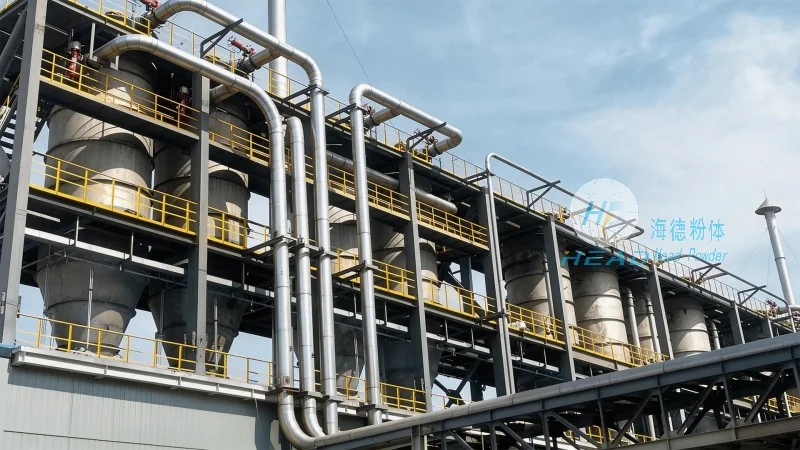
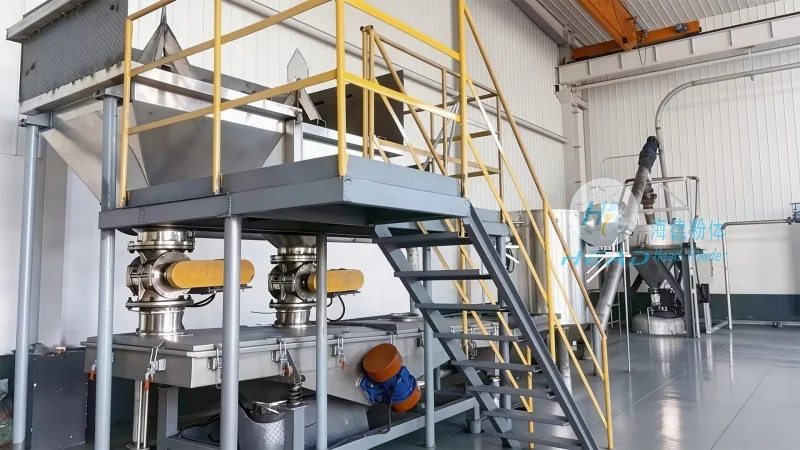
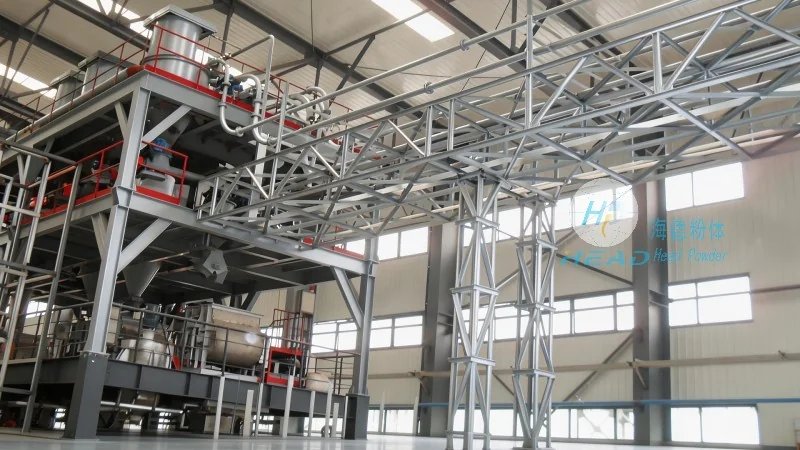
The conveying system for calcium nitrite is engineered to handle the material's characteristics while ensuring safety and efficiency. The process begins with the material stored in a bulk storage silo, which is constructed from corrosion-resistant materials such as stainless steel or lined carbon steel to prevent interaction with the calcium nitrite. The silo is equipped with a bottom discharge valve, often a rotary valve or a gate valve, which controls the flow rate of the material. The screw conveyor, a common component in the system, is designed with a specific pitch and diameter to match the particle size of the calcium nitrite. The screw speed is typically adjusted based on the required flow rate, with standard speeds ranging from 20 to 60 rpm. The conveyor is installed with a slight incline to facilitate material movement, and the slope angle is optimized to balance flowability and energy consumption. For pneumatic conveying systems, a blower or a positive displacement pump is used to create the necessary pressure to transport the material through a pipeline. The pipeline is usually made of stainless steel or plastic, with appropriate diameter and smooth interior to minimize friction and pressure drop. The system includes pressure sensors and flow meters to monitor the conveying process in real-time. If the system detects a blockage or a pressure surge, it triggers an alarm or automatically adjusts the flow rate to prevent damage to equipment. The conveying system is also designed with dust collection and filtration to comply with environmental regulations. The exhaust air is passed through a baghouse or a cartridge filter to capture any fine particles, ensuring that the air discharged is clean and safe. The entire conveying process is integrated with the production line, allowing for seamless transfer of calcium nitrite from storage to processing or packaging units. This integration minimizes handling steps and reduces the risk of contamination or material loss.