

What is Heavy Calcium Powder Pneumatic Conveying? And What Are Its Design Principles?
Heavy calcium powder pneumatic conveying is a method of transporting bulk materials, such as heavy calcium carbonate (CaCO₃), through a pipeline using compressed air or other gas as the conveying medium. This technology is widely used in industrial applications where the efficient and safe transport of powders is essential. The process involves creating a flow of air within the pipeline that lifts and moves the powder particles from the source to the destination, often with minimal mechanical contact and reduced dust generation compared to traditional methods like belt conveyors or bucket elevators.
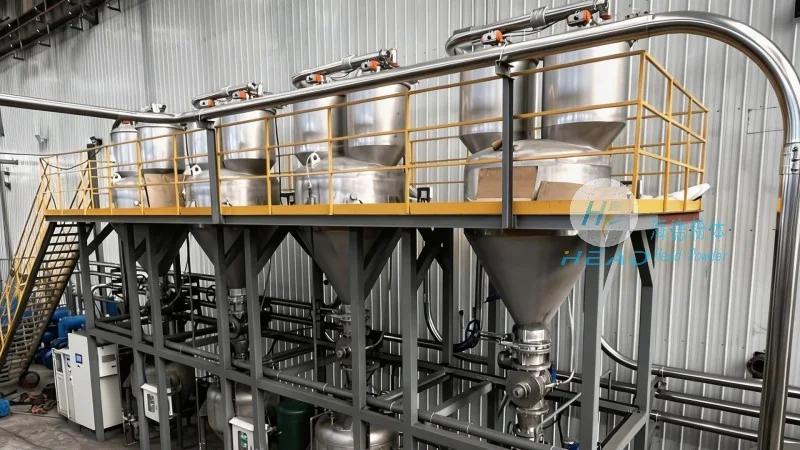
Company Introduction: Shandong HeadPowder Engineering Co., Ltd.
HeadPowder, a leading provider in the field of powder handling and conveying systems, specializes in the design, manufacturing, and installation of advanced pneumatic conveying solutions. With a strong focus on innovation and customer satisfaction, the company has established itself as a trusted partner for industries requiring reliable and efficient material transport. HeadPowder's expertise lies in understanding the unique challenges of handling heavy calcium powders, ensuring that their systems are tailored to meet the specific needs of each client. The company's headquarters is located in Shandong, China, where it leverages local resources and expertise to deliver high-quality products and services.
Design Principles of Heavy Calcium Powder Pneumatic Conveying Systems
The design of a heavy calcium powder pneumatic conveying system involves several critical principles aimed at ensuring optimal performance, efficiency, and safety. The first principle is the selection of the appropriate conveying pressure, which can be categorized into low-pressure, medium-pressure, and high-pressure systems. Low-pressure systems typically operate at pressures up to 0.7 bar, using lower air velocities and are suitable for short distances and low to medium flow rates. Medium-pressure systems, operating at pressures between 0.7 to 2.0 bar, offer better efficiency for moderate distances and flow rates, while high-pressure systems, exceeding 2.0 bar, are used for long-distance transport and high flow rates, often requiring more robust equipment and higher energy consumption.
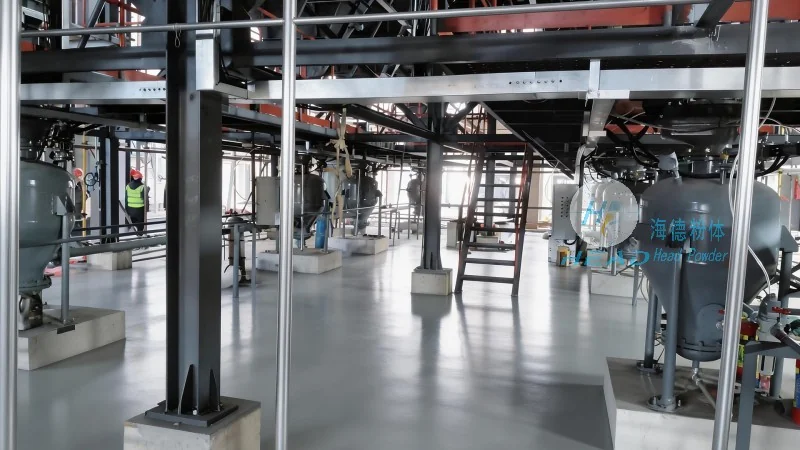
Another key design principle is the choice of the conveying line configuration, which can be either positive pressure or negative pressure. Positive pressure systems, where the conveying medium is introduced into the pipeline under pressure, are commonly used for transporting powders from a central source to multiple destinations, as the air pushes the powder forward. Negative pressure systems, on the other hand, draw the powder into the pipeline using a vacuum, which is ideal for applications where the material needs to be collected from various points and transported to a single location, such as in dust collection or material recovery processes. The selection of the line configuration depends on the specific application requirements, including the layout of the facility, the number of transfer points, and the need for dust control.
System Components and Their Roles
A typical heavy calcium powder pneumatic conveying system consists of several key components, each playing a crucial role in the overall operation. The primary components include the material feed hopper, which holds the heavy calcium powder and provides a controlled feed to the system; the air compressor or vacuum pump, which generates the necessary pressure or vacuum to move the powder; the conveying line, which is the pipeline through which the powder and air travel; the control system, which monitors and regulates the flow of material and air to maintain optimal performance; and the discharge equipment, such as a receiver or silo, where the powder is deposited at the destination.
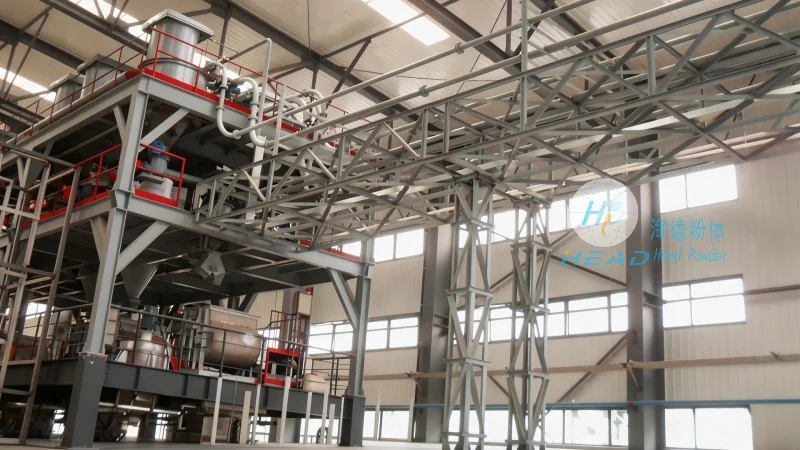
The material feed hopper is designed to prevent material bridging and ensure a consistent flow of powder into the system. It often includes features like agitators or vibrators to break up any clumps and maintain a uniform feed rate. The air compressor or vacuum pump is selected based on the required pressure or vacuum level and the flow rate of the system. For high-capacity systems, larger compressors or vacuum pumps are used to handle higher volumes of material. The conveying line is typically made of materials like stainless steel or PVC, chosen for their resistance to corrosion and wear from the powder particles. The control system may include sensors to monitor pressure, flow, and temperature, as well as valves and regulators to adjust the air flow and prevent system overloads. The discharge equipment is designed to safely collect the powder and prevent dust emissions, often incorporating features like dust filters or bagging systems.
Advantages of Heavy Calcium Powder Pneumatic Conveying
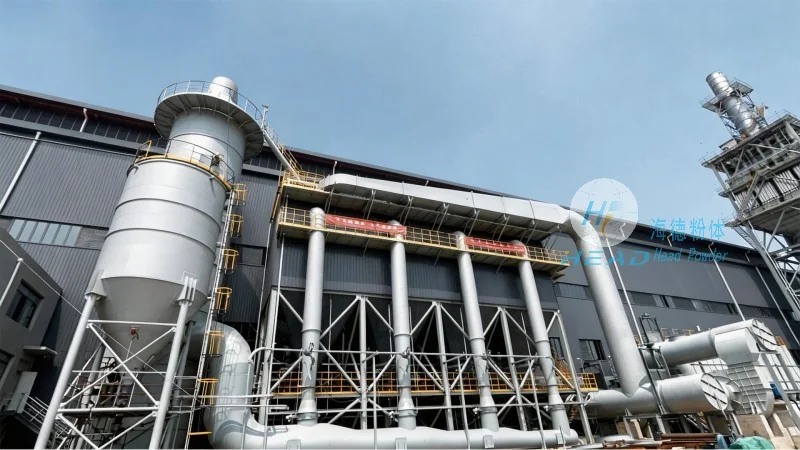
Heavy calcium powder pneumatic conveying offers several advantages over traditional material handling methods. One of the main benefits is the ability to transport powders over long distances with minimal equipment, as the system can be laid out in a flexible configuration to follow the layout of the facility. This reduces the need for multiple transfer points and simplifies the overall process. Another advantage is the reduced risk of dust exposure and contamination, as the system is enclosed and the powder is contained within the pipeline. This is particularly important for heavy calcium powders, which are often used in food, pharmaceutical, and cosmetic industries where product purity is critical. Additionally, pneumatic conveying systems can be designed to handle a wide range of particle sizes and moisture contents, making them versatile for various applications. The systems are also relatively easy to install and maintain, with fewer moving parts compared to mechanical conveyors, leading to lower maintenance costs and longer service life.
Applications in Different Industries
Heavy calcium powder pneumatic conveying is widely used in various industries due to its efficiency and adaptability. In the food and beverage industry, it is used to transport heavy calcium carbonate as a filler or whitening agent in products like paper, plastics, and cosmetics. The pharmaceutical industry utilizes this technology to handle powders used in drug formulations, ensuring that the materials are transported without contamination or degradation. The construction industry also benefits from pneumatic conveying systems for transporting heavy calcium powders used in concrete and mortar mixtures, as it allows for precise control over the material flow and reduces the risk of material segregation. Other applications include the chemical industry, where heavy calcium powders are used as a raw material in the production of various chemicals, and the agricultural industry, where they are used as a supplement in animal feed.