

Working Principle and Characteristics of Unattended Material Feeding Pneumatic Conveying Systems
Shandong HeadPowder Engineering Co., Ltd., a prominent manufacturer based in Shandong, China, specializes in the design and supply of advanced material handling solutions. The company's unattended material feeding pneumatic conveying systems are engineered to deliver efficient, reliable, and automated material transport for diverse industrial applications. These systems are particularly valuable in sectors where consistent material flow is critical, such as food processing, pharmaceuticals, and chemical manufacturing.
Working Principle of Unattended Material Feeding Pneumatic Conveying Systems
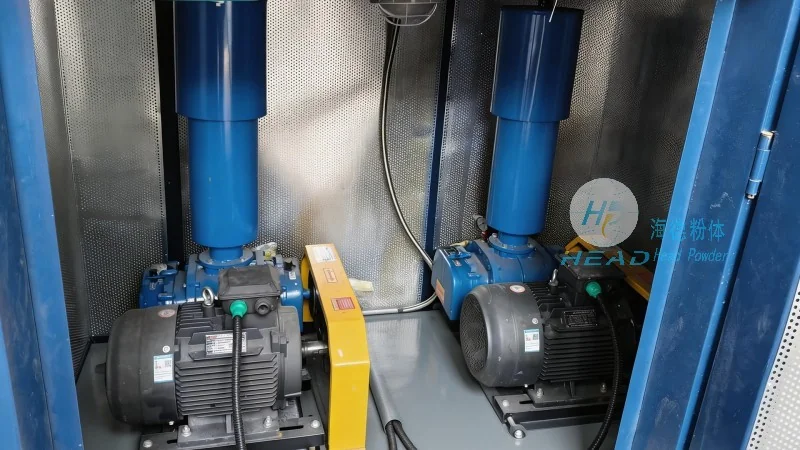
Unattended material feeding pneumatic conveying systems operate on the principle of air-assisted material transport. The process initiates with material being discharged from a storage hopper into a feeding hopper fitted with a rotary airlock valve. The rotary airlock valve regulates the material flow into the conveying pipeline, ensuring a consistent feed rate. Concurrently, a high-pressure air blower generates a stream of air that is introduced into the pipeline. The air and material mixture travels through the pipeline under pressure, where the material is entrained by the air flow. The conveying pipeline is typically constructed from stainless steel or other corrosion-resistant materials to accommodate various material types and maintain hygiene standards. At the receiving end, another rotary airlock valve separates the material from the air, allowing the material to be deposited into a receiving container. The air, now free of material particles, is either filtered and recirculated back to the system or vented to the atmosphere. This closed-loop system minimizes material loss and ensures a clean, dust-free transfer, which is essential for maintaining product quality and adhering to environmental regulations.
Key Characteristics of Unattended Material Feeding Pneumatic Conveying Systems
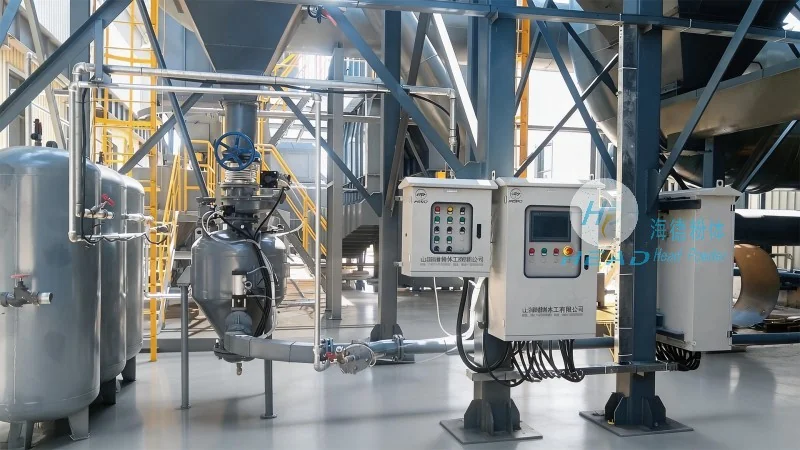
Unattended material feeding pneumatic conveying systems from Shandong HeadPowder Engineering Co., Ltd. exhibit several key characteristics that enhance their performance and applicability. Firstly, the systems are fully automated, eliminating the need for manual labor and reducing operational costs. The integration of advanced control systems allows for real-time monitoring of pressure, flow rate, and material levels, ensuring optimal system performance and preventing potential issues before they occur. Secondly, these systems are highly versatile and can handle a wide range of materials, including powders, granules, and bulk solids, with minimal adjustments. This adaptability makes them suitable for diverse industrial needs, from small-scale operations to large-scale production lines. Thirdly, the closed-loop design significantly reduces dust emissions and environmental impact, as the material is contained within the pipeline and the air is either filtered or recirculated. This feature not only improves workplace safety but also helps companies comply with stringent environmental regulations. Additionally, the systems are compact and can be integrated into existing production lines with minimal modifications, making them a cost-effective solution for both new installations and retrofit applications. The reliability of these systems is further enhanced by robust construction, using high-quality materials and components that are designed to withstand harsh operating conditions and ensure long-term durability.
Benefits and Applications
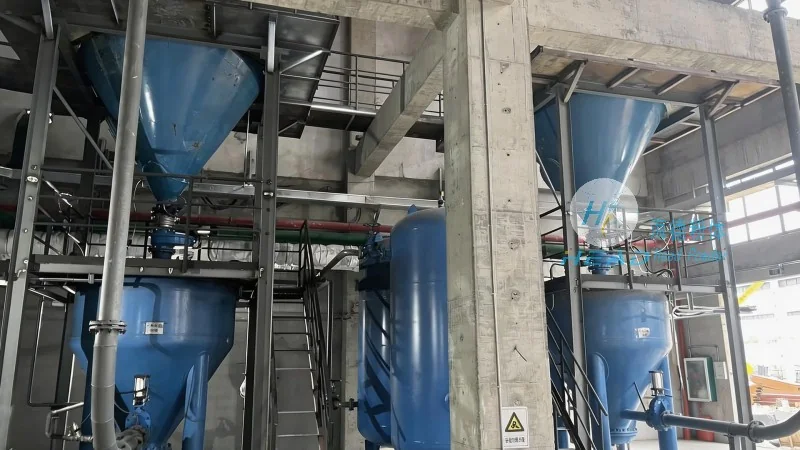
The unattended material feeding pneumatic conveying systems offered by Shandong HeadPowder Engineering Co., Ltd. provide numerous benefits to industrial operations. By automating material handling, these systems increase production efficiency and reduce downtime, leading to higher output and improved profitability. The consistent material flow ensures that downstream processes, such as mixing, blending, or packaging, operate smoothly without interruptions. Furthermore, the systems contribute to improved product quality by maintaining a clean and dust-free environment, which is critical in industries like food and pharmaceuticals where contamination is unacceptable. The environmental benefits, including reduced dust emissions and energy efficiency through air recirculation, also make these systems an attractive choice for companies committed to sustainability. These systems are widely used in applications such as food processing (e.g., conveying flour, sugar, or spices), pharmaceutical manufacturing (e.g., handling active pharmaceutical ingredients or excipients), chemical processing (e.g., transporting powders or granules), and mining (e.g., conveying raw materials from storage to processing equipment). The adaptability and reliability of the systems make them suitable for both new construction and retrofitting existing facilities, providing a flexible solution to meet evolving production needs.