

Working Principle and Characteristics of Pneumatic Conveying for White Carbon Black Materials
White carbon black, chemically known as fumed silica, is a critical industrial material utilized across sectors including rubber, coatings, plastics, and cosmetics due to its high surface area and excellent dispersibility. Handling this fine powder presents unique challenges, such as dust generation and material loss, which traditional bulk handling methods often struggle to address. Pneumatic conveying emerges as a highly effective solution, offering a clean, efficient, and reliable method for transporting white carbon black. This article delves into the working principle and key characteristics of pneumatic conveying systems specifically engineered for white carbon black materials.
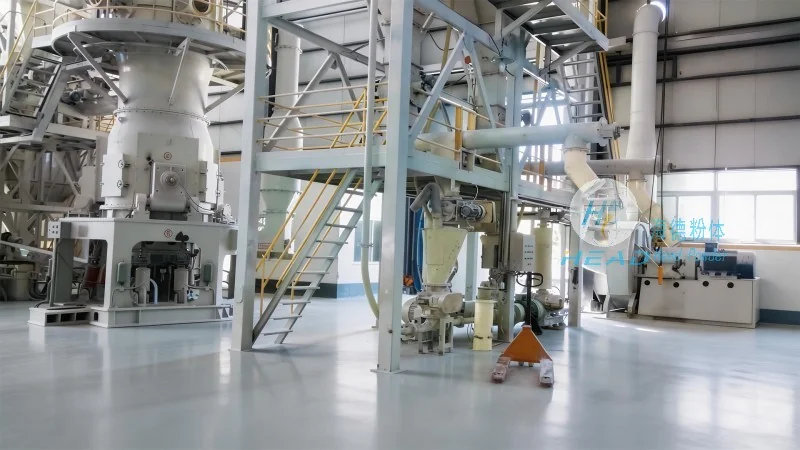
Working Principle of Pneumatic Conveying for White Carbon Black
Pneumatic conveying operates by leveraging compressed air or other gases as the primary driving force to transport bulk materials through a closed or semi-closed pipeline system. For white carbon black—typically a fine particulate with a particle size ranging from 10 to 100 microns and a density of approximately 2.2 g/cm³—the conveying process involves several integral components and stages. The system generally comprises a feeding unit, conveying pipeline, separation unit, and control system. The working principle can be broken down as follows:
1. Material Feeding: White carbon black is introduced into the system via a hopper or rotary valve, ensuring a consistent and controlled flow into the pipeline. This step is vital for maintaining process stability and preventing blockages or uneven material distribution.
2. Air-Gas Generation: Compressed air is supplied at pressures ranging from 0.5 to 1.5 bar above atmospheric levels. The air is introduced at high velocity, creating a flow that entrains the white carbon black particles. The air velocity must exceed gravitational and frictional forces to keep particles suspended in the gas stream.
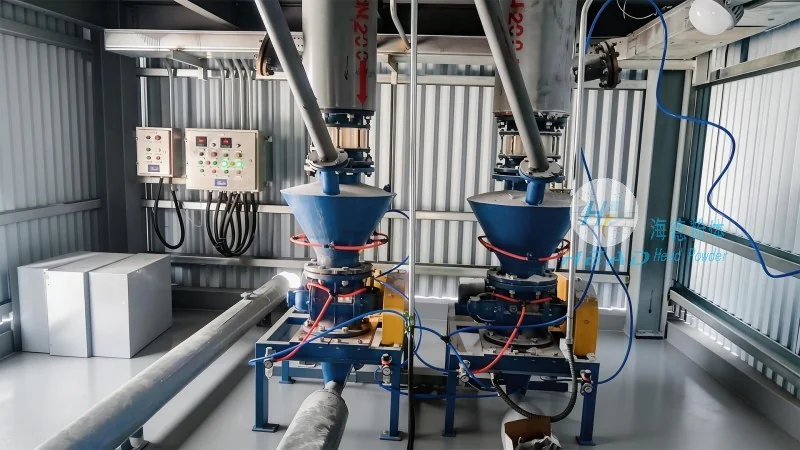
3. Conveying Process: Once entrained, white carbon black particles travel along the pipeline via the air stream. The pipeline length, layout, air velocity, and pressure determine conveying capacity and efficiency. For this fine powder, higher conveying velocities are often required to maintain particle suspension.
4. Gas-Solid Separation: At the destination, the air-solid mixture enters a separation unit—commonly a cyclone separator or bag filter. Centrifugal force in the cyclone separates heavier white carbon black particles from the air, collecting them in a hopper. Clean air is then recirculated or released, depending on system design and regulations.
5. Material Discharge: Separated white carbon black is collected in a storage hopper or directly into the next processing stage, ensuring no residual air remains and maintaining product purity.
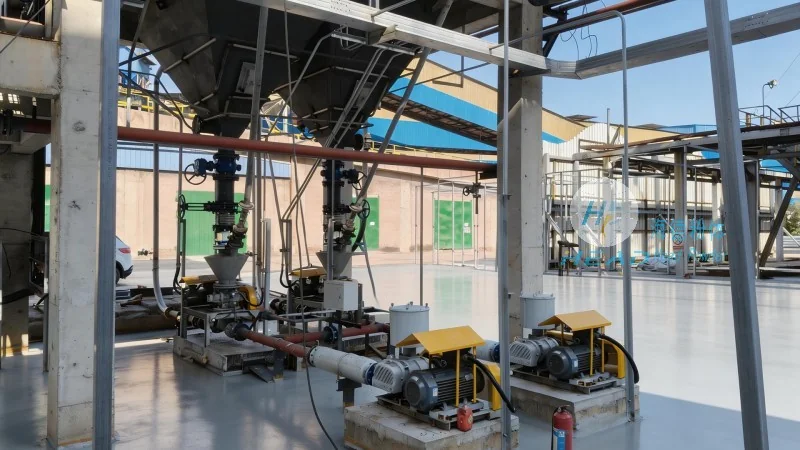
Key Characteristics of Pneumatic Conveying Systems for White Carbon Black
Pneumatic conveying systems for white carbon black exhibit distinct characteristics tailored to the material's properties, such as fine particle size, low density, and tendency to agglomerate. The primary characteristics include:
1. High Efficiency and Capacity: These systems handle large volumes of white carbon black at high throughput rates, enabling long-distance transport (up to several hundred meters) without intermediate transfer points. Capacity is determined by air pressure, velocity, and pipeline/separation equipment design.
2. Environmental Friendliness and Dust Control: The closed system design significantly reduces dust emissions and material loss, addressing health and environmental concerns associated with fine powders. This is particularly critical for white carbon black, which poses respiratory risks if inhaled.
3. Flexibility and Adaptability: Systems can operate in dilute phase (particles suspended in air) or dense phase (slurry-like state). Dilute phase is standard for white carbon black due to its fine nature, though dense phase may be used for longer distances or higher material density. Layouts can be horizontal, vertical, or mixed.
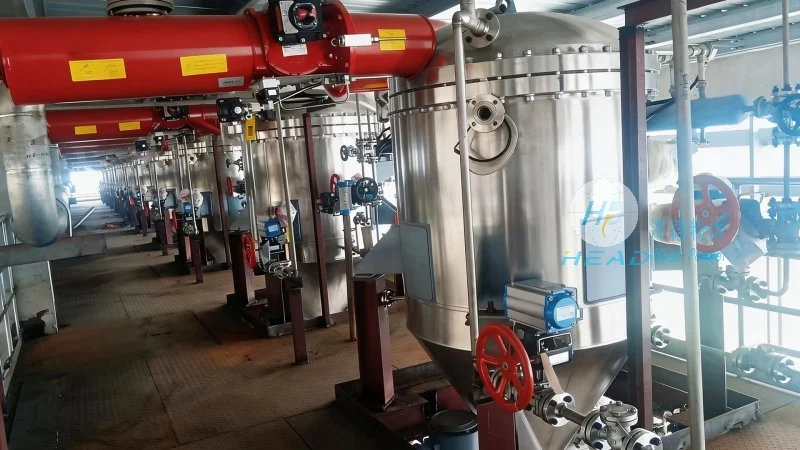
4. Safety and Reliability: The enclosed system minimizes material spillage and exposure risks. Safety features like pressure relief valves, air filters, and particle filters ensure safe operation. High-quality components and advanced control systems enhance reliability.
5. Low Maintenance and Energy Efficiency: Fewer moving parts compared to mechanical systems (e.g., belt or screw conveyors) reduce maintenance needs. Efficient air compressors and optimized system design lower operational costs and energy consumption.
Conclusion and Company Information
White carbon black pneumatic conveying systems are indispensable for industries reliant on this material. The working principle—using compressed air to transport fine particles through a closed pipeline—offers significant advantages in efficiency, environmental impact, and safety. Key characteristics like high capacity, dust control, flexibility, and low maintenance make these systems ideal for handling white carbon black. Shandong HeadPowder Engineering Co., Ltd., a leading manufacturer, specializes in designing and supplying customized pneumatic conveying solutions tailored to specific white carbon black applications. With a focus on quality, innovation, and customer satisfaction, the company provides reliable equipment and technical support for optimal performance. Based in Shandong, China, HeadPowder Engineering Co., Ltd. leverages years of experience and advanced engineering to deliver cutting-edge solutions for material handling across various industrial sectors.