

Principle and Working Scene Characteristics of Potassium Carbonate Powder Pneumatic Conveying Line
HeadPowder, a leading engineering company based in Shandong, China, specializes in the design and implementation of advanced pneumatic conveying systems tailored for potassium carbonate powder. This article explores the fundamental principles behind such systems and highlights the key characteristics of their operational scenarios, providing insights into how these technologies enhance material handling efficiency in industrial applications.
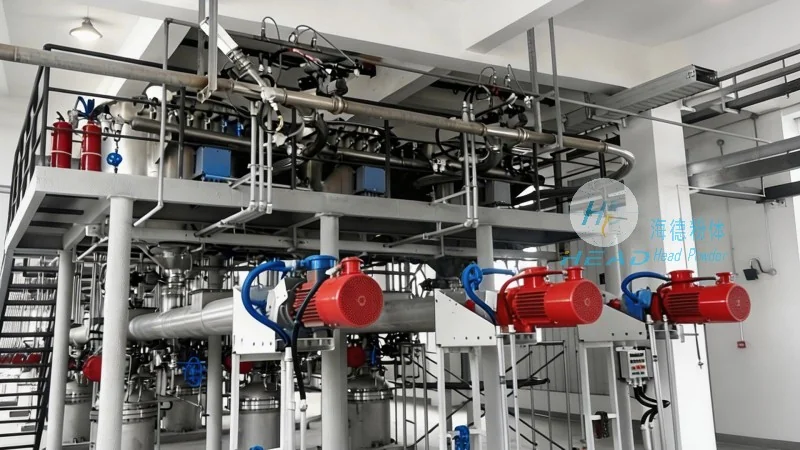
Introduction to Potassium Carbonate Powder Pneumatic Conveying
Potassium carbonate (K₂CO₃), commonly known as potash, is a white, crystalline powder widely used in various industries, including chemical manufacturing, pharmaceuticals, and food processing. Its handling requires specialized equipment due to its fine particle size and potential for dust generation. Pneumatic conveying systems offer a reliable solution for transporting this material from storage to processing units, ensuring safety, efficiency, and product integrity.
Core Principles of Pneumatic Conveying Systems
The operation of a potassium carbonate powder pneumatic conveying line is based on the fundamental principle of using air or gas to transport solid particles. The system typically consists of several key components: a feeding device, a conveying pipeline, a separation unit, and a discharge mechanism. The feeding device, often a rotary valve or a hopper, introduces the powder into the pipeline. Compressed air or gas is then introduced, creating a flow that propels the particles through the system. The separation unit, such as a cyclone or a bag filter, separates the powder from the air stream, allowing the material to be collected at the destination while the air is either recirculated or discharged.
Key Working Scene Characteristics
The operational characteristics of potassium carbonate powder pneumatic conveying systems vary based on the specific application and environment. Several factors influence the design and performance of these systems, including the required conveying distance, material flow rate, and the need for dust control. In industrial settings, these systems are often integrated into larger production lines, where they must coordinate with other equipment to maintain a consistent material supply. The following sections detail the typical characteristics observed in different working scenarios.
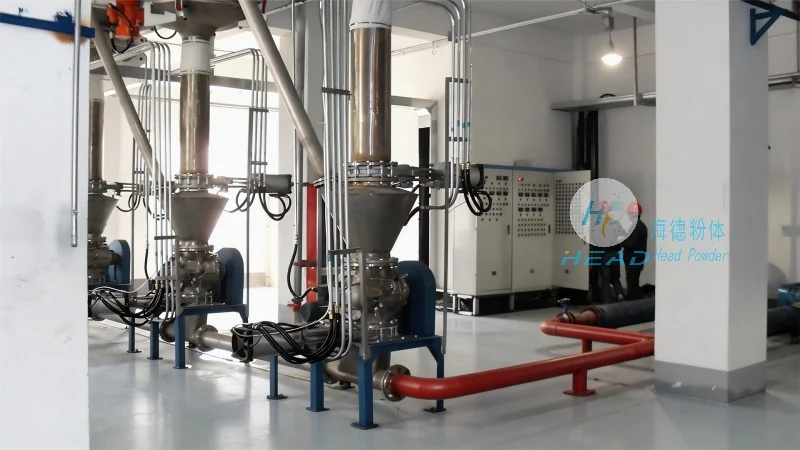
Industrial Manufacturing Applications
In chemical manufacturing facilities, potassium carbonate is used as a raw material for producing various products, such as glass, soaps, and fertilizers. The pneumatic conveying line in this context must handle large volumes of powder efficiently while maintaining high purity standards. The system is designed to minimize particle degradation and prevent contamination, which is critical for downstream processes. For example, in glass production, the material is conveyed from storage silos to furnaces, where precise control over the flow rate is essential to ensure uniform product quality.
Pharmaceutical and Food Processing Environments
In pharmaceutical and food processing industries, the handling of potassium carbonate powder demands stringent hygiene and safety measures. The pneumatic conveying system must be constructed from materials that are compatible with food-grade or pharmaceutical-grade standards, such as stainless steel. The design also includes features to prevent cross-contamination and ensure that the powder remains free from foreign particles. The working scene in these environments often involves short-distance conveying between processing units, where the system must operate quietly and without generating excessive dust to maintain a clean and safe workspace.
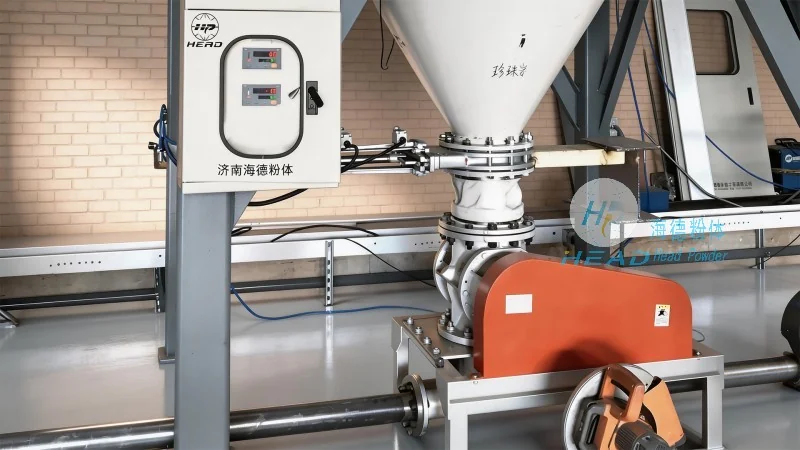
Environmental and Safety Considerations
Due to the fine nature of potassium carbonate powder, dust control is a critical aspect of pneumatic conveying operations. The system incorporates dust collection devices, such as cyclones or bag filters, to capture any particles that escape the pipeline. Additionally, the use of explosion-proof components is essential in environments where the material may be prone to dust explosions. The working scene characteristics include regular maintenance schedules to ensure the system operates efficiently and safely, with emphasis on monitoring air pressure, flow rates, and particle separation efficiency.
Efficiency and Performance Metrics
The effectiveness of a potassium carbonate powder pneumatic conveying line is evaluated based on several performance metrics. These include the conveying capacity (measured in tons per hour), the pressure drop across the system, and the overall energy consumption. In industrial applications, high efficiency is crucial to minimize operational costs and maximize productivity. The system's design, including the choice of pipeline diameter, air velocity, and feeding mechanism, directly impacts these metrics. For instance, a larger pipeline diameter reduces pressure drop but may increase air consumption, while a higher air velocity enhances conveying speed but may lead to higher energy costs. Engineers at HeadPowder optimize these parameters to achieve the best balance between efficiency and cost.
Conclusion
Potassium carbonate powder pneumatic conveying systems, as implemented by Shandong HeadPowder Engineering Co., Ltd., represent a sophisticated solution for handling fine powders in various industrial applications. By understanding the core principles and working scene characteristics, industries can select and operate these systems effectively, ensuring reliable material transport, enhanced safety, and improved production efficiency. The integration of advanced engineering and careful consideration of operational requirements makes these systems indispensable in modern manufacturing processes.