

Principle and Working Scene Characteristics of Barium Sulfate Powder Pneumatic Conveying Lines
Barium sulfate, a widely used industrial powder, often requires efficient and reliable transport solutions to move it from one location to another within manufacturing facilities. Pneumatic conveying lines offer a sophisticated method for handling such powders, ensuring minimal dust, reduced contamination, and enhanced operational safety. This article explores the fundamental principles behind barium sulfate powder pneumatic conveying systems, alongside the key characteristics of their working environments.
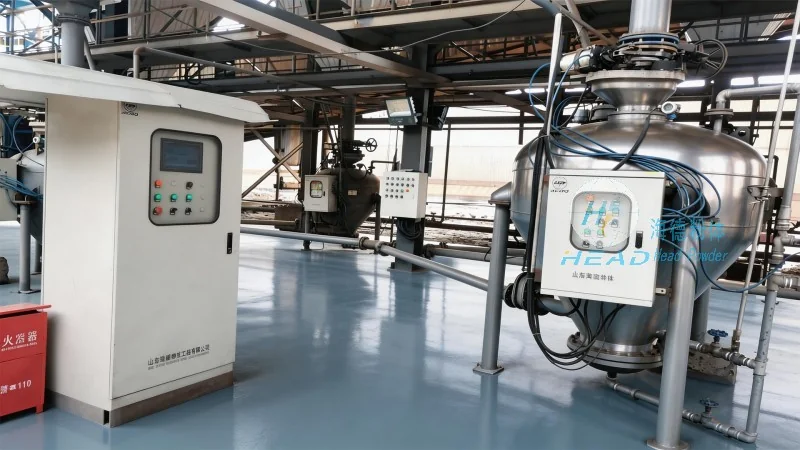
Understanding the Core Principle of Pneumatic Conveying
The principle of pneumatic conveying involves transporting solid particles, such as barium sulfate powder, using a stream of air or gas. In this process, the powder is suspended in the air stream and carried through a pipeline to the destination. There are two primary types of pneumatic conveying: dilute-phase and dense-phase. Dilute-phase systems use higher air velocities to keep the powder suspended, while dense-phase systems employ lower velocities and higher pressure to move the material in a more compact form. For barium sulfate, the choice of system depends on factors like particle size, flow rate, and the distance to be covered. The system typically includes a hopper for material storage, a feeder to control the flow rate, a conveying line, and a receiver to collect the material at the end. The air is supplied by a blower or compressor, creating the necessary pressure and velocity to move the powder. The design of the system must consider the specific properties of barium sulfate, including its density, flowability, and potential for agglomeration, to ensure optimal performance.
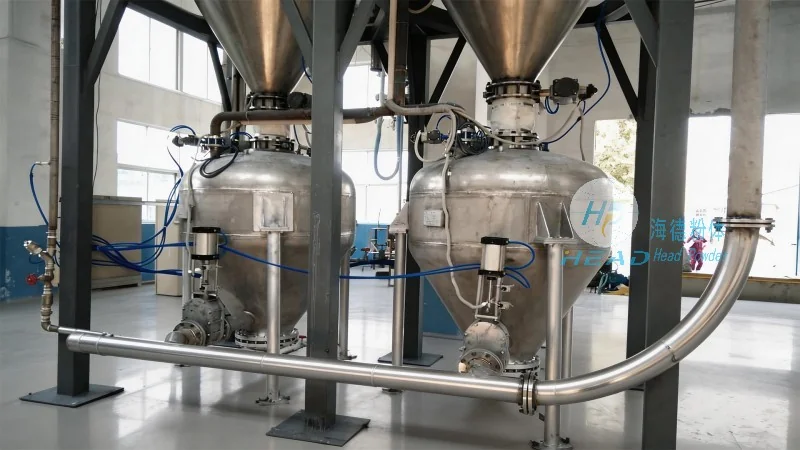
Key Working Scene Characteristics of Barium Sulfate Pneumatic Conveying Lines
The working scene characteristics of barium sulfate pneumatic conveying lines are influenced by several factors that impact system efficiency and reliability. First, the environment where the system operates is critical. Industrial settings, such as chemical plants or pharmaceutical manufacturing facilities, require systems that can handle high volumes of powder while maintaining cleanliness and compliance with safety regulations. The presence of dust and the need for dust control measures are essential considerations. Second, the system's capacity and flow rate are tailored to the production requirements. For instance, in a large-scale manufacturing operation, the conveying line may need to handle several tons of barium sulfate per hour, necessitating a robust design with adequate air flow and pipeline dimensions. Third, the distance between the source and destination points affects the system's configuration. Longer distances may require additional components, such as pulse jets or cyclones, to maintain the powder's suspension and prevent blockages. Fourth, the system's integration with other equipment, like mixers or reactors, is crucial for seamless material handling. The ability to connect the conveying line to other processes without interruption is vital for maintaining production continuity. Finally, the maintenance and operational flexibility of the system are important for long-term performance. Systems that are easy to clean, inspect, and adjust can reduce downtime and improve overall efficiency.
Application Scenarios and Industry Use Cases
Barium sulfate powder pneumatic conveying lines are widely used in various industries due to their versatility and efficiency. In the chemical industry, these systems are employed to transport barium sulfate from storage silos to processing units, ensuring a consistent supply of raw material for manufacturing. The pharmaceutical industry also utilizes such systems for handling barium sulfate in the production of medical imaging agents, where precision and cleanliness are paramount. Additionally, in the construction and coating industries, barium sulfate is used as a filler or pigment, and pneumatic conveying lines facilitate its transport from storage to mixing equipment. Each application requires a customized system design, taking into account the specific requirements of the process, such as particle size distribution, moisture content, and the need for dust-free handling. The adaptability of pneumatic conveying systems makes them suitable for a wide range of applications, from small-scale laboratory operations to large-scale industrial production.
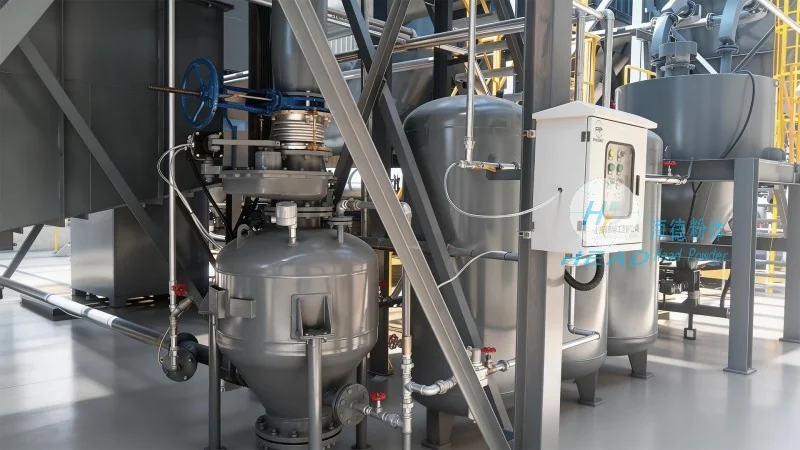
Company Profile: Shandong HeadPowder Engineering Co., Ltd.
HeadPowder, a leading provider of industrial powder handling solutions, specializes in designing and manufacturing pneumatic conveying systems tailored to the needs of various industries. With a focus on quality and innovation, the company has established itself as a trusted partner for businesses requiring reliable and efficient material transport solutions. HeadPowder's expertise lies in understanding the unique challenges of handling powders like barium sulfate, and developing systems that address these challenges effectively. The company's facilities are located in Shandong, China, where it leverages advanced technology and skilled personnel to deliver high-performance pneumatic conveying lines. By combining years of experience with cutting-edge engineering, HeadPowder ensures that its systems meet the highest standards of performance, safety, and durability. Clients benefit from the company's commitment to customer satisfaction, as well as its ability to provide customized solutions that enhance operational efficiency and reduce costs.