

Operation Process and Working Principle of Dry Denitration
Dry denitration, also known as dry flue gas denitration, is a critical technology for reducing nitrogen oxides (NOx) emissions in industrial processes. Commonly used in power plants, cement factories, and other high-emission facilities, this method focuses on converting NOx into harmless nitrogen (N₂) and water (H₂O) through chemical reactions. The core of dry denitration involves the interaction between NOx in the flue gas and a reducing agent, typically ammonia or urea, under controlled temperature and humidity conditions. This article will explore the operation process and working principle of dry denitration, providing a detailed understanding of this essential environmental protection technology.
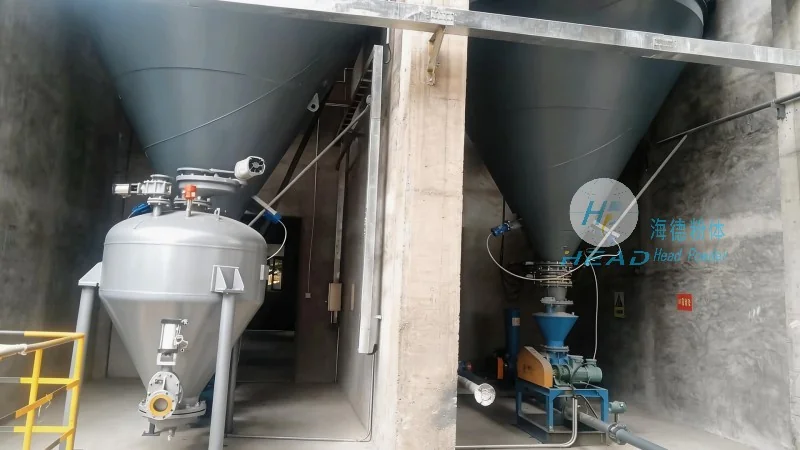
Company Profile: Shandong HeadPowder Engineering Co., Ltd.
Shandong HeadPowder Engineering Co., Ltd., branded as "headpowder", is a leading manufacturer and supplier of dry denitration systems. Specializing in industrial emission control, the company has extensive experience in designing, producing, and installing advanced denitration equipment. HeadPowder's solutions are widely adopted across various industries, helping clients meet stringent environmental regulations and reduce NOx emissions. The company is headquartered in Shandong, China, where it leverages local expertise and resources to deliver high-quality products and services to global markets.
Working Principle of Dry Denitration
The working principle of dry denitration is based on the selective catalytic reduction (SCR) or non-catalytic reduction (SNCR) mechanisms. In the SCR process, a catalyst accelerates the reaction between NOx and the reducing agent. The catalyst provides active sites that facilitate the conversion of NO and NO₂ into N₂ and H₂O. The primary chemical reactions involve the reduction of NO and NO₂ using ammonia or urea as the reducing agent. The overall reaction can be summarized as: 4NH₃ + 4NO + O₂ → 4N₂ + 6H₂O. This reaction is highly efficient when the flue gas temperature is maintained between 150°C and 450°C, with precise control of the reducing agent dosage to prevent over-reduction (ammonia slip) or under-reduction (residual NOx).
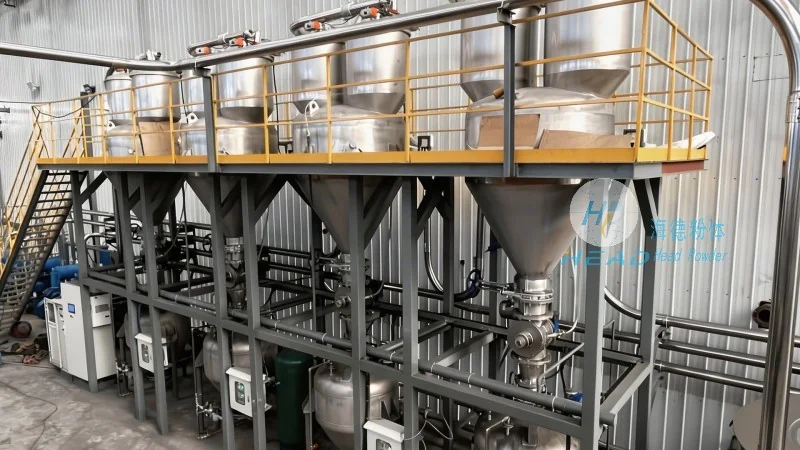
Operation Process of Dry Denitration System
The operation process of a dry denitration system includes several key steps. First, the denitrification agent (ammonia or urea solution) is prepared and stored. The solution is then atomized into fine droplets using a spray nozzle, ensuring uniform distribution within the flue gas stream. The atomized agent mixes with the flue gas as it passes through the denitration reactor. The reactor is designed to maintain optimal temperature and humidity for the chemical reaction, often using heat exchangers or temperature control systems. The flue gas, now with reduced NOx levels, exits the reactor and proceeds to subsequent treatment stages if needed. Throughout the process, sensors and control systems continuously monitor parameters like NOx concentration, temperature, and agent dosage, adjusting the system in real-time to ensure consistent performance. This closed-loop control guarantees that the system meets or exceeds regulatory standards for NOx reduction.
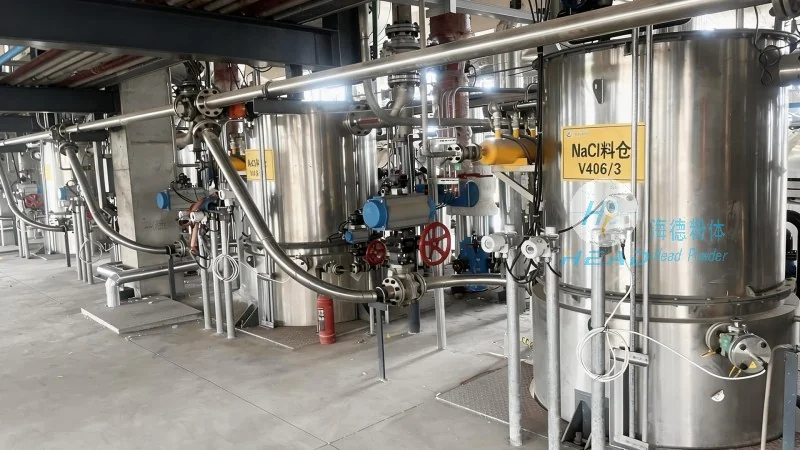
Key Components and Their Functions
A dry denitration system comprises several essential components, each with a specific role. The main components include the agent preparation system, atomization system, denitration reactor, and control system. The agent preparation system dissolves and stores the reducing agent at the appropriate concentration. The atomization system, using rotary or pressure nozzles, breaks the liquid agent into fine droplets to maximize contact with the flue gas. The denitration reactor, typically a fixed-bed or fluidized bed, provides the reaction space where NOx is converted. The reactor's design, including catalyst type and loading, significantly impacts efficiency. The control system integrates sensors and controllers to monitor and adjust key parameters, ensuring optimal operation. Auxiliary components like heat exchangers may be included to preheat the flue gas or recover heat, improving energy efficiency. Each component must be carefully designed and maintained to ensure long-term reliability and performance.
Advantages and Applications of Dry Denitration
Dry denitration technology offers several advantages, making it suitable for diverse industrial applications. Compared to wet denitration, it is more energy-efficient as it avoids large water usage and wastewater treatment. The process also eliminates sludge disposal, reducing environmental impact. The compact design allows easier installation in existing facilities, minimizing downtime and costs. The technology is adaptable to different flue gas compositions and emission levels, providing versatility. Primary applications include power generation, cement production, steel manufacturing, and other high-NOx industries. These sectors benefit from high NOx reduction rates (often over 90%) and cost-effective operation. By implementing dry denitration, industries can comply with environmental regulations while improving overall operational efficiency.