

Operation Process and Working Principle of Coal Ash Powder Conveying System Equipment
Coal ash, a byproduct of coal combustion, presents significant challenges in handling and transportation due to its fine particle size and dusty nature. The coal ash powder conveying system equipment developed by Shandong HeadPowder Engineering Co., Ltd. addresses these challenges through an integrated design that ensures efficient, safe, and reliable transport of coal ash powder. This article provides a detailed overview of the operation process and working principle of such systems, highlighting the key components and mechanisms involved.
About Shandong HeadPowder Engineering Co., Ltd.
Shandong HeadPowder Engineering Co., Ltd., commonly known as HeadPowder, is a leading manufacturer specializing in powder handling and conveying solutions. HeadPowder is headquartered in Shandong, China, and has established itself as a trusted partner in the coal ash management industry. With a strong focus on innovation and customer-centric design, the company develops customized systems tailored to the specific requirements of power plants, cement factories, and other industrial facilities dealing with coal ash disposal and utilization.
Overview of Coal Ash Powder Conveying System Equipment
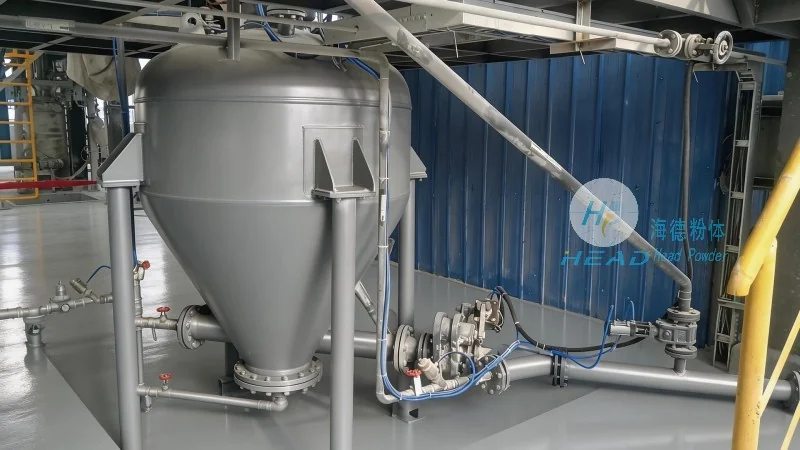
The coal ash powder conveying system typically consists of several core components, including a hopper for material storage, a feeder to control the flow rate, a conveying pipeline (often equipped with a dust suppression system), and a discharge unit. These components work in tandem to ensure the smooth and continuous transport of coal ash powder from the source to the designated destination. The system is designed to handle large volumes of material while maintaining low dust emissions and minimal operational costs.
Operation Process of the Coal Ash Powder Conveying System
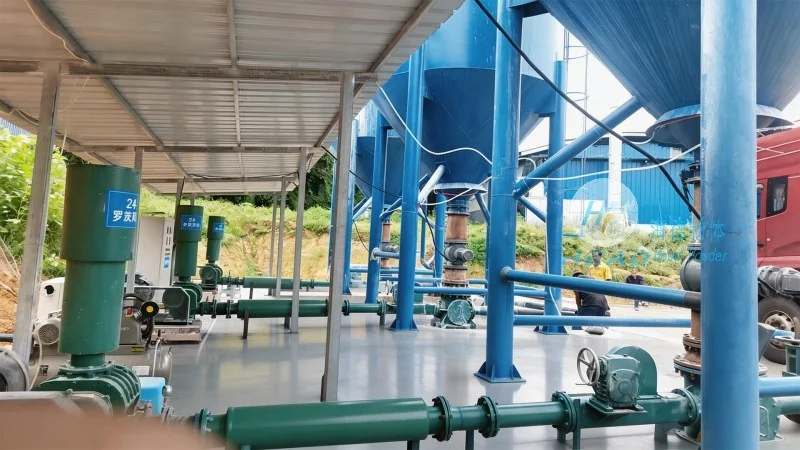
The operation process of the coal ash powder conveying system begins with the loading of coal ash into the hopper. The hopper is equipped with a level indicator to monitor the material volume, ensuring the system operates within safe and efficient parameters. Once the hopper is filled, the feeder activates, controlling the flow rate of coal ash into the conveying pipeline. The feeder may use a screw, rotary valve, or other mechanisms to regulate the material discharge, preventing overloading or underflow. As the coal ash moves through the pipeline, it is propelled by a positive pressure or negative pressure system, depending on the design. The conveying pipeline is usually made of stainless steel or other corrosion-resistant materials to withstand the abrasive nature of coal ash particles. At the discharge end, the material is collected in a storage silo or directly fed into downstream processing equipment. The entire process is automated, with sensors and control systems monitoring key parameters such as pressure, flow rate, and temperature to ensure optimal performance and safety.
Working Principle of the Coal Ash Powder Conveying System
The working principle of the coal ash powder conveying system is based on the principles of fluidization and pneumatic transport. In a positive pressure system, a fan or blower generates a high-pressure air stream that carries the coal ash particles through the pipeline. The air and material mixture is then separated at the discharge end, with the air being recirculated or vented, and the coal ash collected. In a negative pressure system, the pipeline is maintained at a lower pressure than the surrounding environment, drawing the coal ash into the system using suction. Both systems rely on the interaction between the air flow and the powder particles to achieve efficient transport. The key to the system's effectiveness lies in maintaining a consistent air-to-material ratio, which ensures that the particles are fully suspended and transported without clogging or excessive wear on the equipment. Advanced control systems are used to adjust the air flow and material feed rate in real-time, optimizing the conveying efficiency and minimizing energy consumption.
Key Technical Features and Advantages
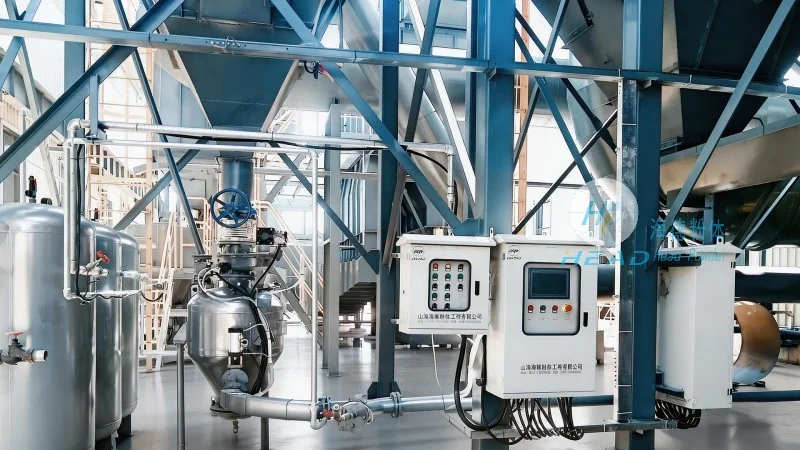
Shandong HeadPowder's coal ash powder conveying system equipment incorporates several technical features that enhance its performance and reliability. These include: 1. **Dust Suppression Technology**: The system is equipped with advanced dust suppression mechanisms, such as water sprayers or electrostatic precipitators, to minimize dust emissions during operation, ensuring compliance with environmental regulations. 2. **Corrosion-Resistant Materials**: The conveying pipeline and other components are made of stainless steel or other corrosion-resistant materials, which are resistant to the acidic and abrasive properties of coal ash, extending the equipment's service life. 3. **Automation and Control Systems**: The system is integrated with sensors and control panels that monitor and regulate key parameters, such as pressure, flow rate, and temperature, enabling remote monitoring and troubleshooting. 4. **Energy Efficiency**: The design optimizes air flow and material feed rates to minimize energy consumption, reducing operational costs for the end-user. 5. **Customization**: HeadPowder offers customized solutions tailored to the specific needs of each client, including different pipe diameters, conveying distances, and material handling capacities.
Applications and Benefits
The coal ash powder conveying system is widely used in various industrial applications, including: 1. **Power Plants**: For transporting coal ash from the boiler to the storage silos or for further utilization in cement production. 2. **Cement Factories**: For conveying coal ash as a raw material in the cement manufacturing process, improving the quality and reducing the cost of cement. 3. **Industrial Waste Management**: For handling and transporting coal ash from industrial facilities to disposal sites or for recycling purposes. The benefits of using such a system include: - **Increased Efficiency**: The automated process reduces labor costs and increases the throughput of coal ash handling. - **Improved Safety**: The enclosed system minimizes dust exposure and reduces the risk of accidents. - **Environmental Compliance**: The dust suppression technology ensures that the system meets environmental regulations, preventing air pollution. - **Cost Savings**: The energy-efficient design and long service life of the equipment result in lower operational and maintenance costs.