

Operation Process and Working Principle of Dust Collector Powder Body Pneumatic Conveying Equipment
For industrial facilities dealing with dust and powder materials, efficient and reliable material handling is crucial. The pneumatic conveying system, particularly designed for dust collector powders, plays a vital role in maintaining operational efficiency and safety. This article delves into the operation process and working principle of such equipment, highlighting its key components, operational flow, and benefits.
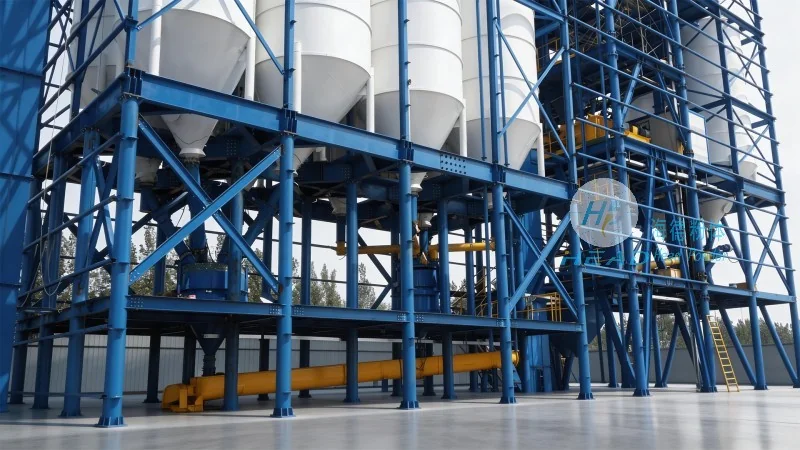
Introduction to Pneumatic Conveying Systems for Dust Collector Powders
HeadPowder, a leading manufacturer based in Shandong, China, specializes in providing advanced pneumatic conveying solutions tailored for industrial applications. The equipment is engineered to handle fine powders and dust efficiently, ensuring minimal loss and maximum throughput. This system is widely used in industries such as cement, chemical, and food processing, where dust management is critical.
Key Components of the Pneumatic Conveying Equipment
The pneumatic conveying system for dust collector powders consists of several essential components that work in harmony to achieve effective material transport. These include the dust collector, conveyor pipeline, air compressor, control system, and discharge unit. Each component is designed to optimize performance and ensure smooth operation.
Firstly, the dust collector is responsible for capturing and collecting the powder material from the production process. It features high-efficiency filters that trap fine particles, preventing them from being released into the atmosphere. The collected powder is then transferred to the conveyor pipeline through a hopper or a feeding device. The pipeline is typically made of stainless steel or other corrosion-resistant materials to handle abrasive powders and maintain hygiene standards.
Secondly, the air compressor provides the necessary pressure and airflow to move the powder through the pipeline. The compressor is equipped with a control system that regulates the air pressure and flow rate, ensuring consistent and stable operation. This control system also includes safety features to prevent overpressure or underpressure conditions, protecting both the equipment and the personnel.
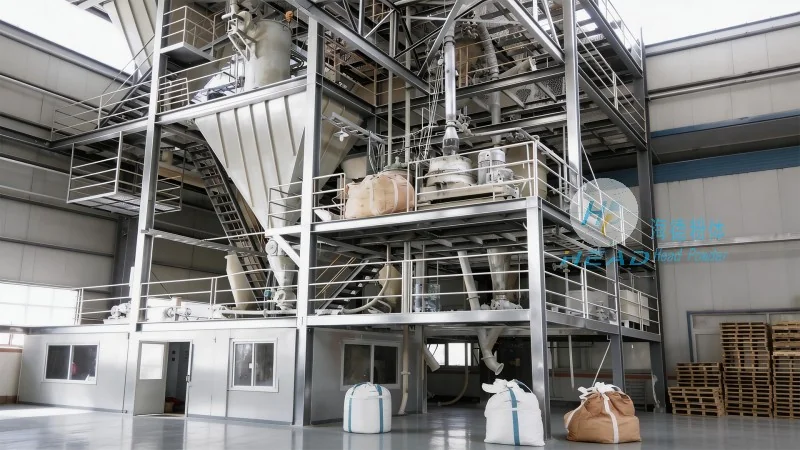
Thirdly, the control system manages the entire operation of the pneumatic conveying equipment. It monitors parameters such as pressure, flow rate, and temperature, and adjusts the compressor settings accordingly. The system also includes alarms and indicators to alert operators of any abnormalities, ensuring timely intervention and preventing equipment damage or material loss.
Finally, the discharge unit is responsible for releasing the powder from the pipeline to the destination point, such as a storage silo or a processing unit. The unit is designed to handle different powder types and flow rates, ensuring smooth and controlled discharge. It may include features like a rotary valve or a screw conveyor to regulate the flow and prevent blockages.
Operation Process of the Pneumatic Conveying System
The operation process of the pneumatic conveying system for dust collector powders involves several steps that ensure efficient material transport. The process begins with the collection of powder from the dust collector. The powder is then fed into the conveyor pipeline through a hopper or a feeding device. The air compressor then generates the required airflow, which carries the powder particles through the pipeline.
As the powder moves through the pipeline, it is suspended in the air stream, allowing it to be transported over long distances without the need for mechanical components like belts or buckets. The airflow maintains the powder in a suspended state, preventing it from settling or clogging the pipeline. The system is designed to handle both low and high pressure operations, depending on the material properties and the distance to be covered.
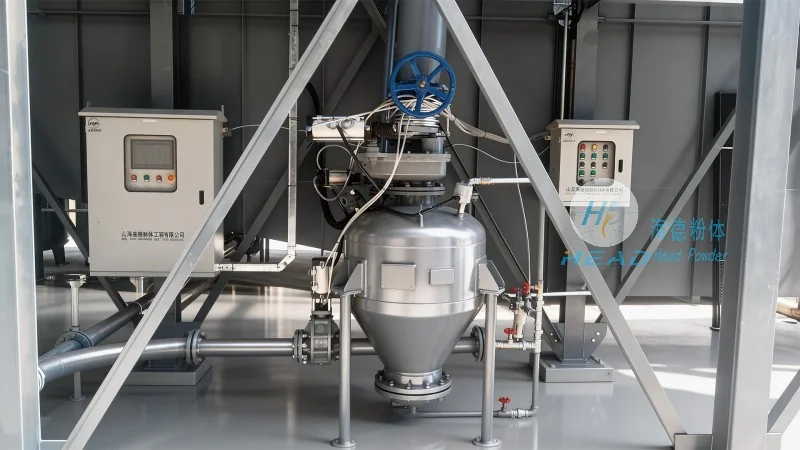
Upon reaching the discharge point, the powder is released from the pipeline into the destination container. The control system regulates the discharge rate to match the processing requirements, ensuring that the material is delivered at a consistent and controlled pace. The system also includes features to prevent dust emissions during the discharge process, maintaining environmental compliance and safety standards.
Working Principle of the Pneumatic Conveying Equipment
The working principle of the pneumatic conveying system relies on the fundamental concept of fluidization and suspension of powder particles in an air stream. The air compressor generates a high-pressure air flow, which is introduced into the conveyor pipeline. The pressure difference between the inlet and outlet of the pipeline creates a flow of air that carries the powder particles.
When the powder is introduced into the pipeline, it is mixed with the air stream, forming a suspension. The air flow maintains the powder particles in a suspended state, preventing them from settling or aggregating. The velocity of the air stream is critical, as it must be sufficient to keep the powder particles suspended but not so high as to cause excessive wear on the pipeline or equipment components.
The system operates on the principle of positive or negative pressure, depending on the application. Positive pressure systems use compressed air to push the powder through the pipeline, while negative pressure systems use suction to draw the powder from the dust collector. Both systems are effective, but the choice depends on the specific requirements of the industrial process, such as the distance to be covered and the material properties.
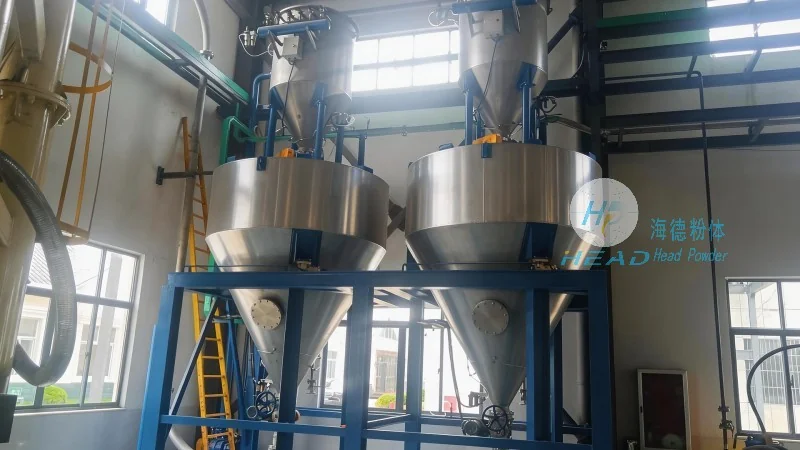
The control system plays a crucial role in maintaining the optimal operating conditions. It monitors the pressure and flow rate of the air stream and adjusts the compressor settings to ensure consistent performance. The system also includes safety features to prevent overpressure or underpressure conditions, protecting both the equipment and the personnel. Additionally, the system is designed to minimize energy consumption by optimizing the airflow and pressure settings.
Benefits and Applications of the Pneumatic Conveying Equipment
The pneumatic conveying system for dust collector powders offers several benefits that make it an ideal solution for industrial applications. Firstly, it provides a dust-free and clean operation, as the powder is contained within the pipeline and does not come into contact with the environment. This reduces the risk of dust emissions and improves workplace safety.
Secondly, the system is highly efficient in terms of material transport, as it can handle large volumes of powder over long distances with minimal loss. The suspended powder transport ensures that the material is delivered in a consistent and controlled manner, reducing the need for manual handling and improving operational efficiency.
Thirdly, the equipment is easy to install and maintain, with modular components that can be easily replaced or repaired. The control system simplifies operation and reduces the need for manual intervention, making it suitable for both small and large-scale industrial applications.